

Comprehensive Guide to FET RF Amplifiers: Key Features & Global Impact
Understanding the Role of the FET RF Amplifier in Today's Tech Landscape
Sometimes, we get so caught up in the latest gadget or smartphone announcement that we forget about the quieter heroes under the hood — like the FET RF amplifier. This little device might not grab headlines, but its global impact? Enormous. From boosting signal clarity in cell towers to vital applications in satellite communication and medical devices, understanding the FET RF amplifier opens doors to appreciating how wireless and RF technology shapes modern life and industry.
Why FET RF Amplifiers Matter Globally
In a world that's increasingly connected — whether it’s the remote village in Sub-Saharan Africa or the sprawling urban hub in East Asia — the demand for reliable radio frequency amplification is growing. According to the International Telecommunication Union (ITU), the number of mobile subscriptions worldwide surpassed 8 billion in 2023, and the backbone of this connectivity often relies on components like the FET RF amplifier.
But raw amplification isn’t the only story. These amplifiers confront tough engineering challenges such as power efficiency, signal integrity, and size constraints, all while supporting an expanding range of frequencies for 5G, IoT, and defense technologies. Frankly, without components like the FET RF amplifier, we'd be staring at a much less connected, and frankly, less interesting world.
What Exactly Is a FET RF Amplifier?
Let’s strip it down: a Field-Effect Transistor (FET) Radio Frequency (RF) amplifier is an electronic circuit that boosts weak radio frequency signals to usable levels with high efficiency and minimal distortion. Think of it as the voice amplifier at a crowded event — it makes sure your message gets heard loud and clear, even amidst noise.
These amplifiers use FETs as active components because of their superior frequency response, input impedance, and noise characteristics compared to bipolar transistors. In practical terms, that means clearer signals with less power draw — crucial in mobile devices and satellite comms alike.
How FET RF Amplifiers Touch Our Lives Every Day
- Mobile networks: Amplify signals in base stations to keep calls crisp and data streaming smoothly.
- Satellite communications: Enable long-distance transmissions with minimal loss.
- Medical equipment: Used in MRI machines and diagnostic tools where precise frequency control matters.
- Military and aerospace: Critical for radar, secure communications, and electronic warfare.
Oddly enough, while they're so embedded in high-tech sectors, many end-users never think twice about these amplifiers hiding in their devices.
Key Elements That Define the Quality of FET RF Amplifiers
1. Durability
Given the often harsh environments — think: outer space, deserts, or industrial sites — FET RF amplifiers are designed with robust materials to withstand temperature extremes and electromagnetic interference.
2. Scalability
Manufacturers need to provide solutions that fit from tiny IoT nodes to massive telecom towers. The modular nature of amplifier circuits helps scale up or down based on frequency, power, and intended use.
3. Cost Efficiency
Balancing performance and price is key. Many engineers say small improvements in amplifier efficiency ripple into huge savings at scale, especially in telecom infrastructure servicing millions.
4. Noise Figure and Linearity
Low noise figure ensures signal clarity, which is vital for data integrity, while linearity avoids distortion, making sure signals maintain their fidelity.
5. Power Consumption
Lower power leads to extended battery life in handheld devices and reduces operational costs for base stations — a win for both users and the environment.
Mini takeaway: These aspects jointly dictate how well an amplifier performs under real-world stresses — which, spoiler alert, is often quite different than lab settings.
FET RF Amplifier in the Wild: Real-World Applications Around the Globe
In South Asia, telecom providers rely on FET RF amplifiers to extend coverage in dense urban landscapes where signal interference is a constant menace. Meanwhile, in the oil fields of the North Sea, ruggedized amplifiers keep critical sensor data flowing from remote rigs to onshore control rooms.
Humanitarian organizations have also adopted these amplifiers for drone-based communication relays in disaster zones. After the 2021 floods in Europe, Drones equipped with advanced FET RF amplifiers helped re-establish wireless links when cell towers went dark.
And don’t forget satellite broadband providers in Latin America, whose service depends heavily on the reliable, low-noise amplification that these amplifiers deliver even under extreme weather.
Advantages That Make FET RF Amplifiers Indispensable
- Economic value: Low operational costs over device lifetimes and reduced maintenance.
- Sustainability: Enhanced efficiency means less wasted energy, aligning with green technology goals.
- Social impact: Improved communication infrastructure empowers education, healthcare, and commerce.
- Reliability: High-quality components contribute to systems that “just work” when it matters most.
It’s kind of like installing a reliable bridge in a remote area — the social and economic ripple effects last generations.
Keeping An Eye Ahead: Future Trends in FET RF Amplifier Technology
Materials science is advancing with gallium nitride (GaN) and indium phosphide substrates promising better heat tolerance and power density. Meanwhile, integration with digital control circuits offers unprecedented real-time tuning and diagnostics.
Automation is enabling faster production scaling, while developments in eco-friendly manufacturing reduce environmental footprints. These innovations mean we’ll see amplifiers that are not only smarter but kinder to the planet — a subtle, but essential evolution given rising global energy concerns.
Facing Challenges—and How to Overcome Them
At times, challenges like thermal management, signal distortion at extreme frequencies, and cost constraints can limit how widely some FET RF amplifiers are deployed. But engineers are increasingly relying on novel heat sinks, adaptive biasing techniques, and modular system designs to mitigate these issues.
Also, supply chain volatility has pushed companies to diversify material sourcing and invest in local manufacturing hubs, thus ensuring more robust availability of key components.
FET RF Amplifier: FAQs
- What distinguishes a FET RF amplifier from other RF amplifiers?
- A FET RF amplifier uses field-effect transistors to achieve superior frequency response and lower noise compared to, say, bipolars. This ensures clearer, more reliable signal amplification especially at high frequencies.
- Can FET RF amplifiers be customized for specific industries?
- Absolutely. They can be tailored for power levels, frequency bands, and environmental durability to suit everything from consumer electronics to aerospace applications.
- How do these amplifiers impact battery life in wireless devices?
- Higher efficiency in amplification means less energy is wasted as heat, which directly translates to longer battery life in smartphones, tablets, and IoT devices.
- Are FET RF amplifiers compatible with 5G technologies?
- Yes, many modern designs are optimized for the higher frequencies and bandwidth that 5G demands, supporting faster data speeds and better connectivity.
Quick Technical Overview: Typical FET RF Amplifier Specification
| Parameter | Typical Value | Description |
|---|---|---|
| Frequency Range | 0.5 - 6 GHz | Supports most cellular and WiFi bands |
| Gain | 15 - 20 dB | Signal amplification level |
| Noise Figure | Indicates signal clarity | |
| Power Consumption | Typically ~150 mW | Efficiency metric |
| Operating Temperature | -40°C to +85°C | Suitable for harsh environments |
Vendor Comparison at a Glance
| Vendor | Frequency Range (GHz) | Typical Gain (dB) | Noise Figure (dB) | Price Per Unit (USD) |
|---|---|---|---|---|
| AmplifyTech | 0.1–6 | 18 | 2.2 | $3.50 |
| RF Solutions Co. | 0.5–5 | 16 | 1.8 | $4.20 |
| GaN Power Amplifiers | 1–7 | 20 | 2.0 | $7.80 |
To sum up, the FET RF amplifier is as much a technical marvel as it is a silent enabler of modern connectivity. It’s not just about boosting signals; it’s about connecting communities, advancing industries, and fostering innovation on a planetary scale.
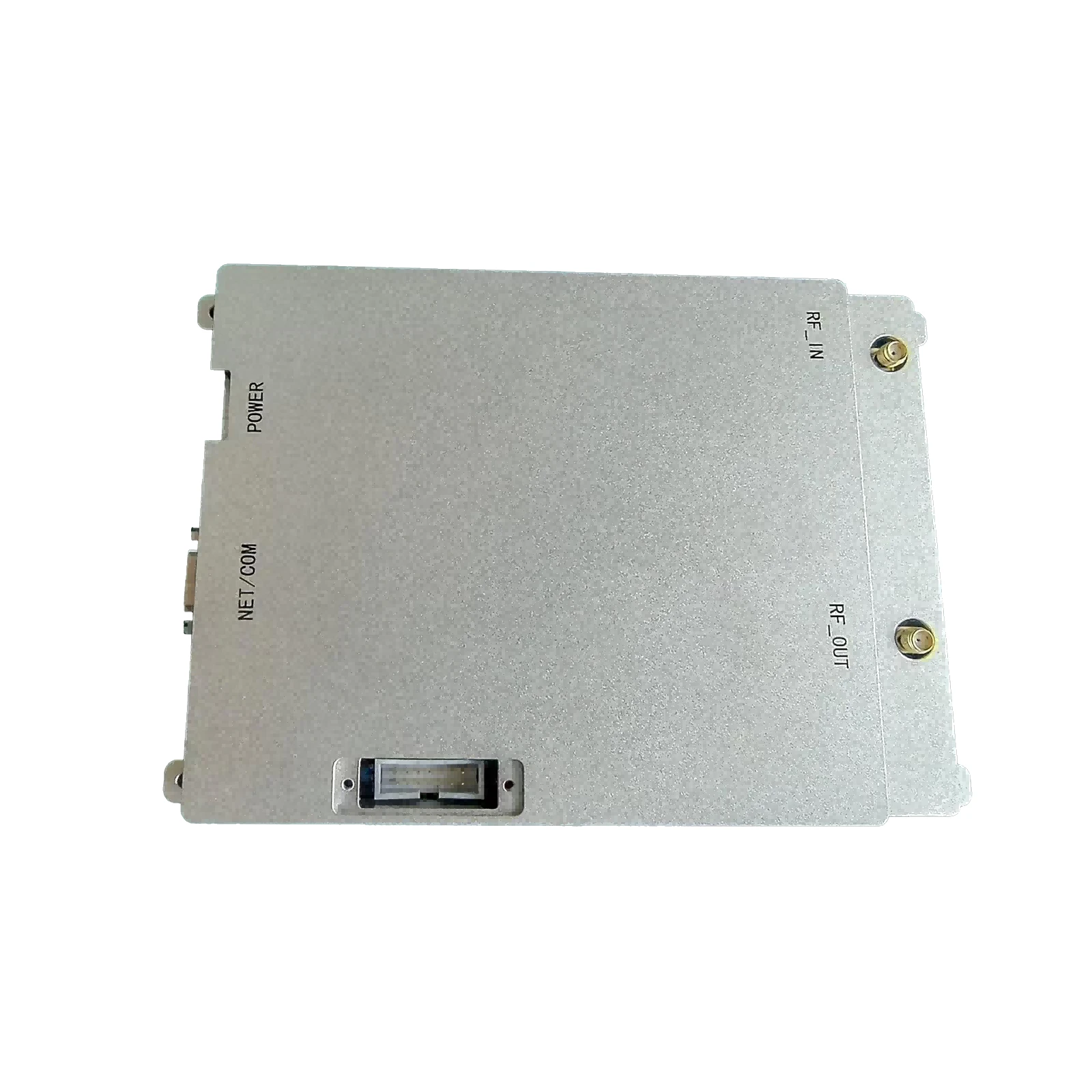
If you want to explore more about the latest in RF technology, or check out some cutting-edge fet rf amplifier products and solutions, definitely jump over to that link.
1. International Telecommunication Union (2023). “Global mobile subscriptions.”
2. IEEE Journal of Solid-State Circuits, “Advances in GaN-based RF power amplifiers,” 2022.
3. Wikipedia contributors. “Field-effect transistor.” Wikipedia. https://en.wikipedia.org/wiki/Field-effect_transistor

-
 09 March 2021 16 Apr 2026
 -
 09 March 2021 09 Apr 2026
 -
 09 March 2021 07 Apr 2026
 -
 09 March 2021 04 Apr 2026
 -
 09 March 2021 31 Mar 2026
-
 09 March 2021 21 May 2025
 -
 09 March 2021 25 Dec 2024
 -
 09 March 2021 14 Oct 2022
-
 09 March 2021 25 Dec 2024

 English
  Arabic
  Belarusian
  Danish
  Dutch
Dutch  French
  German
  Greek
Greek  Japanese
  Korean
  Myanmar
  Polish
  Portuguese
  Russian
  Spanish
  Swedish
  Thai
Thai  Ukrainian
  Vietnamese