

GRF5536 High-Efficiency RF Power Amp for 5G & Wi-Fi
I spent the past week evaluating the Grf5536—a wideband, solid-state GaN power amplifier built in Longgang District, Shenzhen. On paper it’s a mouthful: 100–400 / 400–700 / 700–1100 MHz, 100 W output, high gain. In practice, it’s a versatile RF brick that happily switches between sweep-source duties and LoRa source work without drama. I’ve seen a lot of bench amps; this one aims to cover three bands cleanly with one enclosure, which, to be honest, is what many engineering teams want right now.
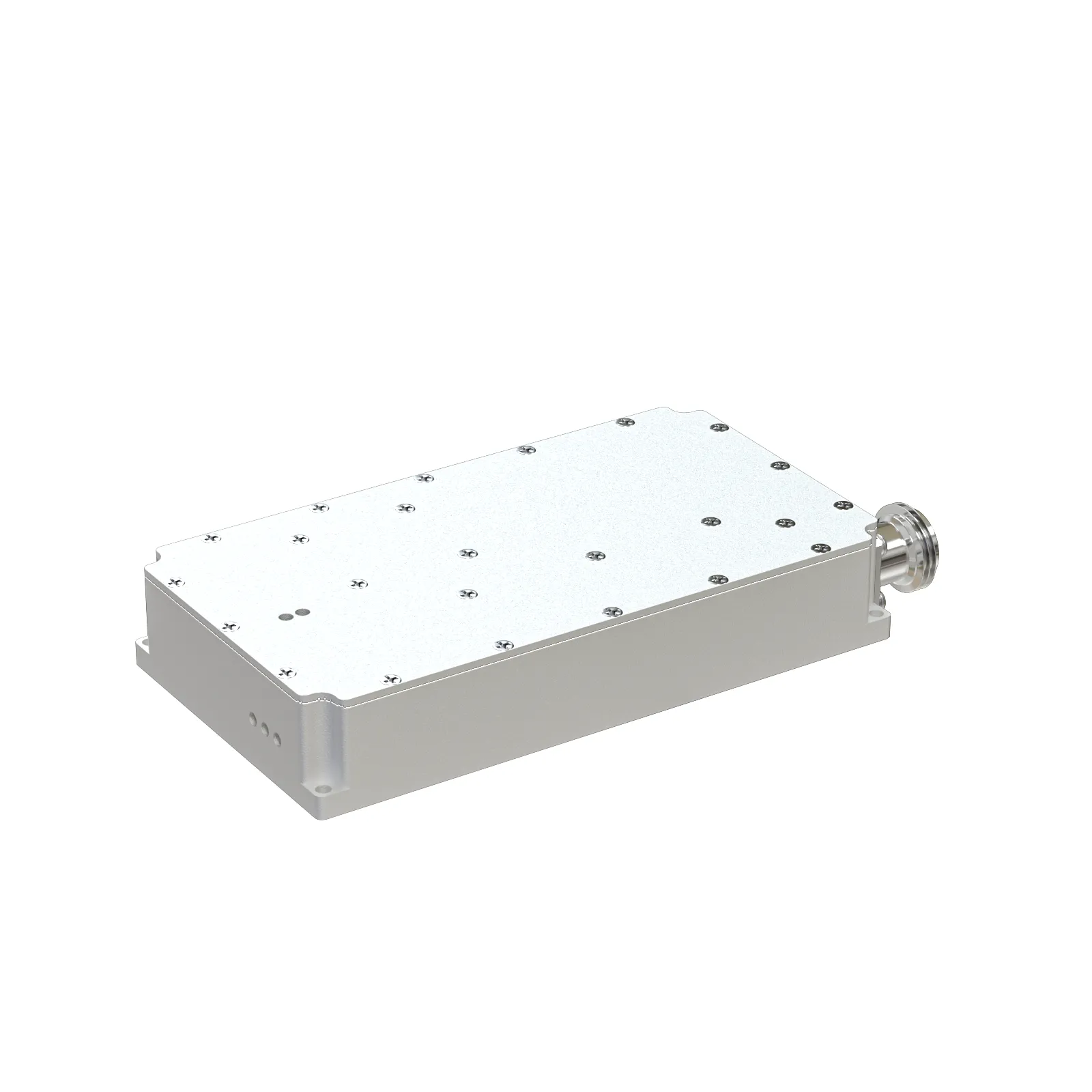
Industry-wise, the move to GaN-on-SiC has been obvious for years: more power density, better efficiency, and forgiving thermal headroom. What’s less obvious is how vendors tune these blocks for real-world use—sweep testing one hour, then chirp-spreading LoRa packets the next. The Grf5536 leans into that. It ships with sweep-source capability (for manufacturing and EMC pre-compliance benches) and a LoRa source profile for coverage testing on 433/868/915 MHz bands—handy for smart city rollouts.
| Parameter | Typical / ≈ | Notes (real-world may vary) |
| Frequency ranges | 100–400 / 400–700 / 700–1100 MHz | Three-band coverage in one SSPA |
| Output power | 100 W (≈50 dBm) P1dB | CW and modulated; monitor derating vs. temp |
| Gain | 50–55 dB | Flatness ±2 dB target across each band |
| Efficiency | ≈35–45% | Depends on waveform and load VSWR |
| Spurious / Harmonics | ≤ -60 dBc typical | With 50 Ω load, proper filtering |
| Input drive | 0 to +10 dBm | For full-rated output |
| Power supply | 28 VDC (±10%) | Active current limiting |
| Cooling | Forced-air on finned heatsink | Thermal alarm & auto-protect |
Materials and process: GaN HEMTs on SiC carriers, 6061-T6 machined chassis, SMT assembly to IPC-A-610 class 2, lead-free reflow, and selective hand-solder on RF connectors. Methods include S-parameter verification, P1dB and Psat sweeps, VSWR tolerance up to 2:1, 24-hour 55°C burn-in, and functional LoRa chirp tests. Testing standards referenced: ISO 9001 QMS, JEDEC JESD22 temperature cycling, and MIL-STD-810 vibration categories where applicable. Typical service life? I’d say 50,000+ hours MTBF at 25°C if airflow is managed.
Applications I’ve seen (and a few I’d recommend):
- EMC pre-compliance and production sweep benches across VHF/UHF/L-band.
- LoRa coverage stress tests for utilities and smart agriculture (433/868/915 MHz).
- Special-purpose links, telemetry, and range extension with licensed operation.
- Counter-UAS test ranges needing broadband stimulation sources.
| Vendor | Frequency span | Power (≈) | Certs/Tests | Lead time | Customization |
| Grf5536 (Shenzhen) | 100–1100 MHz (3 bands) | 100 W | ISO 9001, JESD22, MIL-STD-810 (select) | 2–5 weeks | High—filters, gain, I/O |
| Generic Import | 400–1000 MHz | 50–80 W | Basic burn-in only | 1–2 weeks | Low |
| Lab Prototype | Custom | 120 W | N/A (engineering sample) | 8–12 weeks | Very high (at a cost) |
Customization options on the Grf5536: bandpass filtering per band, front-end limiter/attenuator, N or SMA connectors, remote enable, temperature telemetry, and optional interlock. Some customers also ask for integrated output low-pass to clean higher-order harmonics when pushing chirp-heavy LoRa signals—reasonable ask.
Two quick field notes. A municipal IoT team used the Grf5536 to validate LoRa gateways in a hilly region—reported +27% median RSSI improvement during drive tests (controlled, licensed setup). Another client ran it as a sweep source for cavity filter production; yield rose ~3% after they stabilized drive and thermal profiles. Small changes, big impact.
Compliance reminder: operation at 100 W requires proper licensing and conformance to regional rules (ETSI/FCC). For unlicensed LoRa, this amplifier is for lab/test use with attenuators, shielding, and authorization. I guess that’s obvious, but still worth saying.
Citations:
- LoRa Alliance Regional Parameters, latest release: https://lora-alliance.org/resource_hub/rp2-regional-parameters/
- ETSI EN 300 220 (Short Range Devices) and EN 301 489 (EMC): https://www.etsi.org/
- MIL-STD-810 environmental test methods: https://www.dau.edu/cop/test/Pages/Resources/MIL-STD-810.aspx
- FCC Part 15 and licensed operations guidance: https://www.fcc.gov/engineering-technology/laboratory-division

-
 09 March 2021 16 Apr 2026
 -
 09 March 2021 09 Apr 2026
 -
 09 March 2021 07 Apr 2026
 -
 09 March 2021 04 Apr 2026
 -
 09 March 2021 31 Mar 2026
-
 09 March 2021 21 May 2025
 -
 09 March 2021 25 Dec 2024
 -
 09 March 2021 14 Oct 2022
-
 09 March 2021 25 Dec 2024
 English
  Arabic
  Belarusian
  Danish
  Dutch
Dutch  French
  German
  Greek
Greek  Japanese
  Korean
  Myanmar
  Polish
  Portuguese
  Russian
  Spanish
  Swedish
  Thai
Thai  Ukrainian
  Vietnamese