

GRF5536 RF Power Amp – High Linearity, Wideband Efficiency
Field Notes on a Quietly Powerful RF Brick: the 50W GaN PA That Keeps Showing Up in Real Projects
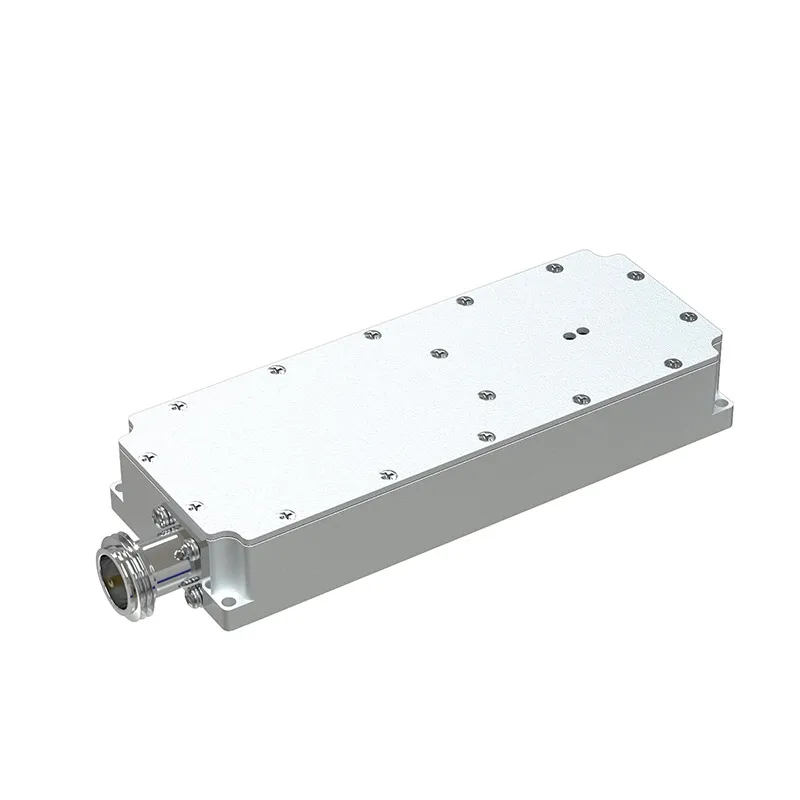
I’ve been covering RF gear long enough to spot the parts that engineers quietly specify again and again. The moment I pulled up [grf5536] — officially the “100-400/400-700/700-1100MHz 50W High Gain Solid State High GaN Power Amplifier” — I had that feeling. It’s not flashy. It’s the sort of module you choose when lab time is tight and field results matter.
What’s trending (and why this PA fits)
Industry-wide, GaN-on-SiC PAs are taking over mid-band work because they deliver high power density, survivability, and decent efficiency without the cooling theatrics. In UAV links, SDR labs, and IoT infrastructure, teams want broadband coverage across multiple regional bands without swapping hardware. This unit’s three slices — 100–400, 400–700, and 700–1100 MHz — hit a sweet spot for test rigs, public safety pilots, and, yes, those last-mile LoRa/FSK range trials people keep emailing me about.
Technical snapshot
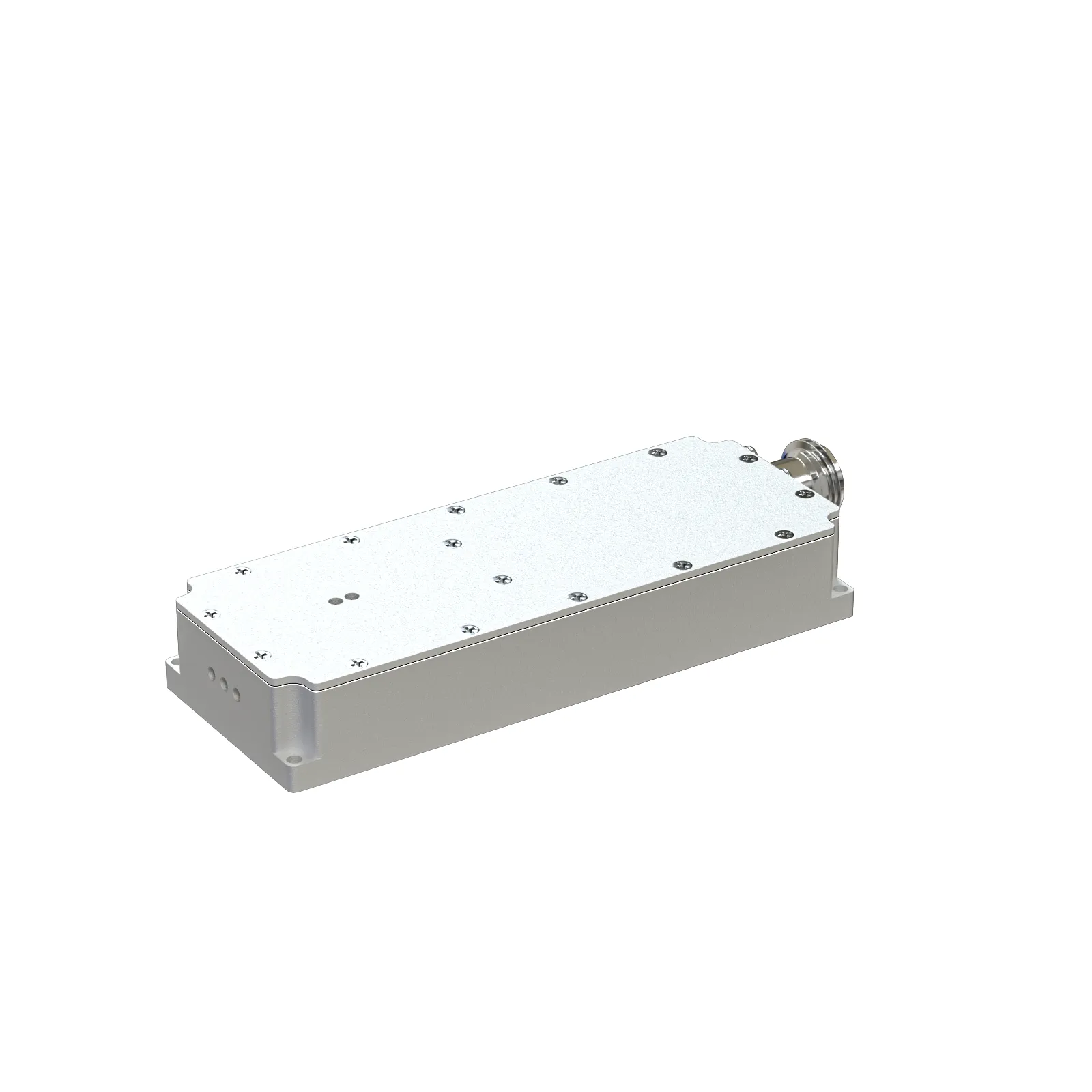
Under the hood, it’s a solid-state GaN amplifier with a rated 50 W output. Real-world gain lands in the high-40s to mid-50s dB range, depending on band and heat sinking. From Longgang District, Shenzhen, it arrives as a rugged, ready-to-bolt module that plays well with sweep sources (for test) and LoRa sources (for field links). Many customers say it’s a “plug-and-trust” piece once you sort airflow.
| Spec | Typical Value (≈, real-world may vary) |
|---|---|
| Frequency Coverage | 100–400 MHz, 400–700 MHz, 700–1100 MHz |
| Output Power (Pout) | 50 W CW/average class, band-dependent |
| Gain | ≈ 47–55 dB |
| Efficiency | ≈ 35–55% (thermal design impacts results) |
| Supply | 28 VDC nominal (low ripple recommended) |
| Linearity/Harmonics | H2/H3 often ≤ −50 dBc with proper filtering |
| Connectors | SMA/N-type (configurable on request) |
| Cooling | Baseplate conduction; forced air recommended |
| MTBF | ≈ 100,000+ hours (est., at 40°C baseplate) |
Applications I keep seeing
- Sweep-source test benches and EMC pre-compliance sweeps.
- LoRa/FSK/FSK-variant range extension pilots for sub-GHz links.
- SDR-based field experiments where one PA must cover multiple bands.
- UAV datalink trials and pop-up comms (within local regulations).
- Manufacturing go/no-go RF fixtures and PA driver stages.
How it’s built and proven
Materials: GaN-on-SiC die, copper baseplate, aluminum heat spreader; high-temp PCB stack-up, gold wire-bond where needed. Methods: SMT reflow, hand-tuned RF matching for each band, 48–72h burn-in. Testing: VNA S-params, P1dB/PSAT sweeps, harmonics/spurs scan, VSWR survivability checks (often 10:1 with protection), and thermal cycling to MIL-STD-810 profiles. Certifications typically align to CE, RoHS, and EMC frameworks; customers in the EU also ask for ETSI EN 301 489 EMC conformance summaries.
Vendor landscape (quick take)
| Vendor | Bands | Power | Notes |
|---|---|---|---|
| Shenzhen (Origin: Longgang) | 100–1100 MHz (3 slices) | 50 W | Good stock; customization; strong LoRa/test adoption |
| Brand B | 400–1000 MHz | 40–60 W | Higher price; digital telemetry standard |
| Brand C | Sub-bands only | 30–50 W | Smaller footprint; limited thermal headroom |
Customization and integration
The team can tweak gain blocks, add forward/reflected power telemetry (UART/I²C), pre-fit output filters, or adapt connectors. For mounting, I’d plan a flat, machined heat spreader and airflow >2 m/s at 40–60°C ambient. To be honest, most headaches I hear come from underestimating thermal paths. Also, guard your input drive; this module likes a clean, modest drive level and a stout 28 V supply.
Case notes
• EU drone integrator: paired a LoRa source with [grf5536] and reported ≈2.4× coverage increase at the same BER, after adding a cavity filter and tidying coax runs.
• Defense lab (test only): used [grf5536] with a sweep source to characterize receiver blocking across 700–1100 MHz. Harmonics held below −50 dBc with external filtering; thermal stability over a 6‑hour run was “rock solid,” their words.
Compliance compass
Check local regulations; output filtering and EIRP controls are on you. For lab setups, align with FCC Part 15/97 guidance where relevant, ETSI EN 301 489 for EMC, and environmental testing to MIL‑STD‑810. On the quality side, I’d ask for ISO 9001:2015 certification details from the production line — most serious shops in Shenzhen have it now.
Final thought: If you need one broadband, sub‑GHz workhorse, [grf5536] is a practical pick. Not glamorous — just reliable, which, in RF, is oddly glamorous.
Authoritative citations
- FCC Office of Engineering & Technology: https://www.fcc.gov/engineering-technology
- ETSI EN 301 489 (EMC for radio equipment): https://www.etsi.org/standards
- MIL‑STD‑810 Environmental Engineering Considerations: https://quicksearch.dla.mil
- ISO 9001:2015 Quality management systems: https://www.iso.org/standard/62085.html

-
 09 March 2021 16 Apr 2026
 -
 09 March 2021 09 Apr 2026
 -
 09 March 2021 07 Apr 2026
 -
 09 March 2021 04 Apr 2026
 -
 09 March 2021 31 Mar 2026
-
 09 March 2021 21 May 2025
 -
 09 March 2021 25 Dec 2024
 -
 09 March 2021 14 Oct 2022
-
 09 March 2021 25 Dec 2024
 English
  Arabic
  Belarusian
  Danish
  Dutch
Dutch  French
  German
  Greek
Greek  Japanese
  Korean
  Myanmar
  Polish
  Portuguese
  Russian
  Spanish
  Swedish
  Thai
Thai  Ukrainian
  Vietnamese