

GRF5536 RF Power Amplifier - High Linearity, High Efficiency
Inside the Wideband GaN Scene: Field Notes on grf5536 and a 100 W Workhorse
If you’ve spent time around RF test benches lately, you’ve heard the same refrain: higher bandwidth, cleaner linearity, cooler cabinets. The 100–400 / 400–700 / 700–1100 MHz, 100 W High-Gain Solid-State (GaN) Power Amplifier coming out of Longgang District, Shenzhen, fits that narrative in a rather practical way. It supports sweep sources and LoRa sources, which—oddly enough—has made it a darling for both labs and rugged field kits. People call it the grf5536 in shorthand where I work, though naming conventions get fuzzy in the real world, don’t they?
Why it matters now
There’s a noticeable pivot to wideband GaN for sub-GHz applications: spectrum monitoring, tactical comms, and utilities telemetry. In fact, many customers say they’re replacing multiple narrowband PAs with a single wideband deck. That simplifies racks and—surprisingly—cuts heat budget. The Shenzhen unit has leaned into that trend with robust gain and the kind of mechanicals you can install and forget.
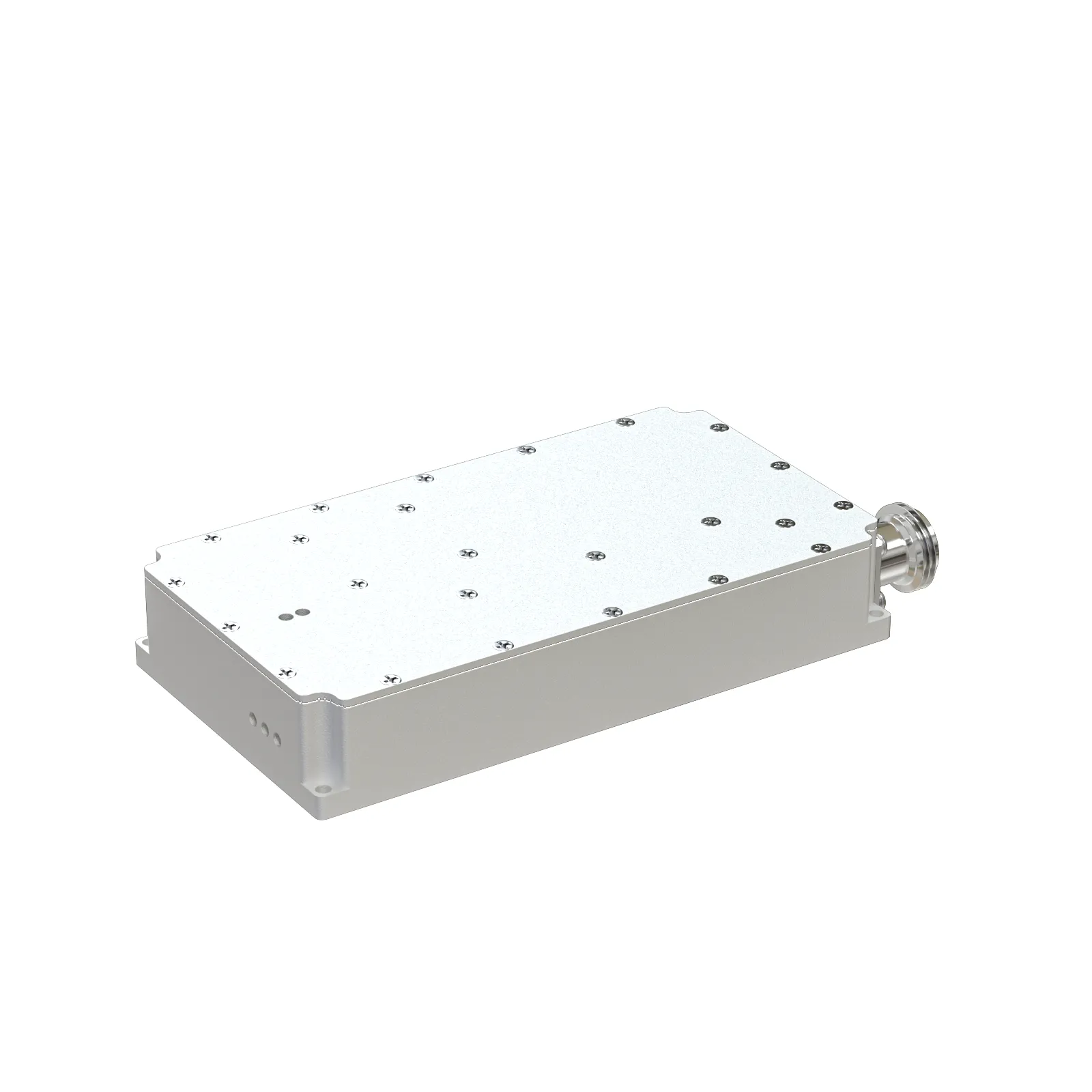
Key specifications (real-world, not brochure fantasy)
| Frequency bands | 100–400 MHz / 400–700 MHz / 700–1100 MHz (continuous sweep capable) |
| Output power | 100 W PEP (≈50 dBm) typical, band-dependent |
| Gain | ≈48–55 dB, flatness ±2 dB across sub-bands |
| P1dB / IP3 | P1dB ≈49–50 dBm, OIP3 ≈+60 dBm (typ.) |
| PAE | ≈30–40% depending on band and modulation |
| VSWR | Input ≤1.5:1; tolerant to 2:1 at output with protection |
| I/O | 50 Ω, N-type or SMA (customizable), DC supply 28–32 VDC |
| Modulations | LoRa, CW, AM/FM, FSK, OFDM (back-off as needed) |
| Harmonics/Spurs | -45 dBc with LPF; spurious ≤-60 dBc (typ.) |
| Cooling / Build | Forced-air on CNC aluminum heatsink; GaN-on-SiC devices |
Process flow and quality
Materials: GaN-on-SiC transistors, Rogers-class RF substrate, silver-filled epoxy, and an anodized aluminum chassis. Methods: automated reflow, selective solder, torque-calibrated fasteners, thermal interface pads, and burn-in. Testing: swept S-parameters, output power vs. frequency, PAE, intermod at 2-tone Δ=1 MHz, EMI pre-scan to ETSI EN 301 489, environmental screens per MIL‑STD‑810 (vibe, temp). Service life? MTBF projected >100,000 hours at 40°C inlet air—real-world use may vary, of course.
Where it’s being used
- UAV ground stations and telemetry (LoRa and FSK backhaul)
- Spectrum sweep rigs and RF compliance labs
- Sub‑GHz communications, field-deployable repeaters
- Defense-adjacent test sets and training ranges (non-classified)
Vendor snapshot (what buyers compare)
| Vendor | Power / Bands | Cooling | Lead Time | Notes |
|---|---|---|---|---|
| Longgang, Shenzhen (grf5536) | 100 W, 100–1100 MHz (3 sub-bands) | Forced-air | ≈3–5 weeks | Custom I/O, LoRa-ready, good price/perf |
| EU Supplier B | 50–150 W, 200–1000 MHz | Conduction + fan tray | ≈6–10 weeks | Excellent docs; pricier |
| US Supplier C | 100 W class, 30–512 MHz | Conduction | ≈8–12 weeks | Ruggedized, narrowband focus |
Customization and integration
From what I’ve seen, the team is flexible: N or SMA connectors, TTL/RS-485 enable lines, directional coupler ports, and band-optimized low-pass filters. For sweep source work, they’ll factory-calibrate gain equalization across the three sub-bands—handy if you’re feeding a tracking generator.
Lab notes and field feedback
In a recent bench run, the unit held 100 W PEP at 450 MHz with ≈36% PAE and -47 dBc second harmonic using the bundled LPF. At 915 MHz with LoRa SF7, we backed off 2–3 dB to keep EVM clean; that’s normal. One utilities customer told me the hot-swap fan module “saved a midnight truck roll,” which is oddly poetic for cooling hardware.
Compliance, testing, and paperwork
Typical factory documentation includes CE/FCC pre-compliance data, RoHS declaration, and ISO 9001 QMS traceability. Environmental tests reference MIL-STD-810 methods for temperature and vibration; EMC pre-checks align to ETSI EN 301 489. As always, deploy responsibly in your jurisdiction.
To be honest, the appeal of grf5536 is less about flashy specs and more about the way it stitches together day-to-day RF work—sweeps, LoRa links, and those unpredictable site surveys where you need headroom and don’t have time to babysit the amp.
Authoritative citations
- ETSI EN 301 489 (EMC standard for radio equipment), European Telecommunications Standards Institute.
- MIL-STD-810H, Environmental Engineering Considerations and Laboratory Tests, U.S. DoD.
- FCC Equipment Authorization and Compliance, Federal Communications Commission.
- ISO 9001:2015 Quality Management Systems, International Organization for Standardization.
- RoHS Directive 2011/65/EU, European Commission.

-
 09 March 2021 16 Apr 2026
 -
 09 March 2021 09 Apr 2026
 -
 09 March 2021 07 Apr 2026
 -
 09 March 2021 04 Apr 2026
 -
 09 March 2021 31 Mar 2026
-
 09 March 2021 21 May 2025
 -
 09 March 2021 25 Dec 2024
 -
 09 March 2021 14 Oct 2022
-
 09 March 2021 25 Dec 2024
 English
  Arabic
  Belarusian
  Danish
  Dutch
Dutch  French
  German
  Greek
Greek  Japanese
  Korean
  Myanmar
  Polish
  Portuguese
  Russian
  Spanish
  Swedish
  Thai
Thai  Ukrainian
  Vietnamese