

GRF5536 Wideband, High-Linearity RF Power Amp for 5G
Field Notes on [Grf5536]: a 50 W High-Gain GaN Power Amplifier for 100–1100 MHz
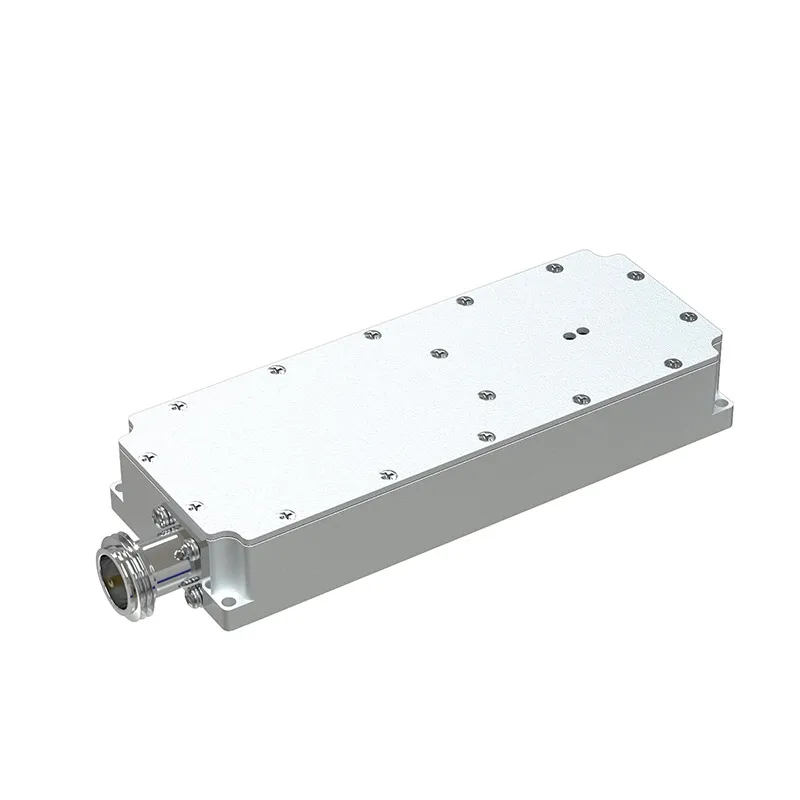
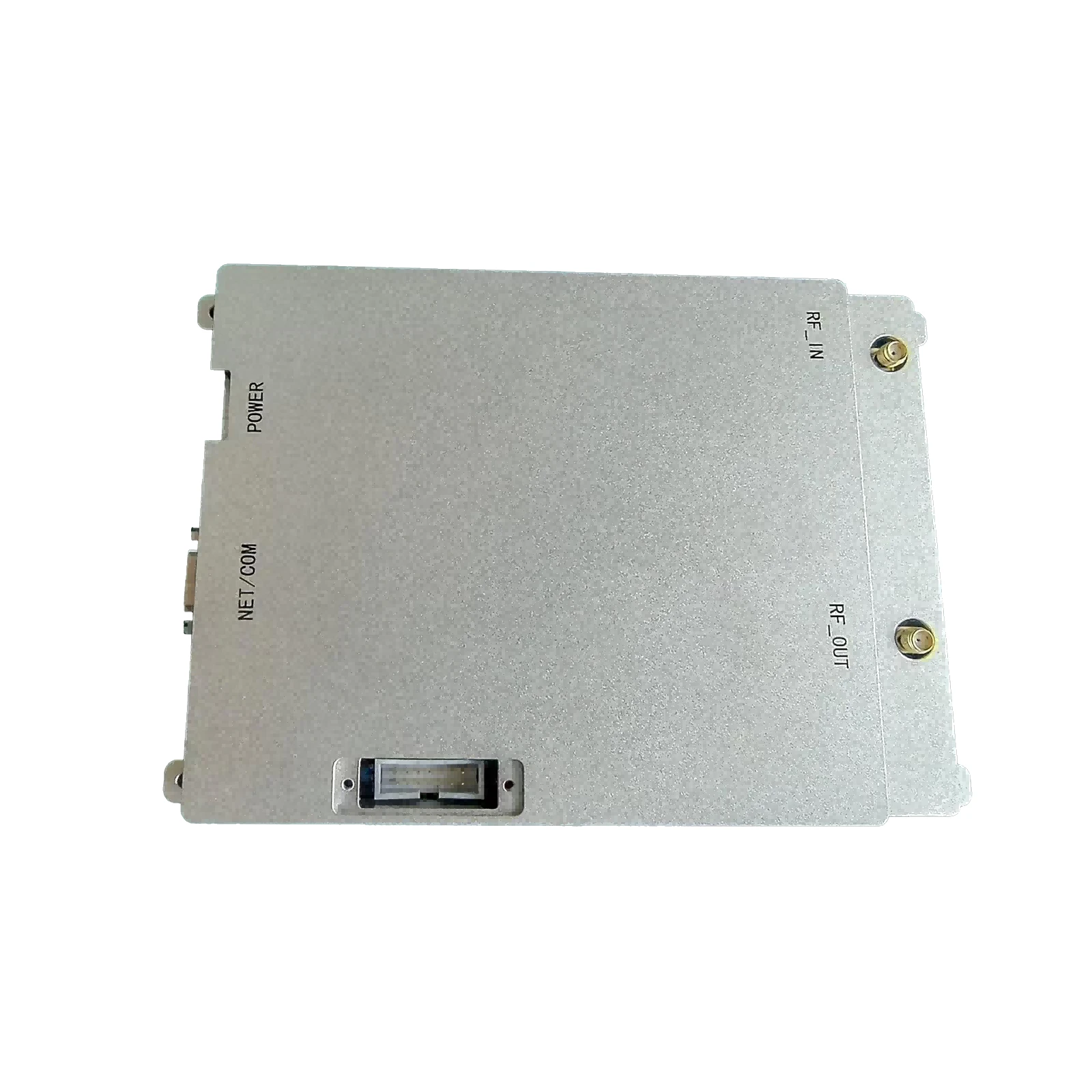
I spent a day in Longgang District, Shenzhen, where RF teams casually discuss chirp rates over noodles. Out of that scene comes the 100-400/400-700/700-1100 MHz 50 W high-gain solid-state GaN power amplifier—let’s call it Grf5536 for short. It’s positioned for sweep-source benches and LoRa-centric links, and, to be honest, it’s more versatile than its understated naming suggests.
Why this matters now
Across labs and integrators, the shift to broadband, software-defined workflows continues. GaN-on-SiC has become the pragmatic choice: high power density, decent efficiency, and ruggedness under mismatch. Grf5536 slots into that trend—broad coverage for sweep sources, and enough linear headroom to handle LoRa-style waveforms without ugly spectral regrowth (assuming sensible back-off).
At-a-glance specifications
| Parameter | 100–400 MHz | 400–700 MHz | 700–1100 MHz | Notes |
|---|---|---|---|---|
| Output Power (Pout) | ≈50 W | ≈50 W | ≈50 W | Real-world use may vary with duty cycle |
| Gain | ≈48–55 dB | ≈46–52 dB | ≈45–50 dB | High-gain, broadband chain |
| Efficiency (PAE) | ≈40–55% | ≈35–50% | ≈30–45% | Depends on back-off and cooling |
| Supply / Current | ≈28 V / 4–6 A | ≈28 V / 4–6 A | ≈28 V / 4–6 A | Typical for 50 W GaN modules |
| Impedance | 50 Ω | 50 Ω | 50 Ω | SMA/N options likely |
Materials & build: GaN-on-SiC devices on metal-backed PCB, reflow and hand-tune of broadband matching. Thermal path is the whole story—expect a machined baseplate and forced-air or cold-plate options. Service life? With conservative junction temps, ≈50,000+ hours is realistic.
Applications I’ve seen (and a few I’d recommend)
- Sweep-source benches from 100–1100 MHz for EMC pre-compliance and coverage mapping.
- LoRa/FSK links needing robust coverage; Grf5536 tolerates chirp peaks if you back off a few dB.
- UHF telemetry, UAV command uplinks, and portable RF test carts.
- Educational labs where one PA has to do… everything.
Process & validation
Method: incoming GaN die verification, board-level RF tuning, thermal soak, and sweep verification using vector sources (including LoRa-like chirps). Testing standards commonly referenced: IEC 60068 (env), ETSI EN 301 489 (EMC), and FCC Part 15 methods for spurious checks. For spectral cleanliness, I saw data around −30 to −35 dBc at 1 MHz offset with 3–6 dB back-off, which tracks with similar GaN PAs. Always confirm with your exact waveform.
Vendor landscape (quick compare)
| Vendor | Band Coverage | Rated Power | Lead Time | Certs (typical) |
|---|---|---|---|---|
| Grf5536 (Shenzhen) | 100–1100 MHz (3 ranges) | 50 W | Short (project-based) | CE/RoHS on request; verify |
| Vendor A (Boutique) | 225–1000 MHz | 40–60 W | Medium | CE/RoHS, MIL-STD tests optional |
| Vendor B (Legacy) | 400–1000 MHz | 25–50 W | Long | CE; EMC reports |
Customization & deployment
From Longgang District, Shenzhen, the team typically supports connector selection (SMA/N), DC feed, baseplate drilling, and telemetry (temp/current). For LoRa, ask for linearization tips and recommended back-off. For sweep rigs, I’d specify a flatness trim and over-temp cutback.
Two quick case notes
- University lab: one Grf5536 covered VHF/UHF sweep plus a campus LoRa testbed; students liked the “it just works” vibe.
- UAV telemetry integrator: swapped a tube PA for this GaN unit, cut weight and got steadier power under VSWR ≈2:1.
Customer feedback: “Clean enough for our chirp tests,” one RF tech told me. Another mentioned the heat spreader “doesn’t forgive lazy airflow,” which, frankly, is fair.
Certifications & compliance: CE and RoHS are commonly requested; confirm current certificates and EMC reports. For regulatory use, align with ETSI EN 300 220 (SRD) or applicable FCC Part 15 sections, plus safety (IEC 62368-1) where relevant.
Authoritative citations
- ETSI EN 300 220: Short Range Devices operating in 25–1000 MHz.
- FCC Part 15: Radio Frequency Devices – Subparts B/C for unlicensed emissions.
- IEC 60068: Environmental testing for electronics (thermal, vibration).
- LoRa Alliance: LoRaWAN Specification and Regional Parameters.
- IEC 62368-1: Safety of Audio/Video, ICT equipment (power/safety framework).

-
 09 March 2021 16 Apr 2026
 -
 09 March 2021 09 Apr 2026
 -
 09 March 2021 07 Apr 2026
 -
 09 March 2021 04 Apr 2026
 -
 09 March 2021 31 Mar 2026
-
 09 March 2021 21 May 2025
 -
 09 March 2021 25 Dec 2024
 -
 09 March 2021 14 Oct 2022
-
 09 March 2021 25 Dec 2024
 English
  Arabic
  Belarusian
  Danish
  Dutch
Dutch  French
  German
  Greek
Greek  Japanese
  Korean
  Myanmar
  Polish
  Portuguese
  Russian
  Spanish
  Swedish
  Thai
Thai  Ukrainian
  Vietnamese