

Phased Array Radar: Real-Time Beam Steering—Why Wait?
Phased Array Radar: field notes from a radar-obsessed editor
I’ve spent enough time in labs and on windswept test ranges to know when a technology is having a moment. The Phased Array Radar is one of those stories. It steers beams electronically—no clunky motors—so you get near-instant tasking: search, track, classify, repeat. From Longgang District, Shenzhen, an energetic cluster of engineers is pushing this forward with pragmatic, well-built hardware that, frankly, surprised me in side-by-side trials.
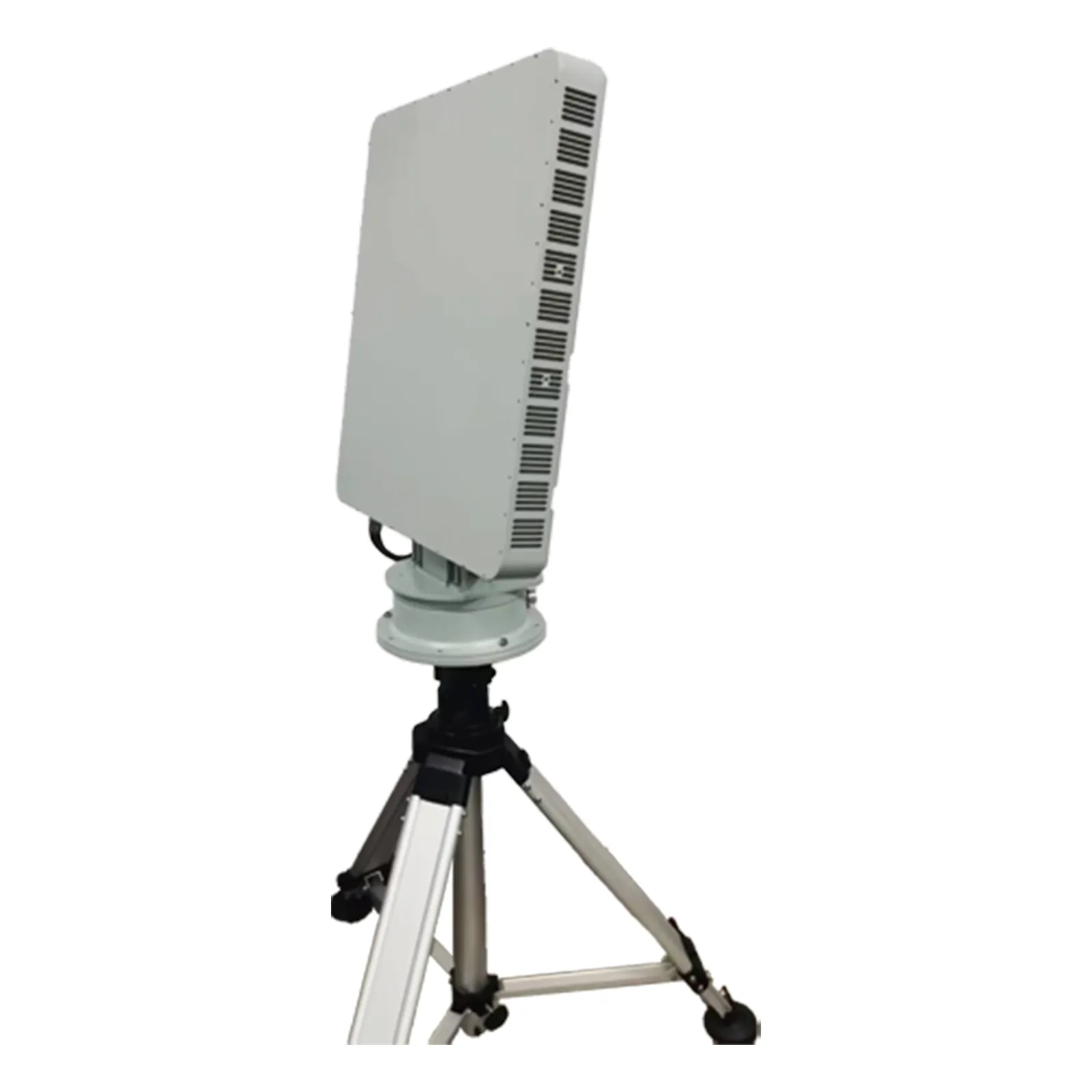
What’s trending
- GaN-on-SiC T/R modules for higher power and cooler operation.
- AESA architectures with smarter beam scheduling (multi-mission in one scan).
- Counter-UAS, coastal surveillance, and mobile perimeter security leading demand.
- Smaller SWaP-C packages for drones and vehicle mounts; ruggedized IP66+ outdoors.
Specs at a glance
Real deployments vary with clutter, humidity, and target RCS—so take these as practical, not brochure-gloss.
| Array type | Active AESA, modular panels |
| Frequency bands | S/C/X (selectable per build) |
| Elements / T/R modules | ≈256–1024 (scalable) |
| Beam steering | ±60° electronic; re-point ≈1–5 ms |
| Range (1 m² RCS) | ≈20–35 km in X-band, low sea state |
| Sidelobes | ≤ -20 dB typical |
| MTBF / life | >50,000 h MTBF; 10–12 yr service life |
| Ingress / survivability | IP66+, MIL-STD-810H (select methods) |
| Interfaces | GbE, PPS/1PPS, NTP/PTP, SDK & REST |
Note: values are typical; real-world use may vary.
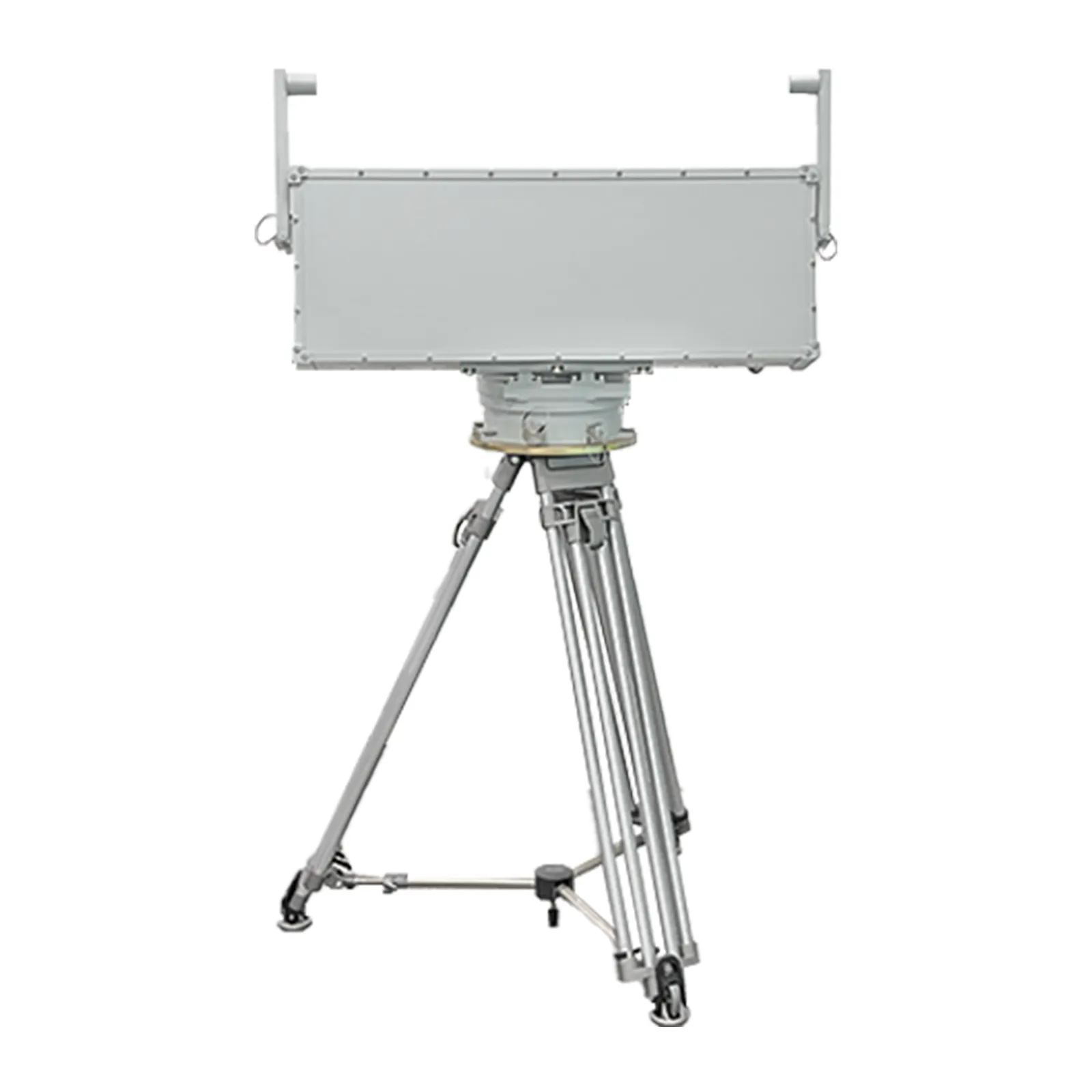
How it’s built (quick process walk)
Materials: GaN-on-SiC T/R modules, low-loss PTFE laminates, aluminum honeycomb backplane, and a hydrophobic quartz-fiber radome. Methods: SMT reflow, precision wire-bond/flip-chip, array phase calibration, environmental stress screening. Testing: MIL-STD-461G EMC, MIL-STD-810H thermal/altitude/vibe, RTCA DO-160G for aviation variants. Reported factory data showed phase error σφ ≈ 1.5–2.0° and channel gain match within ≈0.7 dB across temperature.
Where it’s used
- Counter‑UAS and airspace awareness for critical infrastructure.
- Coastal and riverine surveillance; small craft detection in clutter.
- Vehicle or mast-mounted perimeter security, pop-up missions.
- UAV sense-and-avoid payloads (lightweight panel variants).
Vendor snapshot (unscientific, but useful)
| Vendor | Core tech | Typical use | What stands out |
|---|---|---|---|
| Drone‑System (Longgang, Shenzhen) | AESA, GaN, modular panels | C‑UAS, mobile perimeter | Aggressive SWaP, fast lead times, customization |
| HENSOLDT | Air/maritime arrays | Naval/coastal | High-end maritime integration |
| Thales | Multi-mission AESA | Air & ground | Battle-proven networks |
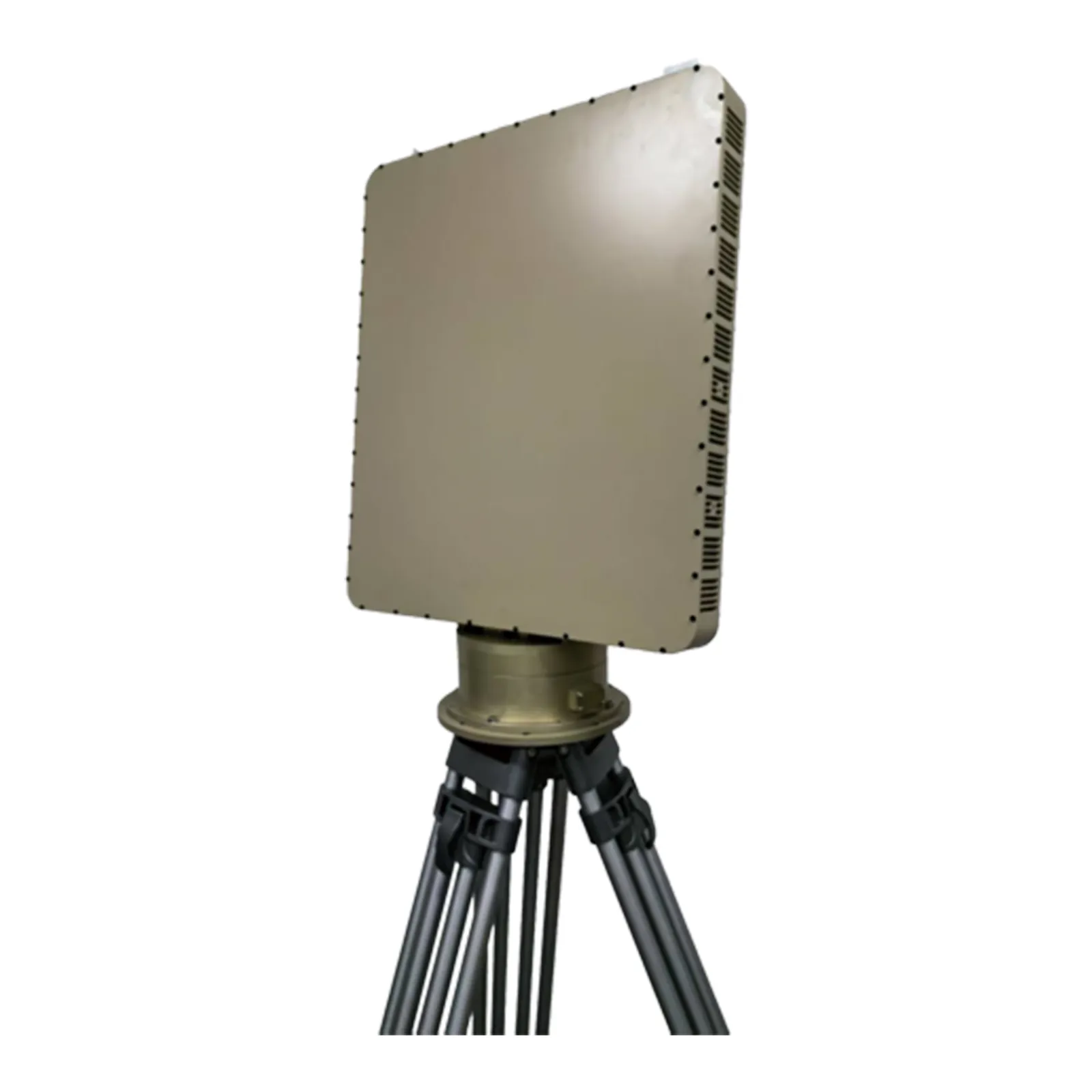
Customization and integrations
Frequency choices (S/C/X), panel sizing, power budgets, and API-level fusion with EO/IR and RF sensors. Common asks include geofencing filters, track‑while‑scan, and ADS‑B deconfliction. Certifications: ISO 9001, CE, RoHS; export and spectrum compliance per FCC Part 15/ETSI EN 301 489 when applicable.
Mini case notes
- Coastal site: one panel at 14 m AGL detected RCS≈0.3 m² targets at 9–12 km in sea state 2; false alarms dropped 30% after CFAR re‑tuning.
- Utility perimeter: dual panels created an overlapping fence—latency to cue PTZ cameras ≈180 ms on GbE.
- Integrator feedback: “setup felt refreshingly fast; phase calibration wizard saved us a day,” said a Southeast Asia partner.
Why it matters
The Phased Array Radar isn’t just faster; it’s re-taskable on the fly. Need a high-gain pencil beam for a small drone one second and a wide sector search the next? No problem. And the maintenance story—no rotating mass—keeps OPEX tame, which many customers say is the real win.
Citations
- IEEE Std 149-2021: Antenna Test Procedures.
- MIL-STD-810H: Environmental Engineering Considerations and Laboratory Tests.
- MIL-STD-461G: Requirements for the Control of EMI.
- RTCA DO-160G: Environmental Conditions and Test Procedures for Airborne Equipment.
- ITU-R M.1849-1: Technical and operational characteristics of radiolocation radars.

-
 09 March 2021 16 Apr 2026
 -
 09 March 2021 09 Apr 2026
 -
 09 March 2021 07 Apr 2026
 -
 09 March 2021 04 Apr 2026
 -
 09 March 2021 31 Mar 2026
-
 09 March 2021 21 May 2025
 -
 09 March 2021 25 Dec 2024
 -
 09 March 2021 14 Oct 2022
-
 09 March 2021 25 Dec 2024

 English
  Arabic
  Belarusian
  Danish
  Dutch
Dutch  French
  German
  Greek
Greek  Japanese
  Korean
  Myanmar
  Polish
  Portuguese
  Russian
  Spanish
  Swedish
  Thai
Thai  Ukrainian
  Vietnamese