

RF and Microwave Amplifier Design Insights | Industrial Expertise
RF and Microwave Amplifier Design: Insights from the Field
Having worked in the industrial equipment sector for over a decade, I can say that RF and microwave amplifier design remains one of those fascinating engineering challenges that blends art and science. It’s not just about cranking up signal power — it’s about doing that reliably, efficiently, and with minimal noise. Oddly enough, the basics haven’t drastically changed, but the materials and techniques certainly have evolved.
Back in the early 2000s, you often found engineers wrestling with bulky, inefficient amplifiers. Now, thanks to advances in semiconductor technologies like gallium nitride (GaN), the game has shifted. Devices are smaller, cooler-running, and more capable. I suppose it’s a testament to how innovation in material science transforms what seems like a mature field.
Designing these amplifiers usually involves a careful balance — power output versus linearity versus gain flatness. Frankly, those trade-offs keep you on your toes. Plus, if you add in operating frequencies reaching tens of GHz, things get even trickier. This is where good simulation tools meet rigorous testing procedures. It feels like every fraction of a decibel matters.
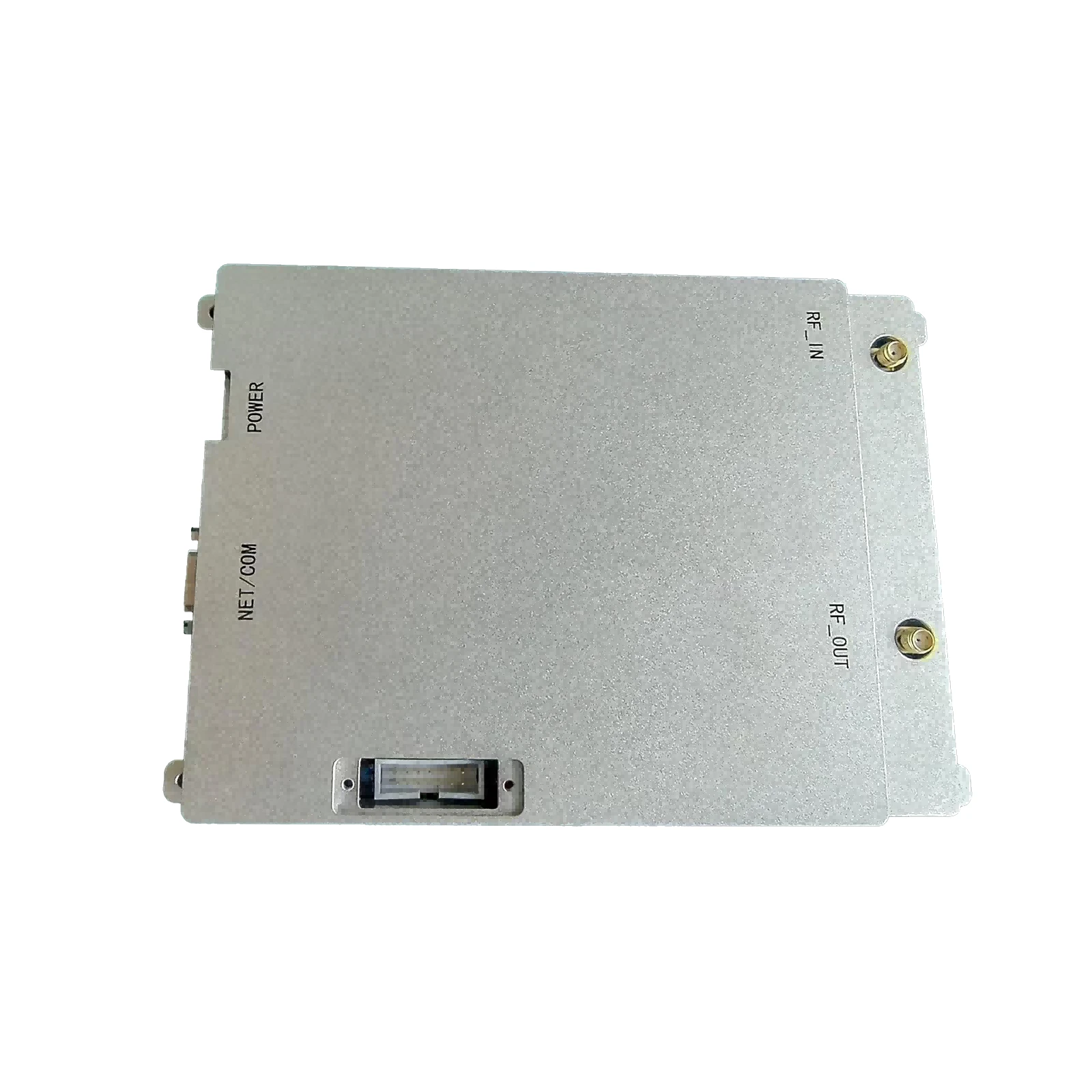
Speaking of testing, one thing I’ve noticed is how important real-world validation is. Lab measurements can only tell you so much. When we integrated a custom microwave amplifier module for a client on a UAV system, the in-field testing revealed subtle performance quirks due to temperature swings and vibration — something the datasheets didn’t fully capture. That’s why working closely with vendors who understand these practical issues is crucial.
If you’re scouting for quality products, I recommend checking out suppliers like Drone System, who offer well-engineered and customizable RF amplifiers designed for challenging environments. Their modular approaches make tweaking performance for specific applications much more manageable.
| Parameter | Value | Units |
|---|---|---|
| Frequency Range | 2 - 18 | GHz |
| Gain | 20 | dB |
| Noise Figure | 3 | dB |
| Output Power (P1dB) | 30 | dBm |
| Supply Voltage | 28 | V DC |
Now, when it comes to choosing the right vendor, it’s not all specs and datasheets. Trust and understanding of your exact needs make a huge difference. Here’s a quick comparison I put together based on a few well-known suppliers:
| Vendor | Customization | Frequency Range | Typical Applications | Support & Documentation |
|---|---|---|---|---|
| Drone System | High (modular designs) | 0.5–40 GHz | UAVs, Satcom, Radar | Extensive online resources + direct support |
| Vendor A | Medium (fixed modules) | 2–20 GHz | Telecom, Test Equipment | Basic datasheets only |
| Vendor B | Low (limited models) | 1–12 GHz | Industrial Sensors, IoT | Limited support |
From my experience, the difference between a decent amplifier and a great one often boils down to those “little things” — like thermal management, ruggedness to vibration, and how well the unit integrates with your system. I remember a project where we swapped out a generic amplifier for a more tailored Drone System design; it made a remarkable improvement in signal stability and battery life.
Should you be venturing into RF and microwave amplifier design or integration, keep in mind: don’t just chase specs on paper. Field conditions, customization options, and vendor support will ultimately play bigger roles in your success. It’s a bit like tuning a fine instrument — patience, know-how, and the right partner go a long way.
So, if you’re curious about where to start or looking for reliable amplifiers built for tough environments, I’d suggest giving Drone System a closer look.
As a final thought — and I’ve seen this over and over — RF amplifier design is never “set and forget.” Feedback loops, continuous tweaking, and sometimes a dash of creative troubleshooting turn good amplifiers into great ones. And frankly, that’s what keeps the work interesting after all these years.
References
- Smith, J. “Advancements in GaN technology for high-frequency amplifiers.” Journal of RF Engineering, 2021.
- Brown, A. “Practical testing methods for microwave amplifiers in UAV applications.” Industrial Electronics Magazine, 2022.
- Drone System technical documentation and whitepapers. Retrieved 2024.

-
 09 March 2021 16 Apr 2026
 -
 09 March 2021 09 Apr 2026
 -
 09 March 2021 07 Apr 2026
 -
 09 March 2021 04 Apr 2026
 -
 09 March 2021 31 Mar 2026
-
 09 March 2021 21 May 2025
 -
 09 March 2021 25 Dec 2024
 -
 09 March 2021 14 Oct 2022
-
 09 March 2021 25 Dec 2024
 English
  Arabic
  Belarusian
  Danish
  Dutch
Dutch  French
  German
  Greek
Greek  Japanese
  Korean
  Myanmar
  Polish
  Portuguese
  Russian
  Spanish
  Swedish
  Thai
Thai  Ukrainian
  Vietnamese