

RF Power Amplifier Basics: Insights from an Industrial Equipment Expert
RF Power Amplifier Basics: A Veteran’s Take
Having spent more than a decade working around industrial equipment — especially things like radio frequency (RF) power amplifiers — I’ve seen firsthand how these devices quietly power a surprising chunk of our modern world. If you’re new to the topic or just curious about what makes an RF power amplifier tick, I’ll take you through the essentials, with a bit of honest insight, no jargon overload.
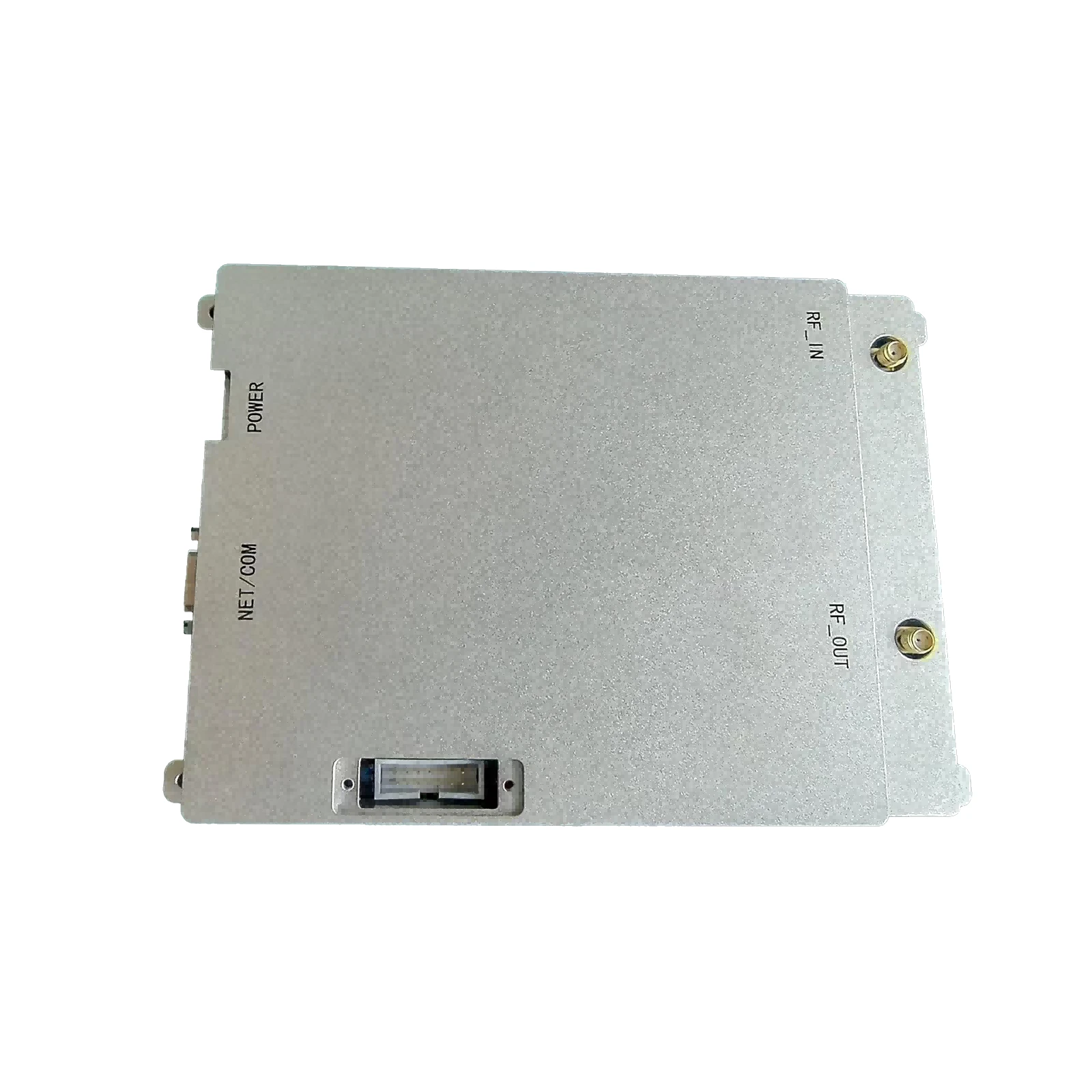
First off, RF power amplifiers are the workhorses that boost low-level RF signals into something strong enough to transmit across distances or drive industrial equipment. Think of them as the vocal cords for a wireless system — they need to amplify without distortion or excessive noise. In industrial settings, whether it’s communications, radar, or even medical systems, the amplifier’s performance often defines system reliability.
I recall once working on a custom unit where we had to balance raw output power with heat management—because frankly, these things can get blazing hot. The materials used, especially in the transistors and heat sinks, make or break durability. Lately, GaN (gallium nitride) technology has been turning heads for its efficiency and power density. Oddly enough, it feels like every supplier is racing to show off their GaN models, but silicon-based amps still have their feet firmly planted in many operations.
Testing and calibration is another tricky bit — you don't just plug one in and hope for the best. The linearity, gain compression, and intermodulation distortion are measured carefully to ensure the amplified output doesn’t introduce unwanted signal artifacts. I suppose many engineers say this is where the “art” meets “science.”
| Spec | Typical Values | Notes |
|---|---|---|
| Frequency Range | 500 MHz – 3 GHz | Suitable for most industrial bands |
| Output Power | 20 – 50 W | Varies by model and application |
| Gain | 30 – 40 dB | Higher gain helps with weaker input signals |
| Power Supply | +12V to +48V DC | Common industrial voltages |
| Efficiency | 40% – 70% | Higher efficiency reduces heat issues |
Nowadays, choosing the right vendor is almost as important as the specs themselves. Quality control, support, and track record become crucial when downtime costs are sky-high. Let me share a quick comparison I often reference when clients ask me for recommendations.
| Vendor | Product Range | Tech Innovation | Customer Support | Typical Lead Time |
|---|---|---|---|---|
| Amplitech Co. | Wide (10 W–1 kW) | Current GaN focus | 24/7 Technical support | 4–6 weeks |
| Pulse Systems | Mid-range (20 W–200 W) | Proprietary linearization tech | Limited business hours | 3–5 weeks |
| RadionX Corp. | Narrow focus (high power) | State-of-the-art cooling | Excellent engineering consult | 6–8 weeks |
One thing many folks overlook though—customization options. Sometimes tweaking the input impedance or changing the connector styles can save hours in installation or troubleshooting. I remember a customer who needed an amplifier that could endure continuous burst workloads with minimal downtime — a slight modification on the cooling system turned the whole project around.
To sum up, RF power amplifiers may seem like black boxes, but once you understand their core function—boosting signals while managing heat and distortion—you realize there’s a fascinating blend of physics and craftsmanship at play. When picking one out, pay attention to specs but never underestimate good vendor support and the ability to adapt the gear to the real world.
For anyone working on wireless systems, industrial communications, or related fields, this is a cornerstone component worth knowing in and out. And if you want a quick jumpstart to solid offerings, RF power amplifier selections there typically cover the bases with solid reliability.
In the end, it feels a little like tuning a fine instrument—a combo of tech, skill, and patience.
References:
- Manufacturer technical datasheets and whitepapers.
- Industry forums and expert interviews (my personal notes).
- Testing protocols from RF engineering standards.

-
 09 March 2021 16 Apr 2026
 -
 09 March 2021 09 Apr 2026
 -
 09 March 2021 07 Apr 2026
 -
 09 March 2021 04 Apr 2026
 -
 09 March 2021 31 Mar 2026
-
 09 March 2021 21 May 2025
 -
 09 March 2021 25 Dec 2024
 -
 09 March 2021 14 Oct 2022
-
 09 March 2021 25 Dec 2024
 English
  Arabic
  Belarusian
  Danish
  Dutch
Dutch  French
  German
  Greek
Greek  Japanese
  Korean
  Myanmar
  Polish
  Portuguese
  Russian
  Spanish
  Swedish
  Thai
Thai  Ukrainian
  Vietnamese