

RF Power Amplifier Basics – Understanding Key Concepts & Industry Applications
RF Power Amplifier Basics: What You Need to Know
In today’s connected world, understanding rf power amplifier basics isn’t just for engineers tinkering in labs; it’s essential knowledge for anyone involved in wireless communications, from telecom operators to disaster relief organizers. At its core, rf power amplification boosts radio frequency signals so they can travel further, penetrate obstacles, and maintain quality. This fundamental technology powers everything from your mobile phone conversations to emergency alert systems, and it’s only growing more important as demand for wireless connectivity explodes worldwide.
Why RF Power Amplifiers Matter Globally
The global telecommunications industry is expected to surpass $1.5 trillion by 2027, with wireless networks responsible for the lion’s share of that growth (source: World Bank). As billions in remote, underserved areas gain access to mobile data, the ability to efficiently amplify RF signals is a critical bottleneck. Not only do these amplifiers enable reliable coverage in dense cities, but they also play a vital role in reaching isolated regions — often where conventional infrastructure struggles to exist.
Oddly enough, the challenge is not just increasing power but doing so sustainably and with minimal interference. Power amplifiers burn out easily if not designed well, and inefficient ones drain energy — a real concern both economically and environmentally.
Defining RF Power Amplifier Basics
So what exactly are rf power amplifiers? Simply put, they are electronic devices that increase the power of a radio frequency signal. Imagine whispering into a megaphone — the amplifier is the megaphone making your voice carry across a stadium. In technical terms, they take a low-power RF input signal and boost it to a higher power output without distorting the information embedded in it.
This capability is fundamental for applications like satellite communication, radar, cellular base stations, and even some medical devices. As wireless technology evolves, understanding how these amplifiers operate becomes crucial for optimizing networks and ensuring clear, uninterrupted communications.
Core Aspects of RF Power Amplifiers
1. Efficiency
Efficiency relates to how much of the input electrical power is converted into useful RF output rather than wasted as heat. High efficiency means less energy consumption — critical in systems where power resources are limited, such as remote towers or battery-powered devices.
2. Linearity
Linearity refers to the amplifier’s ability to output signals without distortion. This ensures that signals maintain integrity and don’t interfere excessively with neighboring channels. Linearity can often be a trade-off with efficiency, so designers must strike a careful balance.
3. Frequency Range
Different applications require amplifiers that operate across vastly different frequency bands — from a few megahertz for AM radio to multiple gigahertz for 5G cellular networks.
4. Power Output
The actual power level (watts) that the amplifier can deliver determines how far and clearly a signal transmits.
5. Durability
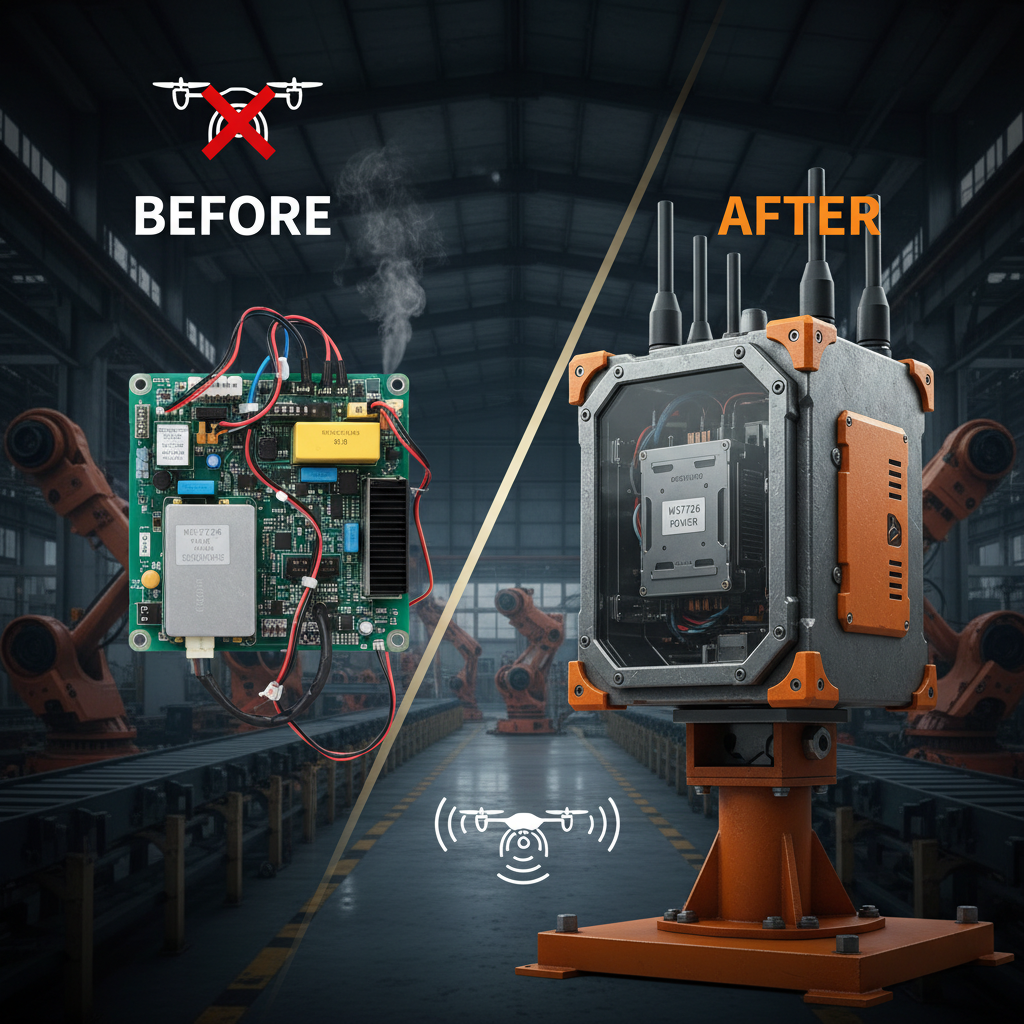
Physical robustness is often overlooked but is incredibly important. Amplifiers used outdoors or in harsh environments need to survive temperature swings, moisture, and vibration.
Mini Takeaway:
Understanding these fundamentals helps engineers choose or design the right RF power amplifier for each unique scenario, balancing efficiency and performance.
Typical RF Power Amplifier Product Specifications
| Specification | Value / Unit |
|---|---|
| Frequency Range | 700 MHz – 3 GHz |
| Output Power | +40 dBm (10 W) |
| Efficiency | 65% |
| Linearity (IMD3) | -30 dBc |
| Operating Temperature | -40 °C to +85 °C |
| Package Size | 50 x 50 x 10 mm |
Global Applications & Use Cases
RF power amplifiers are everywhere—in a way, invisible yet indispensable. For instance:
- Telecommunications: Cell towers regularly use power amplifiers to extend reach and maintain signal clarity. The recent rollout of 5G networks adds complexity and urgency to amplifier design.
- Disaster Relief Operations: In post-disaster zones where infrastructure is compromised, portable RF amplifiers help boost emergency communication signals, restoring contact with relief teams.
- Remote Industrial Zones: Mines or oil fields often depend on RF communications since terrestrial network lines are impractical.
- Military & Aerospace: Radar systems, satellite communications, and secure transmissions all demand robust RF amplification.
Regions like Sub-Saharan Africa and Southeast Asia see amplified demand for reliable wireless access — improving everything from healthcare delivery to education.
Mini Takeaway:
The versatility of RF amplifiers means they empower technologies and services that touch billions worldwide, often in unexpected ways.
Vendor Comparison: Popular RF Power Amplifier Providers
| Vendor | Frequency Coverage | Efficiency | Price Range | Notable Features |
|---|---|---|---|---|
| Company A | 0.5–3.5 GHz | 60% | $$$ | High linearity, rugged design |
| Company B | 700 MHz–2.7 GHz | 68% | $$ | Compact size, good balance |
| Company C | 1–5 GHz | 55% | $$$$ | Cutting-edge materials, high power |
Advantages & Long-Term Value of RF Power Amplifiers
Investing time to grasp the rf power amplifier basics leads to many clear benefits. For businesses, it means deploying more reliable networks that serve more customers. For communities, it translates to safer, more trustworthy communication capabilities — especially during emergencies.
From a sustainability standpoint, efficient amplifiers reduce energy consumption dramatically, helping facilities shrink their carbon footprints. And frankly, in a world increasingly dependent on wireless tech, the dignity and safety that comes from stable connectivity can’t be overstated.
Future Trends & Innovations in RF Amplification
Looking ahead, expect greater integration of gallium nitride (GaN) and silicon carbide (SiC) semiconductors, which offer higher power density and better heat resilience. Green energy initiatives also focus on making power amplifiers more energy-efficient and compatible with renewable power sources — not just saving money but helping meet international climate goals (see ISO energy standards).
Meanwhile, automation and AI-driven adaptive amplifiers could dynamically optimize performance in real-time, cutting waste and interference when network demand shifts — an exciting frontier for sure.
Challenges & Solutions in RF Power Amplifier Implementation
But it’s not all smooth sailing. Common hurdles include:
- Heat Dissipation: High power amplifiers generate heat that can degrade components unless effectively managed.
- Cost Constraints: High-performance parts can be pricey, especially for expansive networks.
- Signal Distortion: Balancing efficiency and linearity is tricky — mistakes can lead to network interference.
Innovative cooling techniques, modular designs, and hybrid materials are increasingly solving these issues, while ongoing research continues to push efficiency peaks upward.
FAQ: Frequently Asked Questions About RF Power Amplifier Basics
Q1: What factors should I consider when selecting an RF power amplifier?
A1: Consider efficiency, frequency range, output power, linearity, and environmental durability. The right choice balances your application’s needs, whether for long-range communications or compact device integration.
Q2: How long do typical RF power amplifiers last in the field?
A2: Lifespan varies, but well-designed amplifiers in controlled environments often last 10+ years. Outdoor or harsh conditions may reduce this, so ruggedized models or frequent maintenance are recommended.
Q3: Can RF power amplifiers be environmentally friendly?
A3: Yes. Modern designs emphasize energy efficiency and use eco-friendly materials. Integration with green energy systems further enhances sustainability.
Q4: How does amplifier linearity affect signal quality?
A4: High linearity ensures transmissions remain clear and reduces interference with adjacent channels, vital for multi-channel and broadband communications.
Q5: Are portable RF power amplifiers useful in emergency settings?
A5: Absolutely. Portable amplifiers restore reliable communication quickly in disaster zones where infrastructure is damaged or non-existent.
Conclusion
The journey through rf power amplifier basics reveals a beautifully complex area underpinning much of our wireless world. From improving global connectivity to ensuring safety and pushing technological frontiers, mastering these fundamentals pays dividends far beyond the lab. Curious to explore more or find the right amplifier for your project? Visit our website: https://www.drone-system.com to get started.
A little bit of power goes a long way — in RF, it means connecting the world.
References

-
 09 March 2021 16 Apr 2026
 -
 09 March 2021 09 Apr 2026
 -
 09 March 2021 07 Apr 2026
 -
 09 March 2021 04 Apr 2026
 -
 09 March 2021 31 Mar 2026
-
 09 March 2021 21 May 2025
 -
 09 March 2021 25 Dec 2024
 -
 09 March 2021 14 Oct 2022
-
 09 March 2021 25 Dec 2024



 English
  Arabic
  Belarusian
  Danish
  Dutch
Dutch  French
  German
  Greek
Greek  Japanese
  Korean
  Myanmar
  Polish
  Portuguese
  Russian
  Spanish
  Swedish
  Thai
Thai  Ukrainian
  Vietnamese