

RF Power Amplifier Design – Enhancing Efficiency and Connectivity Worldwide
Understanding RF Power Amplifier Design: Why It Matters Today
If you've ever got a signal from your smartphone, an amateur radio, or even a satellite link, chances are good that RF power amplifier design helped make that signal strong, clear, and reliable. But beyond the tech-savvy world, this design discipline quietly fuels global communications—from emergency disaster recovery to advancing remote industrial operations. In real terms, it underpins how billions stay connected, making it an engineering topic with surprisingly broad impact.
Why does this matter globally? Well, according to the International Telecommunication Union (ITU), over 4 billion people worldwide are connected to the internet, many relying on wireless links energized by carefully designed RF power amplifiers.1 Designing these amplifiers effectively isn’t just about strength but also efficiency, cost, and adaptability, especially in regions where infrastructure is patchy or disrupted. So understanding rf power amplifier design isn’t just deep tech jargon — it’s a key to bridging digital divides worldwide.
Putting It in Context: The Global Role of RF Power Amplification
The world’s thirst for wireless data keeps growing exponentially—whether that’s 5G networks in booming cities or low-bandwidth satellite communication in deserts and oceans. According to data from the World Bank, nearly half the global population still suffers from inadequate internet access or slow wireless, and that’s in 2024.2 One big bottleneck? The power amplifiers that boost signals without wasting precious energy or creating interference.
Wireless systems everywhere face tough challenges: power consumption, heat dissipation, device miniaturization... Without smart RF power amplifier design, networks risk higher costs, outages, or slower coverage. Engineers today aim to overcome these hurdles with designs that balance performance with sustainability—a hot topic since the UN and ISO are really pushing industries to cut energy waste and emissions.3
What Exactly Is RF Power Amplifier Design?
At its core, RF power amplifier design is the art and science of creating circuits that boost low-power radio-frequency signals to higher power levels suitable for transmission. These circuits are the middlemen between your device’s tiny signals and the vast airwaves that span cities or even continents. The goal? Amp up signal strength while maintaining clarity, efficiency, and minimal distortion.
Think of an RF power amplifier as a megaphone for signals. In critical sectors like emergency response, remote sensing, or military communications, reliable amplification is vital. The whole concept links to modern industry needs like uninterrupted connectivity in remote oil rigs, or real-time data streams for disaster relief teams. So, it’s more than just radio buzz—it’s enabling technologies that safeguard lives and livelihoods worldwide.
Key Components of Effective RF Power Amplifier Design
1. Efficiency: Balancing Power with Heat
Many engineers say efficiency is the heart of RF amplifier design. Why? Because inefficiency converts lots of precious power into heat, which requires bulky cooling. Higher efficiency means longer battery life, reduced operational costs, and smaller hardware footprints.
2. Linearity: Ensuring Signal Integrity
Linearity prevents distortion, so the amplified signal stays true to the original. Nonlinear amplifiers might be powerful, but they muddle the signal—bad news for data rates and clarity.
3. Bandwidth: Wide vs. Narrow
Designers have to pick the right bandwidth. Wideband amplifiers handle many frequencies but sometimes at the cost of efficiency. Narrowband designs optimize power for a specific frequency range—often used in specialized industrial systems.
4. Thermal Management: Cooling Strategies
Amplifiers get hot. How they handle this heat affects reliability and lifetime. Good design includes clever heat sinks or even liquid cooling in extreme applications.
5. Size and Scalability
Portability matters—especially for field deployments. Amplifiers need to stay compact without sacrificing performance. Plus, some systems scale up via modular amplifier arrays.
Mini takeaway: Getting these fundamentals right means devices that deliver more signal with less hassle—saving money, space, and headaches.
Real-World Applications: Where RF Power Amplifiers Shine
Let’s zoom out and look at practice—to people, places, and problems.
- Post-disaster communications: After earthquakes or hurricanes, cell towers could be down. Temporary RF amplifier units boost signals for emergency responders and aid teams, keeping vital voice and data flows alive.
- Remote industrial zones: Mining operations in Africa or oil rigs in the North Sea use specialized RF power amplifiers to sustain communications where cables simply can't reach.
- Broadcasting: TV and radio transmitters require hefty, efficient power amplifiers to serve wide areas reliably. New digital broadcast standards lean heavily on intelligent amplifier designs.
- Military and aerospace: High-performance RF amplifiers are integral to radars, satellite links, and encrypted communications where failure is not an option.
Product Specifications: A Typical RF Power Amplifier Example
| Specification | Details |
|---|---|
| Frequency Range | 2 GHz - 6 GHz |
| Output Power | 40 Watts (Peak) |
| Gain | 28 dB |
| Efficiency | 55% |
| Linearity (IMD) | -30 dBc |
| Dimensions | 120mm × 80mm × 40mm |
Vendor Comparison: A Quick Look at Leading RF Amplifier Providers
| Vendor | Price Range | Efficiency | Frequency Support | Notable Features |
|---|---|---|---|---|
| AmplifyCo | $$$ (Premium) | 60% | 1-10 GHz | Advanced thermal cooling, compact design |
| PowerTone | $$ (Mid-Range) | 52% | 2-6 GHz | Good linearity, modular units |
| WaveTech | $ (Economy) | 45% | 1.5-5 GHz | Robust design for harsh environments |
Key Benefits and Long-Term Value of RF Power Amplifier Innovations
Transparent benefits of thoughtful rf power amplifier design include not only tangible cost-saving but also more reliable, sustainable wireless networks. Reduced energy consumption means lower environmental impact—something increasingly critical as industries face carbon regulations.
Emotionally and socially, better signal reliability saves lives and supports dignity. Imagine a rural clinic using satellite links powered by efficient amplifiers to get real-time medical advice during emergencies. It creates trust—a human connection that technology sometimes struggles to convey.
Emerging Trends and Technologies to Watch
Green energy integration is beginning to influence RF amplifier designs—solar-powered remote transmitters demand ultra-efficient components. Similarly, new semiconductor materials like GaN (Gallium Nitride) allow higher power densities with less heat, a game-changer in many fields.
Automation in RF design, leveraging AI for predictive maintenance and dynamic signal optimization, is another exciting frontier that could soon standardize how amplifiers self-tune for best performance.
Overcoming Obstacles: Challenges and Modern Solutions
Current limitations include the balancing act between power and heat. Many designs wrestle with miniaturization vs. cooling requirements. However, novel approaches like microfluidic cooling or adaptive bias circuits help tackle these pain points.
Moreover, integration with software-defined radio platforms offers flexibility, allowing a single amplifier to adjust frequency and gain on the fly—kind of like the Swiss Army knife for signals.
Frequently Asked Questions About RF Power Amplifier Design
Q1: Why is efficiency so crucial in RF power amplifiers?
A: Efficiency determines how much input electrical power is converted into useful signal output rather than wasted as heat. High efficiency means lower energy costs, smaller cooling needs, and longer device lifespan.
Q2: Can RF power amplifiers support multiple frequency bands?
A: Yes, some amplifiers are designed for broadband use to cover multiple bands but may sacrifice some efficiency or linearity. Narrowband amplifiers optimize performance for specific frequencies.
Q3: What industries rely most heavily on RF amplifier design?
A: Telecommunications, defense, aerospace, broadcasting, and emergency services all critically depend on advanced RF amplifier solutions to maintain robust communications.
Q4: How do environmental factors affect amplifier performance?
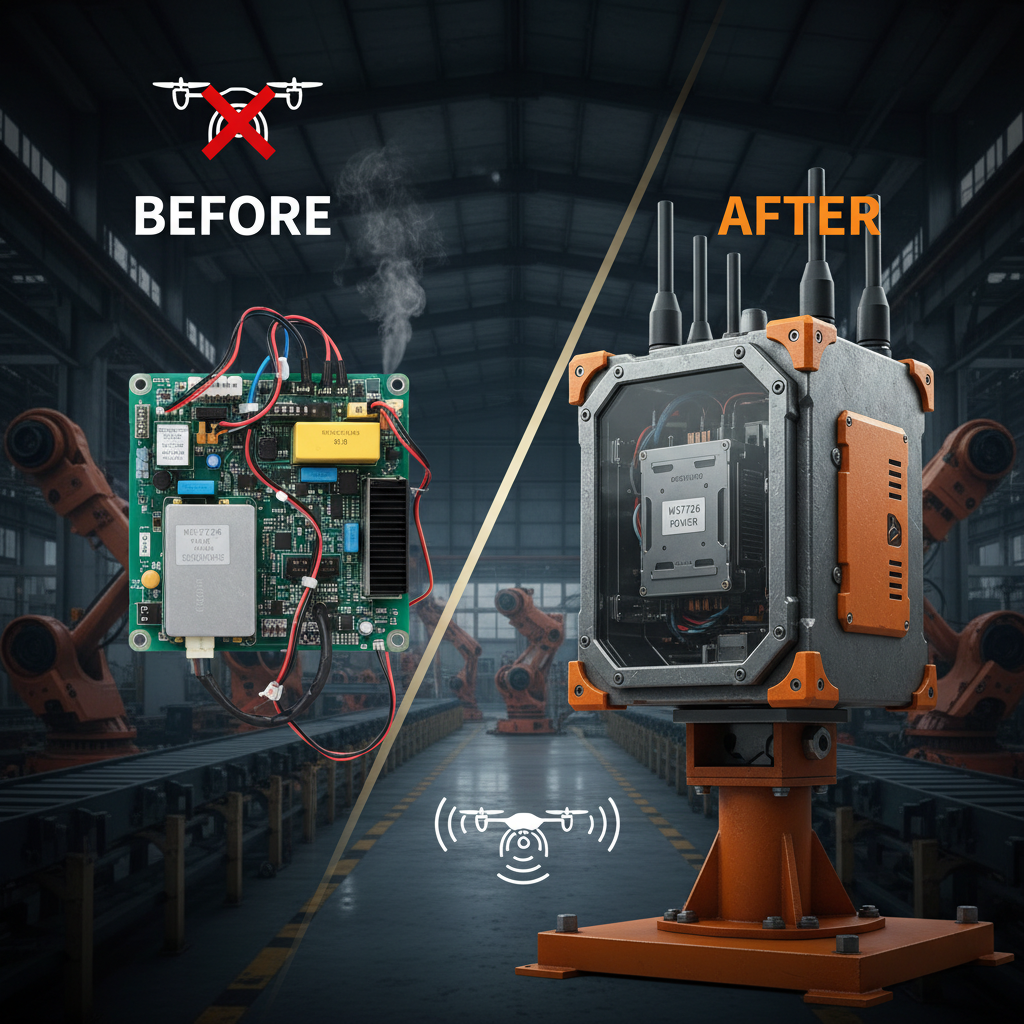
A: Temperature changes, moisture, and dust can degrade amplifier components or reduce efficiency. Hence, ruggedized designs with good thermal management are necessary for harsh environments.
Mini takeaway: Practical RF power amplifier knowledge bridges theory and application, helping engineers and users alike maximize connectivity benefits.
Wrapping Up: Why RF Power Amplifier Design Is Worth Your Attention
To sum it up: mastering rf power amplifier design means unlocking the potential for faster, greener, more reliable wireless communications. As networks push farther into remote and delicate environments, the amplifier’s role only grows. If you’re tackling connectivity challenges, taking a deep dive into this subject is not just smart—it’s necessary.
Curious to learn more or see design examples? Visit our website for in-depth guides and product demos tailored to today’s wireless landscape.
References

-
 09 March 2021 16 Apr 2026
 -
 09 March 2021 09 Apr 2026
 -
 09 March 2021 07 Apr 2026
 -
 09 March 2021 04 Apr 2026
 -
 09 March 2021 31 Mar 2026
-
 09 March 2021 21 May 2025
 -
 09 March 2021 25 Dec 2024
 -
 09 March 2021 14 Oct 2022
-
 09 March 2021 25 Dec 2024

 English
  Arabic
  Belarusian
  Danish
  Dutch
Dutch  French
  German
  Greek
Greek  Japanese
  Korean
  Myanmar
  Polish
  Portuguese
  Russian
  Spanish
  Swedish
  Thai
Thai  Ukrainian
  Vietnamese