

Simple RF Amplifier: Boosting Wireless Signals with Reliable Efficiency
Understanding the Humble Power Behind Wireless Communication: The Simple RF Amplifier
Simple RF amplifiers might not grab headlines like flashy smartphones or cutting-edge satellites, but their role in global communication, defense, and humanitarian efforts is genuinely enormous. Roughly put, these handy components boost weak radio signals, making wireless transmissions clearer, farther, and more reliable. Given today’s endlessly connected world, understanding simple RF amplifiers isn’t just technical trivia — it’s foundational to grasping how signals whisper across continents and oceans.
And here’s where it gets interesting: from enabling emergency responders in disaster zones to supporting vast industrial automation systems, simple RF amplifiers quietly solve a major problem — how to keep data flowing over the airwaves without losing signal strength or quality.
The Global Context: Why Simple RF Amplifiers Matter More Than Ever
Consider this: The International Telecommunication Union reports that over 5 billion people worldwide now use mobile devices, a figure steadily climbing with expanding coverage into remote areas. That’s billions of radio signals buzzing nonstop. But quality wireless communication isn’t just about connecting people on social apps — there’s a huge demand in sectors like agriculture, transportation, emergency relief, and the military. In fact, according to the World Bank, reliable communications infrastructure is a key driver in economic development, especially in underserved regions.
Simple RF amplifiers address the worldwide challenge of signal attenuation and interference. Their role is critical wherever radio frequency transmissions must punch through obstacles, long distances, or noisy environments. Without efficient amplification, devices risk dropping signals, increased power consumption, and wasted resources.
Mini takeaway: Given the explosive growth of wireless tech, simple RF amplifiers are the unsung heroes that keep our connected lives running smoothly.
What Exactly Is a Simple RF Amplifier?
At its core, a simple RF amplifier is an electronic device that takes a weak radio frequency input signal and increases its power output without distorting the original message. Think of it as a microphone for invisible signals — making whispers extra loud but keeping every detail intact.
Unlike complex multi-stage or highly specialized amplifiers used in advanced radar or satellite systems, simple RF amplifiers typically focus on straightforward amplification over a specific frequency range and often come at a lower cost and complexity. This makes them ideal for wide applications, including communication devices, signal testers, and basic transmitter modules.
Because RF amplifiers operate in radio frequencies (roughly 3 kHz to 300 GHz), their design must respect intricate physics — impedance matching, gain stability, and noise reduction — even in a “simple” setup.
Mini takeaway: Simple RF amplifiers strike a balance between effective signal strength and affordability, making them indispensable in countless devices.
Core Components and Key Factors That Define Simple RF Amplifiers
1. Gain (Amplification Factor)
Gain represents how much an amplifier boosts a signal's power, usually measured in decibels (dB). For simple RF amplifiers, engineers aim for a steady, predictable gain — not too high to avoid distortion, nor too low to be ineffective. It’s the sweet spot that keeps signals strong and clean.
2. Frequency Range
Simple RF amplifiers are often designed for narrow frequency bands to maximize efficiency. For example, an amplifier used in VHF amateur radios won't cover microwave frequencies. Picking the right frequency range keeps noise low and performance optimal.
3. Noise Figure
This is about how much unwanted interference an amplifier adds while boosting signals. A lower noise figure means the signal remains clear, which is particularly essential for applications like medical telemetry or remote sensing.
4. Power Consumption and Efficiency
Since many simple RF amplifiers power portable or remote devices, they must balance signal gain with energy use. Efficient designs stretch battery life without sacrificing performance.
5. Physical Size & Durability
In rugged field use — say, post-disaster recovery — a small, sturdy amplifier can make a huge difference. That’s why miniaturized, robust packaging is a real plus.
6. Cost and Scalability
Keeping costs down while enabling mass production helps put RF amplifiers into consumer gadgets and industrial tools alike. Scalability often means choosing standardized components and modular designs.
Mini takeaway: Simple RF amplifiers are all about smart compromises — balancing gain, noise, power use, and size to get practical, reliable results.
How Simple RF Amplifiers Power Real-World Applications
You’ll find simple RF amplifiers behind many key operations worldwide. A few highlights:
- Disaster Relief: After earthquakes or floods, communication networks collapse. Portable radios with simple RF amplifiers enable first responders to set up emergency comms fast.
- Remote Industrial Sites: Mining or oil rigs in isolated areas rely on radio links boosted by simple RF amplifiers for real-time equipment monitoring.
- Consumer Wireless Devices: From walkie-talkies to basic IoT sensors, simple amplifiers ensure signals reach receivers without gulping battery power.
- Education & Research: Amateur radio enthusiasts and university labs use these amplifiers for experimentation and hands-on learning.
Interestingly, in emerging markets across Africa and Southeast Asia, simple RF amplifiers help extend mobile coverage where infrastructure remains thin — empowering everything from mobile banking to telemedicine.
Mini takeaway: The “simple” RF amplifier quietly acts as a bridge — linking distant voices, vital data, and emergency responders in tough spots.
Advantages and the Long-Term Value of Simple RF Amplifiers
The charm of simple RF amplifiers lies in their:
- Cost efficiency: Affordable both to manufacture and maintain.
- Reliability: Straightforward design means fewer points of failure, essential in critical communication.
- Energy-saving operation: Lower power demands mean longer device uptime.
- Scalability: From single units to large arrays, easy to adapt without reinventing the wheel.
On a human level, they bring safety and dignity by sustaining communication in crises. For engineers, the stable, predictable performance builds trust. And for innovators, their simplicity invites clever adaptations — like combining with IoT tech or solar-powered nodes.
Looking Ahead: Future Trends in Simple RF Amplifiers
We’re starting to see exciting trends shaping this niche:
- Green Amplification: Incorporating ultra-low-power materials and circuits to support renewable-energy-powered devices.
- Digital Integration: Embedding amplifiers alongside digital signal processing to enhance clarity and reduce interference.
- Miniaturization: Advances in semiconductor tech shrinking the size even further, for wearable or embedded systems.
- Automatic Tuning: Self-adjusting gain and frequency parameters to optimize performance dynamically.
In this quiet evolution, simple RF amplifiers become smarter, greener, and more flexible without losing their foundational strengths.
Overcoming Challenges: Common Issues and Practical Solutions
Of course, simple RF amplifiers aren’t magic bullets. They face issues like:
- Interference: Nearby electronics can jam signals if shielding isn’t well-designed.
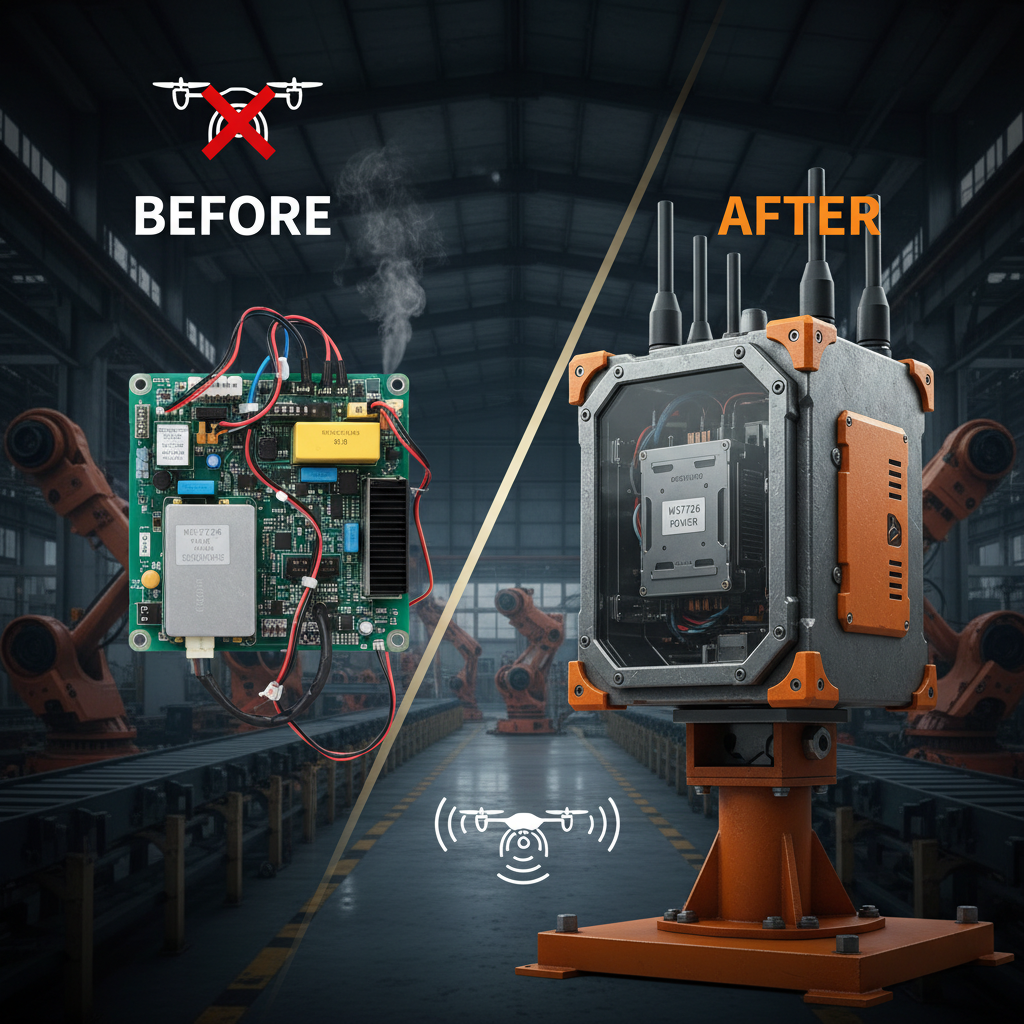
- Heat Dissipation: Even simple amplifiers generate heat that must be managed to avoid damage.
- Component Variability: Cheap parts can cause inconsistent gain and noise levels.
Experts suggest:
- Using metal enclosures and careful circuit layouts for shielding.
- Employing heat sinks or thermally conductive materials.
- Investing in quality, standardized components without breaking the bank.
Ultimately, no single solution fits all — but experience-driven design tweaks and modular building blocks keep simple RF amplifiers robust and adaptable.
FAQ: Your Simple RF Amplifier Questions Answered
- Q1: What makes a simple RF amplifier better than a complex one in everyday use?
- A: Simple RF amplifiers generally offer easier maintenance, lower cost, and sufficient performance for many applications like handheld radios or IoT devices. They focus on reliability over raw power or complex features.
- Q2: How long can a simple RF amplifier last in harsh environments?
- A: With proper enclosure and thermal management, simple RF amplifiers can last years — often 5 to 10 — even in tough outdoor or industrial settings.
- Q3: Are simple RF amplifiers energy efficient?
- A: Yes, their straightforward design often results in reduced power consumption, ideal for battery-operated or solar-powered devices.
- Q4: Can I integrate a simple RF amplifier into a large wireless network?
- A: Absolutely. Many networks use simple RF amplifiers as building blocks to strengthen signals across vast distances, especially when combined with repeaters or digital processing.
- Q5: Where can I buy reliable simple RF amplifiers?
- A: Trusted electronics distributors and specialty RF vendors offer a variety of models. Always consider specs relevant to your frequency and power needs.
Product Specification Table: Typical Simple RF Amplifier Model
| Specification | Value/Range |
|---|---|
| Frequency Range | 100 MHz – 1 GHz |
| Gain | 20 dB ± 1 dB |
| Noise Figure | |
| Power Consumption | 250 mW typical |
| Output Power | +15 dBm max |
| Operating Temperature | -40°C to +85°C |
| Dimensions | 25 x 15 x 5 mm |
Vendor Comparison: Popular Simple RF Amplifier Suppliers
| Vendor | Model Examples | Typical Applications | Price Range (USD) |
|---|---|---|---|
| RF Solutions Inc. | RS100, RS200 | Handheld radios, portable comms | $15 - $35 |
| WaveAmp Technologies | WA-Q1, WA-QX | Industrial IoT sensors, telemetry | $20 - $50 |
| MicroGain Electronics | MG-10, MG-20 | Amateur radio, education kits | $10 - $25 |
Wrapping Up: Why Simple RF Amplifiers Still Matter
In real terms, the simple RF amplifier is a remarkable example of “doing more with less.” With minimal fuss and cost, these devices keep our communications alive, reliable, and accessible, from the bustling cityscape to remote corners of the world. While the wireless world races toward 5G and beyond, the humble RF amplifier remains a foundational building block, quietly amplifying signals — and the human voices behind them.
If you’re intrigued by how such straightforward tech can power profound global connections, I encourage you to explore more on simple rf amplifier. Who knows, the next signal you send might be riding on one of these unassuming yet vital amplifiers.
It's fascinating how fundamental components like these quietly underpin our connected world. Sometimes, the simplest tech has the biggest impact.
References:
1. International Telecommunication Union (ITU). “Measuring digital development.”
2. World Bank. “Information and Communication Technologies.”
3. IEEE Standard on RF Amplifiers.

-
 09 March 2021 16 Apr 2026
 -
 09 March 2021 09 Apr 2026
 -
 09 March 2021 07 Apr 2026
 -
 09 March 2021 04 Apr 2026
 -
 09 March 2021 31 Mar 2026
-
 09 March 2021 21 May 2025
 -
 09 March 2021 25 Dec 2024
 -
 09 March 2021 14 Oct 2022
-
 09 March 2021 25 Dec 2024

 English
  Arabic
  Belarusian
  Danish
  Dutch
Dutch  French
  German
  Greek
Greek  Japanese
  Korean
  Myanmar
  Polish
  Portuguese
  Russian
  Spanish
  Swedish
  Thai
Thai  Ukrainian
  Vietnamese