

Understanding High Frequency RF Amplifiers for Modern Communication
What is a High Frequency RF Amplifier and Why It Matters
In the fast-evolving world of wireless communication, the high frequency RF amplifier plays an often behind-the-scenes yet absolutely critical role. Whether it’s enabling clearer signals for global satellite networks or powering radar systems that keep our skies safe, these amplifiers are the unsung heroes of modern connectivity. Understanding their function and benefits isn’t just for engineers; it's important for anyone curious about how the invisible waves around us keep the world talking.
Globally, this technology underpins industries from telecom to defense, impacting billions of lives and countless business operations. It’s not just a piece of hardware—it’s a cornerstone in the infrastructure of today’s digital age.
Mini takeaway: Grasping what high frequency RF amplifiers bring to the table helps us appreciate the complexity behind everyday wireless marvels.
The Global Pulse: Why High Frequency RF Amplifiers Are More Relevant Than Ever
The demand for faster, more reliable wireless connections has skyrocketed. According to the International Telecommunication Union (ITU), over 67% of the world’s population are internet users as of 2023, relying heavily on wireless technologies that depend on efficient RF amplification. With emerging 5G networks and expanding satellite internet constellations, the need for powerful, stable, and low-noise high frequency RF amplifiers grows exponentially.
Moreover, global challenges such as disaster response efforts and remote area connectivity bring new pressure to deploy systems that remain robust under tough conditions. Typical signal loss or interference can mean the difference between life and death in a crisis, so the quality and reliability of these amplifiers are no small matter.
Mini takeaway: High frequency RF amplifiers are at the heart of addressing connectivity challenges worldwide, from urban centers to the most isolated regions.
Defining the High Frequency RF Amplifier
Put simply, a high frequency RF amplifier is an electronic device that boosts weak radio frequency signals without distorting the information they carry. Operating in the very high frequency (VHF) and ultra high frequency (UHF) ranges, these amplifiers enable signals to travel further and penetrate tougher obstacles.
They’re fundamental in industries ranging from telecommunications and broadcast media to radar operations and satellite communications. And in humanitarian settings, these amplifiers help maintain critical links for emergency teams working where infrastructure is minimal or damaged.
Mini takeaway: Think of a high frequency RF amplifier as your signal’s personal trainer, helping it go the distance stronger and clearer.
Core Components and Key Factors in High Frequency RF Amplifiers
Frequency Range and Bandwidth
The amplifier’s ability to handle wide bandwidths and operate efficiently at high frequencies is central. For example, satellite communications typically require amplifiers operating upwards of 1 GHz. Selecting the right frequency range affects not only performance but system compatibility.
Noise Figure and Signal Clarity
One of the tricky parts is keeping the added noise low. Amplifiers inevitably introduce some noise, but a high-quality high frequency RF amplifier minimizes this to maintain signal integrity—vital for applications like radar or secure military comms.
Power Output and Efficiency
The balance between power and energy consumption is a constant dance. Amplifiers must output enough power to overcome losses during transmission but must avoid overheating or becoming energy hogs, especially in remote installations.
Durability and Environmental Resilience
Because many are deployed in harsh environments—think desert telecom towers or oceanic weather stations—they need to resist temperature extremes, moisture, and vibration.
Cost and Scalability
While cutting-edge components command premium prices, balancing budget and performance is often the make-or-break factor. Furthermore, scalable designs allow integration into bigger systems or upgrading when requirements evolve.
Mini takeaway:
- Effective high frequency RF amplifiers juggle frequency handling, noise reduction, power efficiency, and durability.
- These elements all impact real-world usability and long-term reliability.
Real-World Applications Shaping Modern Life
These amplifiers do not just live in labs; they power tangible projects globally. For example:
- Satellite Internet Hubs: Remote regions in Sub-Saharan Africa and parts of Asia depend on high frequency amplifiers in ground stations to stay connected.
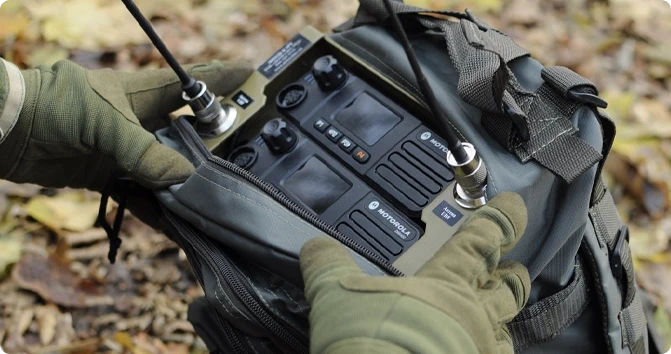
- Disaster Relief Communications: In hurricane-prone zones like the Caribbean, emergency radios fitted with robust RF amplifiers ensure continuous liaison when cellular networks fail.
- Military and Aerospace: Radar and communication arrays rely on high frequency amplifiers for precise detection and secure data exchange.
- Telecommunication Networks: With 5G rollouts in North America and Europe, upgraded RF amplification technology allows faster and more reliable mobile connections.
It feels like these devices are silently stitching together our connected world, in ways we often don’t immediately notice.
Advantages and Enduring Value
Why invest in the best high frequency RF amplifiers? The advantages are both tangible and somewhat intangible:
- Improved Signal Strength and Range: Less dropouts, more reliable links even in challenging terrain.
- Cost Efficiency over Time: Quality amplifiers reduce maintenance and replacement costs.
- Social Impact: Enabling connectivity in underserved areas contributes to economic growth and education.
- Safety and Trust: Reliable communication systems save lives and build resilience.
- Innovation Enablement: They’re a foundation for next-gen tech like IoT and automated systems.
Product Specification Table
| Specification | Typical Parameter | Description |
|---|---|---|
| Frequency Range | 500 MHz – 6 GHz | Supports common telecom and radar bands |
| Gain | 20–40 dB | Amplification factor of input RF signal |
| Noise Figure | Measurement of noise introduced by amplifier | |
| Output Power | +30 dBm (1 Watt) | Maximum power output delivered to the load |
| Power Supply | 12 V DC | Standard operating voltage input |
| Operating Temperature | -40°C to +85°C | Suitable for harsh environmental conditions |
How Different Vendors Stack Up
| Vendor | Frequency Range | Gain (dB) | Noise Figure (dB) | Power Output (dBm) | Notable Feature |
|---|---|---|---|---|---|
| AlphaTech | 0.5 – 4 GHz | 30 | 1.5 | 28 | High heat dissipation design |
| BetaWave | 1 – 6 GHz | 35 | 2.0 | 30 | Compact size for mobile use |
| Gamma Circuits | 0.8 – 5 GHz | 28 | 1.8 | 27 | Energy efficient circuit design |
Emerging Trends and Innovations in Amplification Technology
The race to develop smaller, more efficient, and greener amplifiers has led to some fascinating advances. For instance, the adoption of gallium nitride (GaN) semiconductors allows amplifiers to operate at higher power densities and temperatures than traditional silicon-based devices. This shift is critical for meeting the energy efficiency demands of modern telecom towers.
Also, with the digital transformation speeding up, software-defined RF amplification is gaining ground, enabling real-time adjustment of amplification parameters — improving flexibility and reducing downtime. And policymakers are increasingly emphasizing sustainability, incentivizing designs that integrate recyclable materials and lower energy footprints.
It’s a thrilling time because these innovations don’t just improve performance; they reshape how and where amplifiers can be deployed.
Addressing Challenges with Practical Solutions
Despite their importance, these amplifiers aren’t without challenges. For example, the trade-off between gain and noise figure often forces difficult compromises. Additionally, harsh environments can prematurely age electronic components, leading to failures.
Experts suggest regular environmental testing using standards like those from ISO helps predict reliability better. Additionally, modular amplifier designs simplify onsite repairs and updates — reducing downtime.
Finally, collaborations across manufacturers and end-users can develop customized solutions that uniquely fit operational scenarios, leading to smarter investment and better performance over time.
FAQ: Your Practical Questions Answered
Q1: How does a high frequency RF amplifier affect wireless signal quality?
A: By amplifying weak RF signals without adding excessive noise, the amplifier ensures signals stay strong and clear over longer distances, reducing dropouts and improving overall communication quality.
Q2: Are these amplifiers energy efficient, and why does that matter?
A: Modern designs focus heavily on power efficiency to lower operational costs and reduce heat generation, especially important for telecom towers in remote locations where cooling options are limited.
Q3: Can a high frequency RF amplifier be used for both terrestrial and satellite communications?
A: Yes, many amplifiers are designed to cover wide frequency ranges suitable for both, though the exact model should be chosen based on the required frequency band and power output.
Q4: What maintenance does a high frequency RF amplifier typically require?
A: Routine checks involve verifying power supply stability, inspecting connectors and housing for damage, and testing performance with signal analyzers to catch issues before failure.
Conclusion: Why Invest in Quality High Frequency RF Amplification?
At the end of the day, the reliability and efficiency of high frequency RF amplifiers determine how well our connected world functions in complex environments—from dense urban centers to isolated emergency relief fields. Investing in quality amplification technology means stronger communication links, longer equipment life, and ultimately, greater social and economic impact.
If you want to explore the latest in high frequency RF amplifiers—ones that combine advanced materials, efficiency, and robust design—be sure to visit our site for cutting-edge solutions tailored to your needs.
References

-
 09 March 2021 16 Apr 2026
 -
 09 March 2021 09 Apr 2026
 -
 09 March 2021 07 Apr 2026
 -
 09 March 2021 04 Apr 2026
 -
 09 March 2021 31 Mar 2026
-
 09 March 2021 21 May 2025
 -
 09 March 2021 25 Dec 2024
 -
 09 March 2021 14 Oct 2022
-
 09 March 2021 25 Dec 2024

 English
  Arabic
  Belarusian
  Danish
  Dutch
Dutch  French
  German
  Greek
Greek  Japanese
  Korean
  Myanmar
  Polish
  Portuguese
  Russian
  Spanish
  Swedish
  Thai
Thai  Ukrainian
  Vietnamese