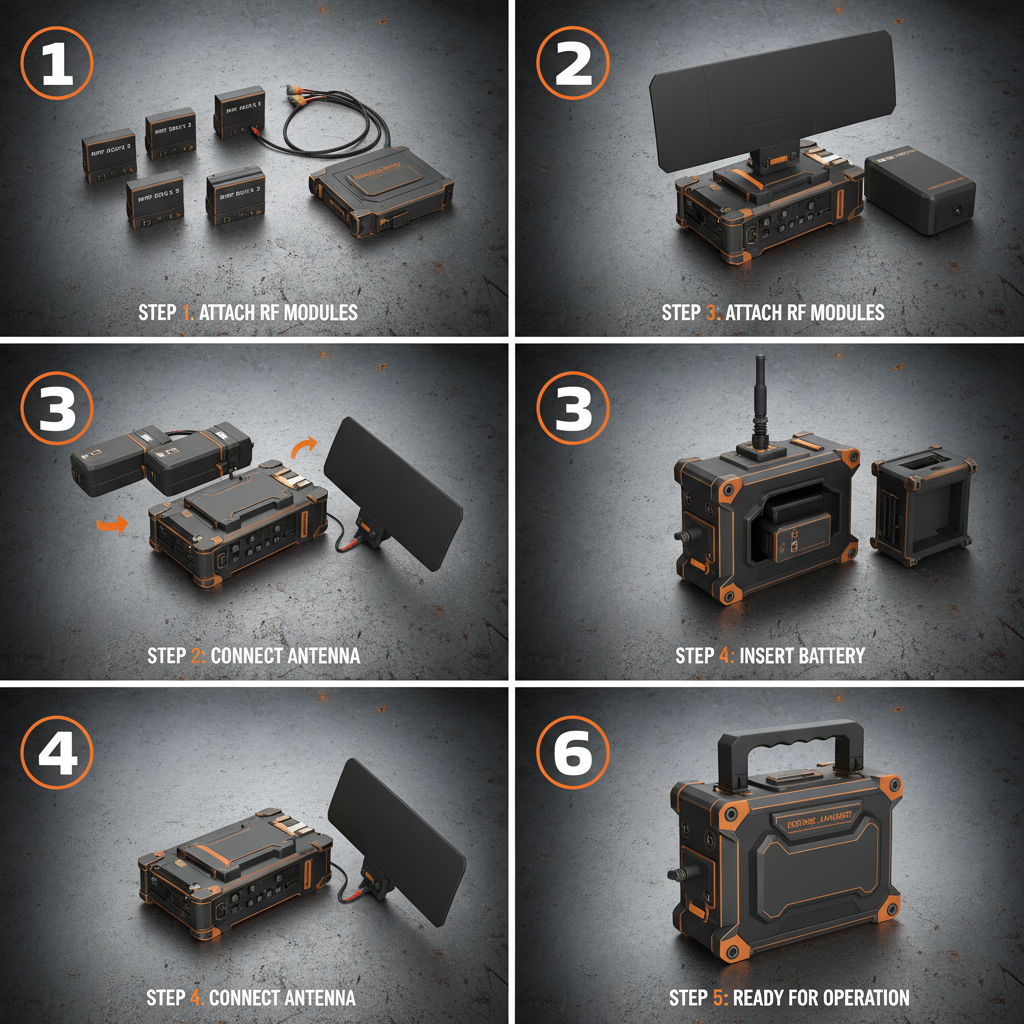

When engineers and procurement officers evaluate an rf kit power amplifier price, they are rarely looking for the cheapest component on the market. Instead, the focus is typically on the relationship between cost, signal integrity, and thermal stability in high-demand RF environments.
The pricing of RF power amplifier kits is rarely static, as it is driven by the specific frequency range, output power requirements, and the level of integration required for the final deployment, whether for telecommunications or specialized defense systems.
Understanding the underlying cost drivers allows organizations to optimize their hardware budgets without sacrificing the reliability of their wireless communication links or security infrastructure.

Analyzing the Primary Cost Drivers of RF Power Amplifiers

The total cost of an RF power amplifier kit is determined by more than just the transistors used. Material science plays a critical role, where the shift from traditional silicon to Gallium Nitride (GaN) or Gallium Arsenide (GaAs) significantly alters the price point due to superior power density and efficiency.
Furthermore, the precision of the matching networks and the quality of the thermal management system—such as heat sinks and specialized cooling interfaces—add layers of cost that directly correlate with the unit's longevity and stability under heavy load.
For customized broadband solutions, the engineering hours required for impedance matching across a wide spectrum (e.g., 300-6000MHz) often represent a significant portion of the initial investment compared to off-the-shelf narrowband components.
Technical Specifications that Influence Market Valuation
Gain stability and linearity are the primary benchmarks for high-end amplifiers. A kit that maintains a flat gain response across its entire bandwidth will naturally command a premium because it reduces the need for complex external equalization circuitry.
Harmonic distortion and spurious emissions also dictate the price; amplifiers designed to meet stringent international regulatory standards require superior filtering and shielding, increasing the manufacturing complexity.
Additionally, the integration level—whether the kit is a bare PCB or a fully shielded module with aviation-standard connectors—determines the final price and the ease of integration into larger systems like drone detectors or jammer chassis.
Deployment Scenarios for High-Efficiency RF Amplification
In the realm of counter-drone technology, RF power amplifiers are essential for extending the effective range of signal interruption. A 50W amplifier operating in the 300-6000MHz range allows a system to neutralize threats from a significant distance, ensuring perimeter security.
Beyond defense, these kits are utilized in specialized telecommunications infrastructure where signal boosting is required to overcome atmospheric attenuation or physical obstructions in rural deployments.
Another critical application is found in radar components and spoofing modules, where precise power control is necessary to simulate legitimate signals without creating detectable anomalies in the RF spectrum.
Comparing Performance Efficiency Across Power Levels
Evaluating the trade-off between output power and energy efficiency is vital for vehicle-mounted or handheld systems where battery life is limited. Higher power output typically leads to increased thermal dissipation requirements.
When comparing standard industry benchmarks against optimized RF kits, we often see a significant improvement in signal-to-noise ratios and thermal stability at higher power thresholds.
rf kit power amplifier price Performance Metrics
As illustrated, optimized kits can maintain higher efficiency levels (PAE) even as the frequency increases, which reduces the risk of component degradation over time.
Strategic Procurement Considerations for RF Hardware Kits
Procurement teams should prioritize the Total Cost of Ownership (TCO) over the initial purchase price. A cheaper amplifier that lacks adequate thermal protection may lead to frequent system failures and higher maintenance costs.
It is essential to verify the manufacturer's ability to provide customized tuning. Since every RF environment is different, the ability to adjust the amplifier's parameters to match specific antenna impedances can prevent signal reflection and power loss.
Furthermore, ensure that the kit includes comprehensive testing data, such as S-parameter files and power sweep charts, to verify that the hardware meets the claimed specifications before integration.
Evolution of Wideband Amplification and Future Price Trends
The industry is moving toward more integrated Software Defined Radio (SDR) compatible amplifiers. These systems allow for dynamic frequency adjustment, which may lead to a consolidation of hardware where one wideband amplifier replaces several narrowband units.
As Gallium Nitride (GaN) manufacturing processes mature and scale, the cost of high-power density amplifiers is likely to decrease, making professional-grade RF kits more accessible for small-scale security operations.
We may also see an increase in "intelligent" amplifiers that incorporate real-time thermal monitoring and automatic gain control to prevent burnout, adding a new layer of value to the standard RF kit.
Decision Matrix for Selecting the Right Amplifier Kit
Choosing the correct RF amplifier requires balancing technical requirements against the operational budget. The following matrix provides a framework for comparing different solution types based on common industry needs.
Whether you require a narrowband solution for a specific frequency or a broadband kit for versatile applications, the decision should be based on the intended environment and the required output power.
| Solution Type | Primary Frequency Use | Thermal Requirement | Cost Factor |
|---|---|---|---|
| Narrowband Kit | Fixed Single Band | Passive Cooling | Low to Moderate |
| Broadband Kit | 300-6000MHz Range | Active Heat Sinks | Moderate to High |
| GaN High-Power | High Frequency/High Watt | Forced Air/Liquid | High Premium |
| Customized ODM | Application Specific | Optimized Chassis | Variable (Engineering Lead) |
| Integrated Module | Multi-band SDR | Embedded Thermal | Moderate |
| Low-Noise Kit | Reception/Pre-Amp | Minimal/Ambient | Moderate |
Ultimately, the most cost-effective solution is one that aligns perfectly with the system's power budget and frequency requirements, minimizing waste and maximizing signal reach.
Frequently Asked Questions
Conclusion
Determining the right investment for an RF power amplifier requires a shift in perspective from simple unit cost to overall system performance. By focusing on efficiency, thermal stability, and frequency precision, organizations can ensure their communication and security infrastructure remains robust.
For professionals evaluating these technical requirements, comprehensive product details and corporate capabilities regarding RF solutions are available via www.drone-system.com.