

Efficient RF Class C Amplifier Insights from Industry Experts
Understanding the rf class c amplifier: A Practical Industry Perspective
Having spent a fair share of years surrounded by industrial equipment—and more than one late night troubleshooting RF amplifiers—I can say the rf class c amplifier holds a unique spot in the toolkit. Oddly enough, not every engineer truly appreciates how much these amplifiers punch above their weight in efficiency, especially when operating in high-frequency domains.
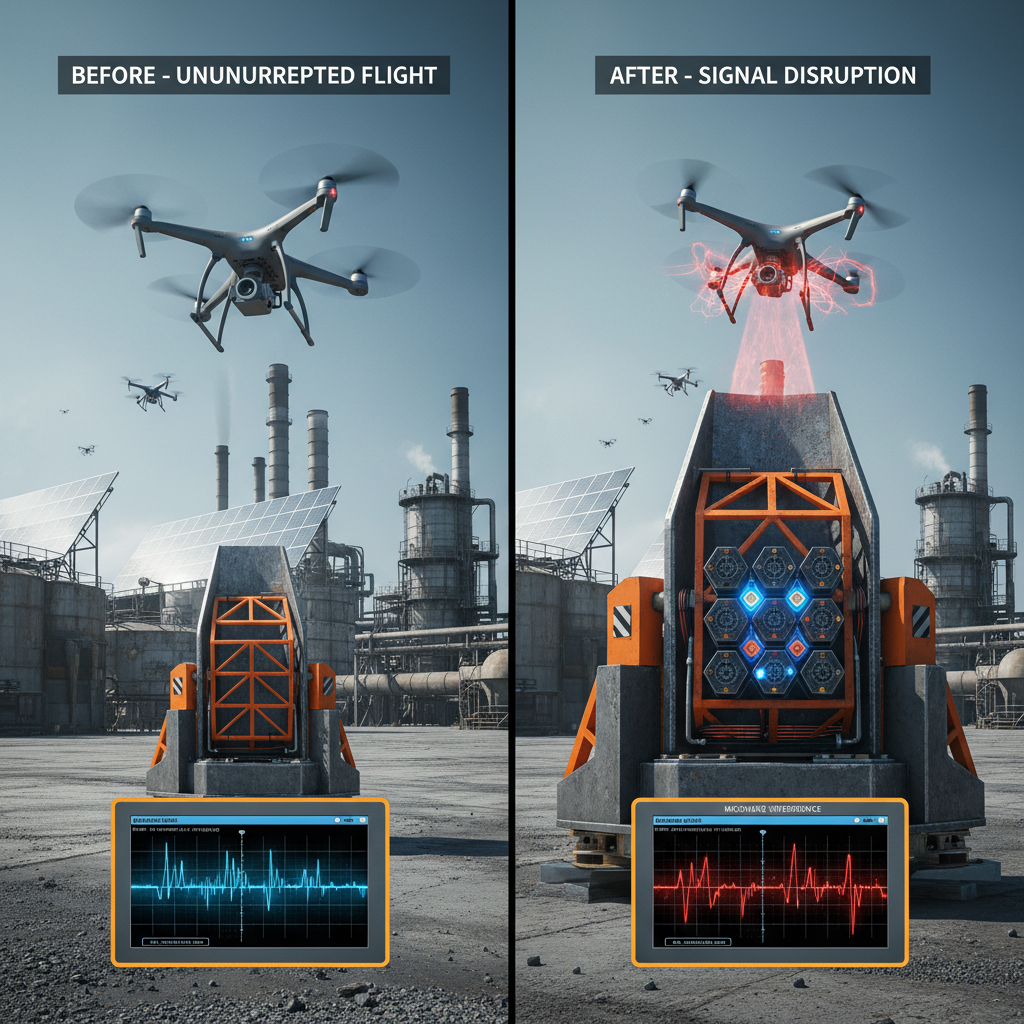
In real terms, Class C amplifiers are designed to amplify radio frequency signals by operating their active device (usually a transistor) for less than 180 degrees of the input signal’s cycle. What this means practically is they’re highly efficient—sometimes hitting efficiencies above 70 or even 80%. This comes at a cost: some distortion and a non-linear output, but for many RF transmission scenarios, like in industrial telemetry or drone communications, that tradeoff is acceptable if not downright desirable.
Over the years, I’ve noticed that many engineers tend to underestimate just how critical component quality and design choices are in amplifiers like these. For instance, selecting RF transistors with stable characteristic curves is crucial, as is careful impedance matching. You could have a stellar transistor, but if your tank circuit isn’t properly tuned, the whole setup feels like trying to push a bike with a flat tire.
Key Product Specifications
| Specification | Typical Value |
|---|---|
| Operating Frequency Range | 1 MHz - 500 MHz |
| Output Power | Up to 100 Watts |
| Efficiency | 70-85% |
| Harmonic Distortion | Typically 15% |
| Transistor Type | LDMOS / Bipolar Junction |
| Power Supply Voltage | 12 V - 48 V DC |
| Cooling Method | Forced Air / Heat Sink |
The beauty of these amplifiers is that they can be customized easily to fit very specific industrial needs. For example, a client I once worked with required a small-footprint module for drone ground stations, which meant I had to balance thermal management with power density—a delicate dance, if you ask me.
Vendor Comparison: What Sets Them Apart?
| Feature / Vendor | Amplifier Co. | RF Power Solutions | Drone System |
|---|---|---|---|
| Efficiency | ~72% | ~74% | Up to 85% |
| Frequency Range | 5 MHz - 400 MHz | 1 MHz - 300 MHz | 1 MHz - 500 MHz |
| Customization Options | Limited | Moderate | Extensive |
| Cooling Solutions | Basic Heat Sinks | Fan Assisted | Advanced Forced Air & Liquid Cooling |
| Typical Use Case | Fixed Installations | Broadcast | Mobile & Drone Communications |
| Price Range | $900 - $1,200 | $1,000 - $1,400 | $950 - $1,300 |
Of course, picking the right vendor is half the battle. What’s priceless is having someone who gets the actual application—not just specs on a spreadsheet. I’ve worked with vendors who simply push their catalog items, and then others, like the team at Drone System, that really listen and adapt products to real-world drone and remote telemetry needs.
One client in the renewable energy sector told me, “We needed an RF amplifier that could handle wide temperature swings and maintain signal integrity across hills. That kind of reliability saved us from major data loss.” Frankly, when you’re in harsh environments, these nuances matter.
Testing workflows for Class C RF amplifiers usually involve spectral purity and power output consistency at various drive levels. I often recommend thorough bench testing combined with field trials whenever possible — because an amplifier that performs well in the lab may still surprise you under real operational stresses.
Looking back, it's clear that the rf class c amplifier remains one of those essential building blocks for efficient RF energy transfer, especially in industrial setups where power efficiency and compact size can’t be ignored. Yeah, it’s not perfect for every signal—linearity isn’t its strong point—but it definitely has its place.
In the end, knowing your exact requirements and pairing them with the right supplier can make all the difference. That, and a bit of patience in tuning — but I guess that’s true for most good tech.
References:
1. Pozar, D.M., “Microwave Engineering,” 4th Ed., Wiley, 2011.
2. Gonzalez, G., “Microwave Transistor Amplifiers,” 2nd Ed., Prentice Hall, 1997.
3. Datasheets and performance reports, Drone System (2023).

-
 09 March 2021 16 Apr 2026
 -
 09 March 2021 09 Apr 2026
 -
 09 March 2021 07 Apr 2026
 -
 09 March 2021 04 Apr 2026
 -
 09 March 2021 31 Mar 2026
-
 09 March 2021 21 May 2025
 -
 09 March 2021 25 Dec 2024
 -
 09 March 2021 14 Oct 2022
-
 09 March 2021 25 Dec 2024
 English
  Arabic
  Belarusian
  Danish
  Dutch
Dutch  French
  German
  Greek
Greek  Japanese
  Korean
  Myanmar
  Polish
  Portuguese
  Russian
  Spanish
  Swedish
  Thai
Thai  Ukrainian
  Vietnamese