

Expert Insights on RF Power Amplifier Design | Industrial Equipment
A Veteran’s Take on RF Power Amplifier Design
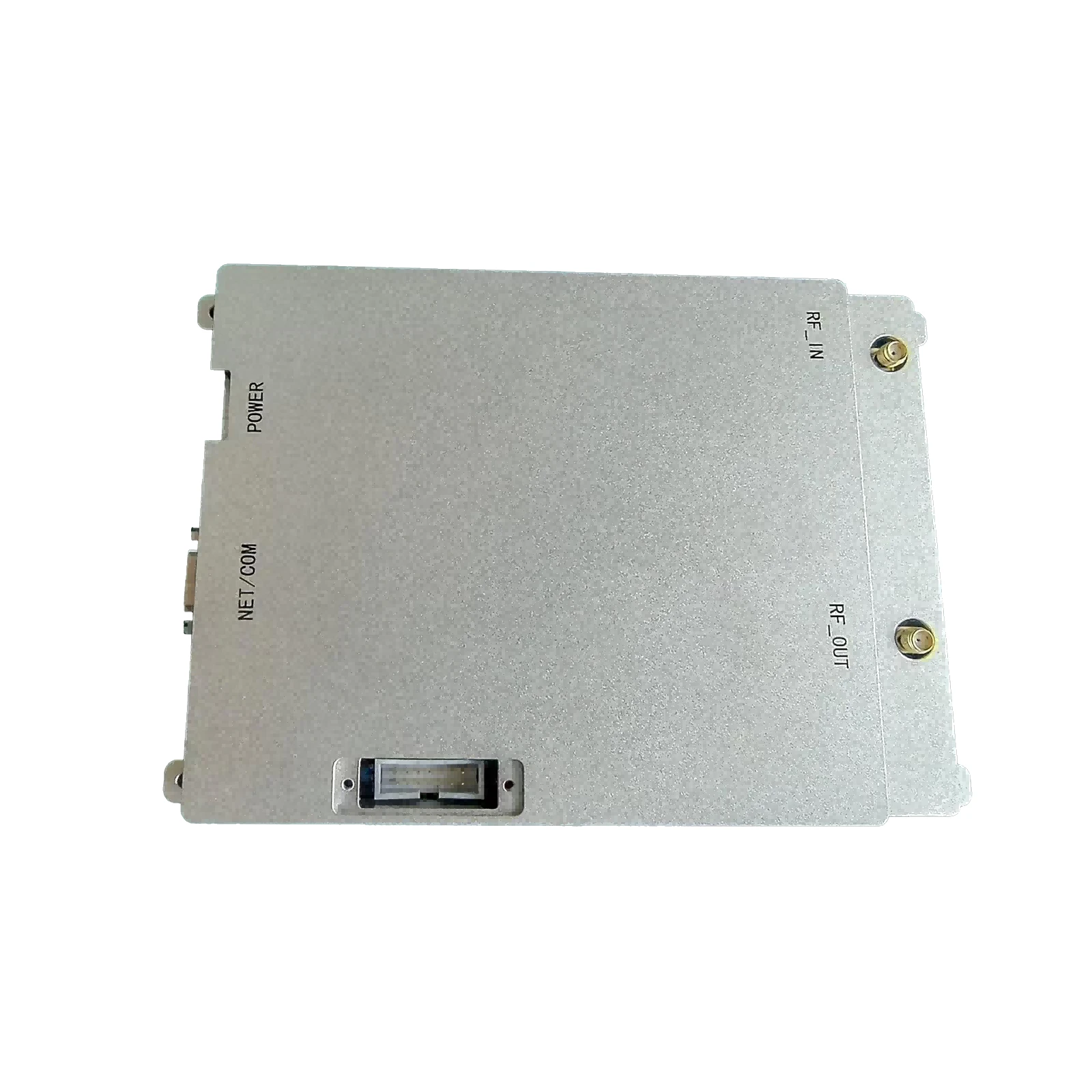
Having spent more than a decade working with industrial radio frequency (RF) equipment, I’ve developed a bit of a soft spot for RF power amplifiers. They’re the unsung heroes in so many wireless systems—boosting signals with precision and reliability, while quietly battling the odds inside cramped chassis and soaring temperature runs. Frankly, good amplifier design is part science, part craft, and a dash of patience.
Now, when we talk about RF power amplifiers, it’s not just about cranking power to unreasonable levels. It’s the finesse—linearity, efficiency, gain flatness, and thermal management—that make or break a design. Over the years, I’ve noticed engineers obsess over specs like Gain Compression Point (P1dB), Third-Order Intercept Point (IP3), and noise figures, because these dictate how clean and strong the output signal remains under real-world conditions.
Oddly enough, the materials selection often sweeps under the rug in many discussions. But in reality, the choice of transistors (GaAs, GaN, or Si LDMOS) and substrate profoundly influences performance and durability. For instance, GaN devices have really revolutionized high-power, high-frequency designs, offering superior heat tolerance and efficiency—a must in today’s compact, high-demand systems.
I remember working with a drone systems integrator last year who required an amplifier that not only met a strict power budget but had to fit a weight-sensitive airborne payload. Customizing the amplifier’s architecture to optimize heat dispersion while keeping power steady was a challenge I enjoyed tackling. These hands-on tweaks, in my experience, often separate a “good enough” amplifier from a truly robust one.
Product Specifications Snapshot
| Specification | Typical Value | Notes |
|---|---|---|
| Frequency Range | 400 MHz – 3 GHz | Covers broad spectrum for various industrial uses |
| Output Power | Up to 50 W (typical) | Dependent on module and cooling |
| Gain | 30 dB ± 1 dB | Stable across frequency range |
| P1dB Compression Point | 45 W | Ensures linearity under load |
| Efficiency | > 60% | Optimized for power saving |
| Operating Temperature | -40°C to +85°C | Ruggedized for industrial conditions |
Comparing RF Power Amplifier Vendors
| Vendor | Frequency Range | Max Output Power | Efficiency | Customization |
|---|---|---|---|---|
| AmplifyTech | 100 MHz – 3 GHz | 40 W | 55% | Standard modules only |
| RadioPro | 400 MHz – 3.5 GHz | 50 W | 62% | Custom solutions, add cost |
| WaveLine | 50 MHz – 2.5 GHz | 35 W | 58% | Limited customization |
One thing I’ve learned is to never underestimate testing under real operating conditions. Lab specs can make everything look rosy, but as soon as you slap an amplifier into a harsh industrial environment or airborne platform, the game changes. You start facing thermal cycling, vibration, and other stressors that grease the wheels of failure if you’re not careful.
So, to wrap things up, if you’re in the hunt for a reliable RF power amplifier, keep an eye on the balance between power, efficiency, and ruggedness—and don’t be shy to probe the vendor’s track record on customization and support. Sometimes it’s those small technical conversations that save you weeks of troubleshooting later.
In real terms, good design and materials pay dividends in lifespan and performance—trust me, it’s what separates the good from the merely “okay” solutions.
A quick nod to the engineers who taught me: nothing beats rolling up sleeves and chasing problems on the factory floor.
References:
1. "Fundamentals of RF Power Amplifier Design," IEEE Press
2. GaN Technology in Industrial Amplifiers, Journal of Microwave Tech
3. Vendor Technical Datasheets, 2023

-
 09 March 2021 16 Apr 2026
 -
 09 March 2021 09 Apr 2026
 -
 09 March 2021 07 Apr 2026
 -
 09 March 2021 04 Apr 2026
 -
 09 March 2021 31 Mar 2026
-
 09 March 2021 21 May 2025
 -
 09 March 2021 25 Dec 2024
 -
 09 March 2021 14 Oct 2022
-
 09 March 2021 25 Dec 2024
 English
  Arabic
  Belarusian
  Danish
  Dutch
Dutch  French
  German
  Greek
Greek  Japanese
  Korean
  Myanmar
  Polish
  Portuguese
  Russian
  Spanish
  Swedish
  Thai
Thai  Ukrainian
  Vietnamese