

GRF5536 RF Power Amp – High Gain, Linear, Low Power
Field Notes on grf5536: a 100–6200 MHz, 50 W RF Module With VSWR, Detection, and Temperature Intelligence
RF is having a very real moment. Between counter‑UAS, private networks, test ranges, and resilient telemetry, engineers keep asking for wider bandwidth, cleaner power, and smarter protection. That’s where grf5536 slid onto my bench—built in Longgang District, Shenzhen, and clearly designed for functional customization rather than off‑the‑shelf complacency. To be honest, that’s refreshing.
What it is, in plain terms
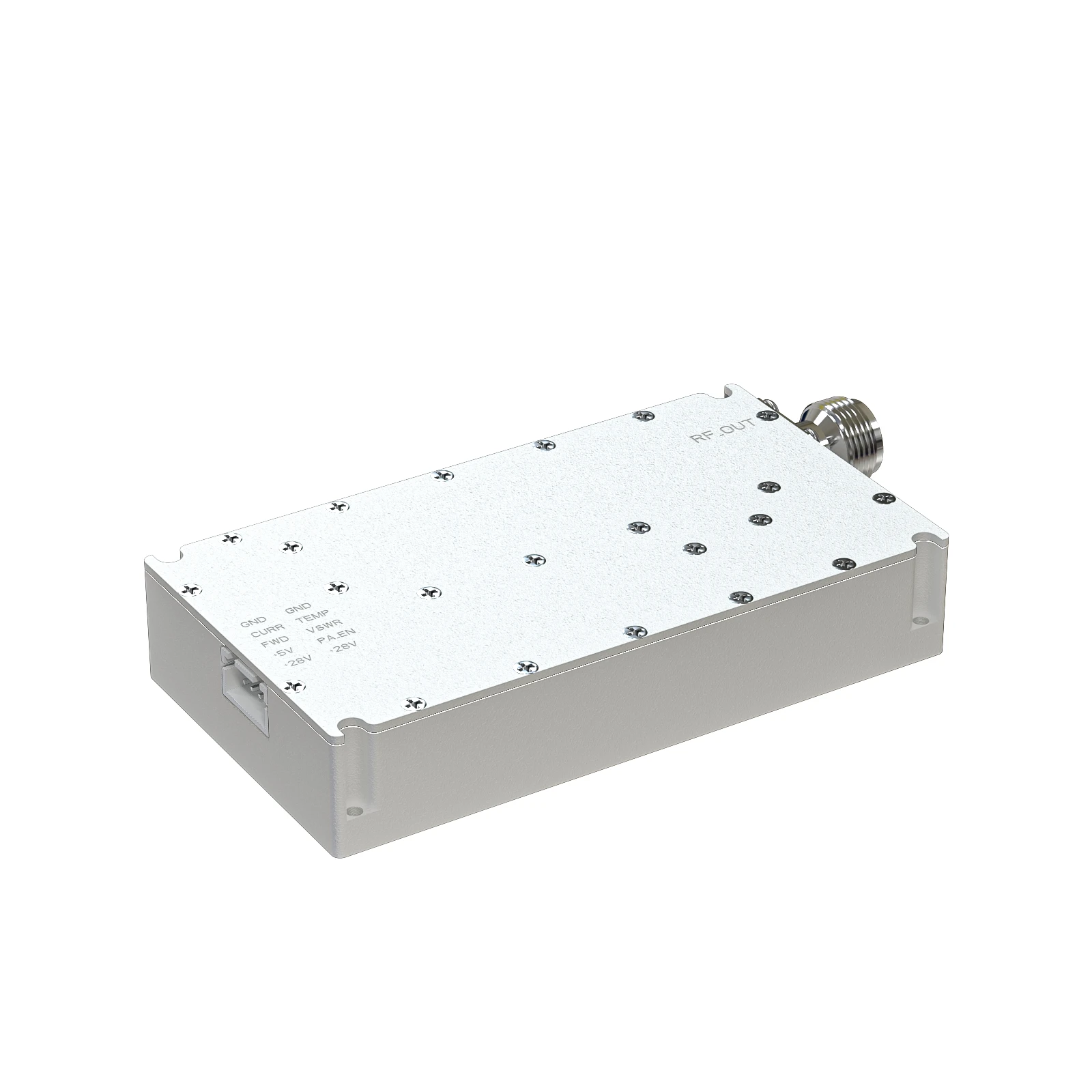
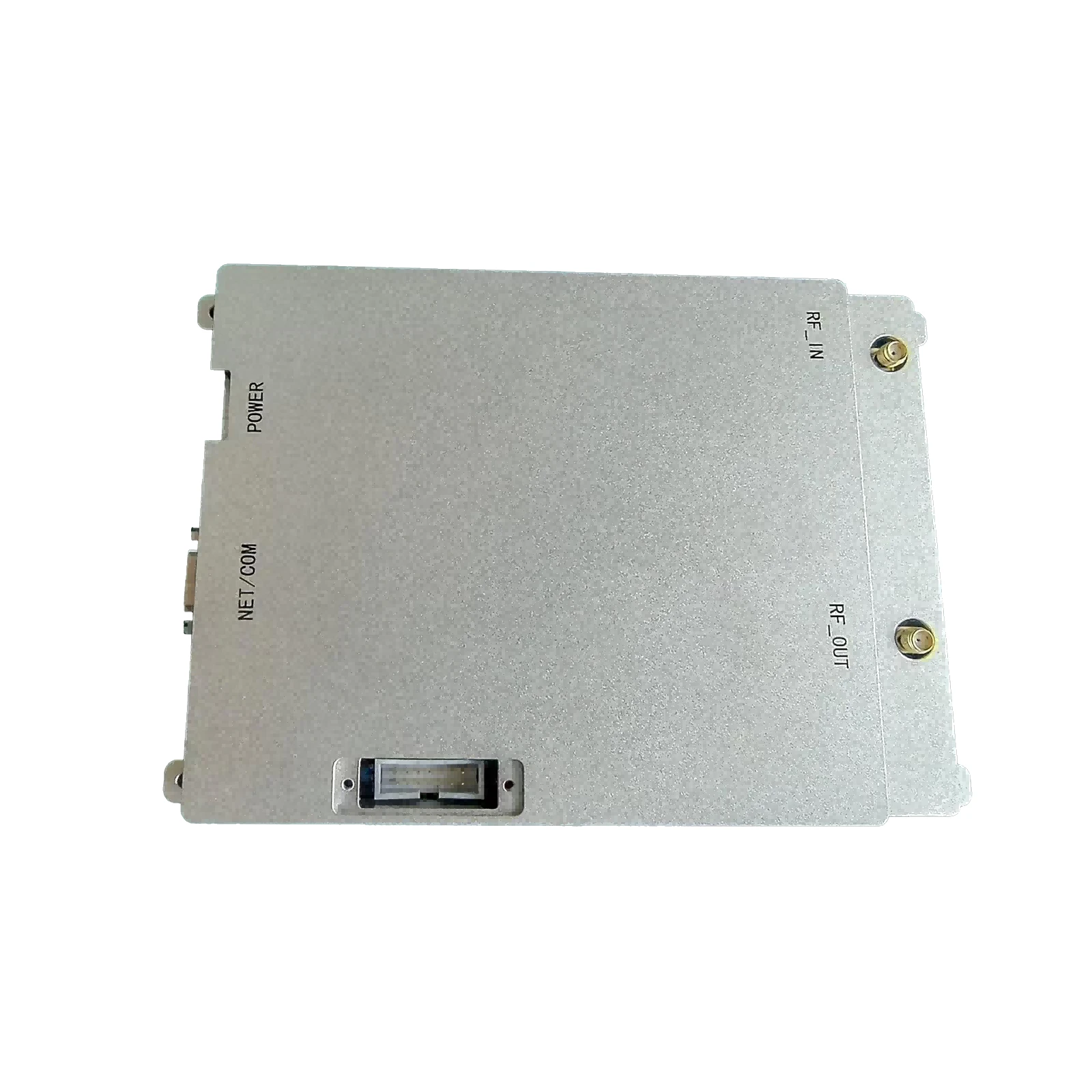
grf5536 is a wideband RF power block rated around 50 W across ≈100–6200 MHz, with integrated VSWR monitoring, RF power detection, and temperature telemetry. In practice, that means easier protection against mismatches, real‑time visibility during drive sweeps, and fewer “mystery” shutdowns when things heat up. Actually, integration like this is becoming the norm across serious deployment projects.
Key specifications (real‑world use may vary)
| Parameter | Typical | Notes |
|---|---|---|
| Frequency range | 100–6200 MHz | Continuous coverage for L/S/C bands |
| Output power | ≈50 W CW | Back‑off for linear waveforms recommended |
| VSWR protection | Active monitoring | Foldback/shutdown logic under mismatch |
| Power detection | Directional coupler + detector | Forward/reflected readouts |
| Temperature sensing | NTC/IC sensor | Telemetry via header; thresholds configurable |
| Efficiency | ≈35–55% | Band‑dependent; PAE peak around 2.4 GHz |
| Power supply | 28–32 VDC | Ripple control improves EVM |
| Connectors | SMA/N options | Custom I/O pinout available |
| Cooling | Baseplate conduction | Heatsink or cold plate |
Process flow and reliability
- Materials: GaN-on-SiC PA devices, Rogers/FR‑4 hybrid RF stackup, machined aluminum baseplate.
- Methods: SMT reflow, RF tuning, conformal coat (optional), functional burn‑in.
- Testing: IEC 62368‑1 safety pre‑checks; ETSI EN 301 489 EMC; thermal cycling per MIL‑STD‑810H methods (lab‑level).
- Service life: designed for continuous duty; MTTF model suggests 40k–60k h at Tc ≤ 85°C (I guess conservative).
- Industries: UAV comms, test & measurement, public safety, EW prototyping, private LTE/5G fronthaul experiments.
Where people use it
Engineers tell me grf5536 shines in band‑agile testbeds and portable counter‑UAS kits. In fact, one lab used it for a 2.2–2.5 GHz sweep with forward/reflected telemetry tied into a Python rig; another customer ran OFDM with modest back‑off to keep EVM tidy—no drama, which is the point.
Vendor snapshot (quick comparison)
| Vendor | Coverage | Customization | Lead Time | Certs/Docs |
|---|---|---|---|---|
| Drone‑System (Longgang, Shenzhen) | 100–6200 MHz | High (firmware + I/O) | ≈3–6 wks | QC + test reports; CE/EMC guidance |
| Generic OEM A | 700–2700 MHz | Low | ≈8–10 wks | Basic datasheet |
| Lab Module B | 1–6 GHz | Medium | ≈4–8 wks | EMC report on request |
Customization and two fast case studies
Because grf5536 is positioned for functional development, you can tweak detector slopes, alarm thresholds, GPIO mapping, and even connectorization.
- Case 1 (Public safety): shifted gain flatness ±1.5 dB across 1.6–1.9 GHz; added thermal alarm at 80°C. Result: fewer field trips, operators said.
- Case 2 (T&M house): enabled analog RSSI tap and UART telemetry; lab reported PAE ≈48% at 2.4 GHz, 43% at 900 MHz, with clean foldback under 3:1 VSWR.
Standards, data, and feedback
Lab packs typically include S‑parameters, gain/power sweeps, and thermal plots. Compliance is aided by IEC 62368‑1 safety design practices and ETSI EN 301 489 EMC targets; environmental stress is checked against MIL‑STD‑810H methods. Customers say the biggest win is “it doesn’t fry under a bad antenna,” which, frankly, is what VSWR intelligence is supposed to deliver.
Bottom line: if you need a wideband, 50 W block that plays nicely with your control stack, grf5536 is a pragmatic pick with room to grow.
Authoritative citations
- IEC 62368‑1: Audio/video, information and communication technology equipment safety — https://webstore.iec.ch
- ETSI EN 301 489 series: Electromagnetic compatibility for radio equipment — https://www.etsi.org/
- MIL‑STD‑810H: Environmental Engineering Considerations and Laboratory Tests — https://quicksearch.dla.mil/

-
 09 March 2021 16 Apr 2026
 -
 09 March 2021 09 Apr 2026
 -
 09 March 2021 07 Apr 2026
 -
 09 March 2021 04 Apr 2026
 -
 09 March 2021 31 Mar 2026
-
 09 March 2021 21 May 2025
 -
 09 March 2021 25 Dec 2024
 -
 09 March 2021 14 Oct 2022
-
 09 March 2021 25 Dec 2024
 English
  Arabic
  Belarusian
  Danish
  Dutch
Dutch  French
  German
  Greek
Greek  Japanese
  Korean
  Myanmar
  Polish
  Portuguese
  Russian
  Spanish
  Swedish
  Thai
Thai  Ukrainian
  Vietnamese