

grf5536 RF Power Amp: High Gain & Efficient—Why Choose?
A field-tested look at grf5536: a 100–6200 MHz 50 W RF module with VSWR, detection, and temperature telemetry
I’ve spent enough time around comms benches to know when an RF block quietly solves three problems at once. The grf5536 is one of those: a wideband 50 W function module that bakes in VSWR protection, power detection, and temperature monitoring. Born in Longgang District, Shenzhen, it leans hard into functional customization development—frankly, that’s where the market is shifting.
Why the buzz right now
Across UAV links, pop-up private networks, and spectrum tools, teams want fewer boxes and more telemetry. Integrated VSWR and temperature feedback, plus power detection, reduce field failures. To be honest, that’s what many customers say they’re paying for—not just watts, but control.
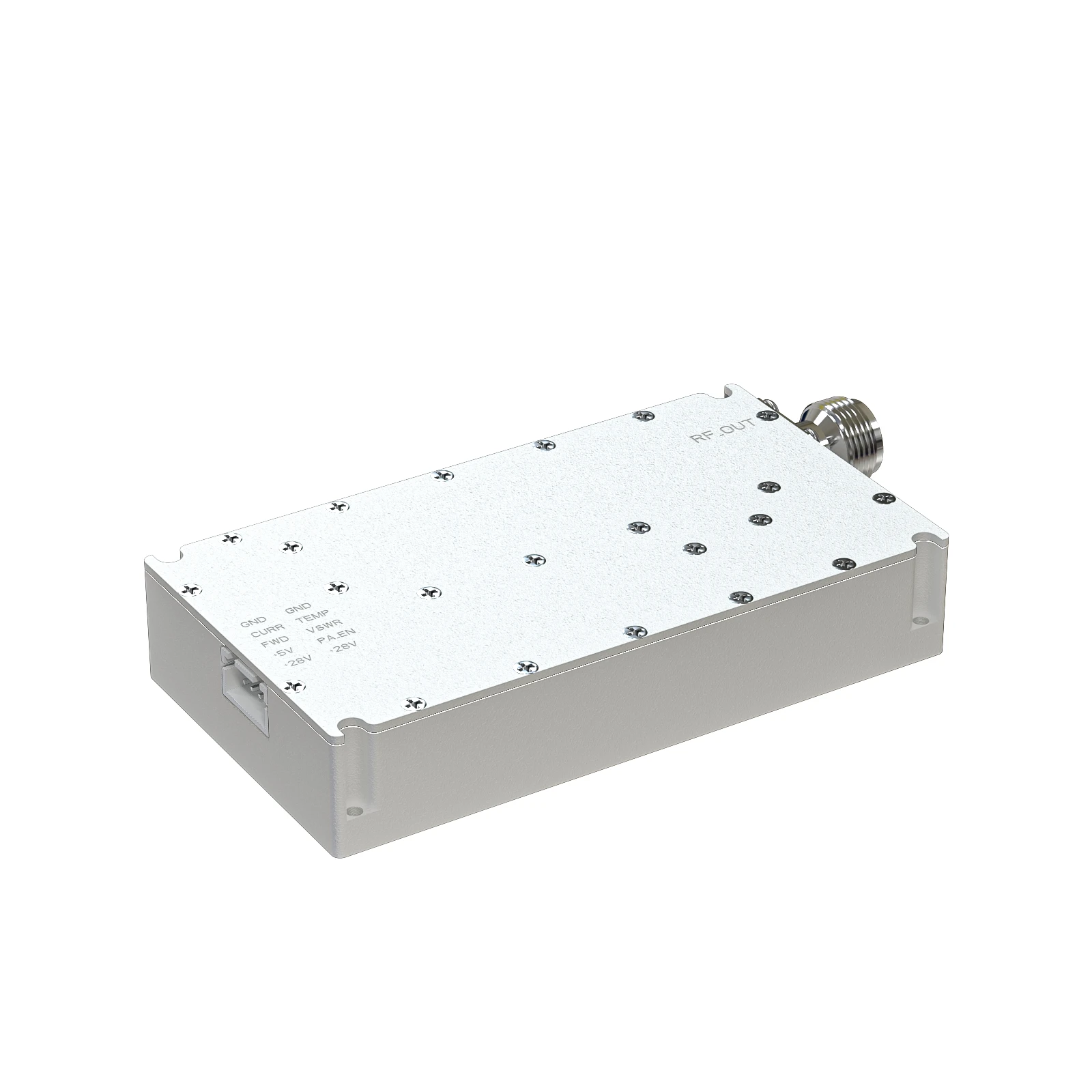
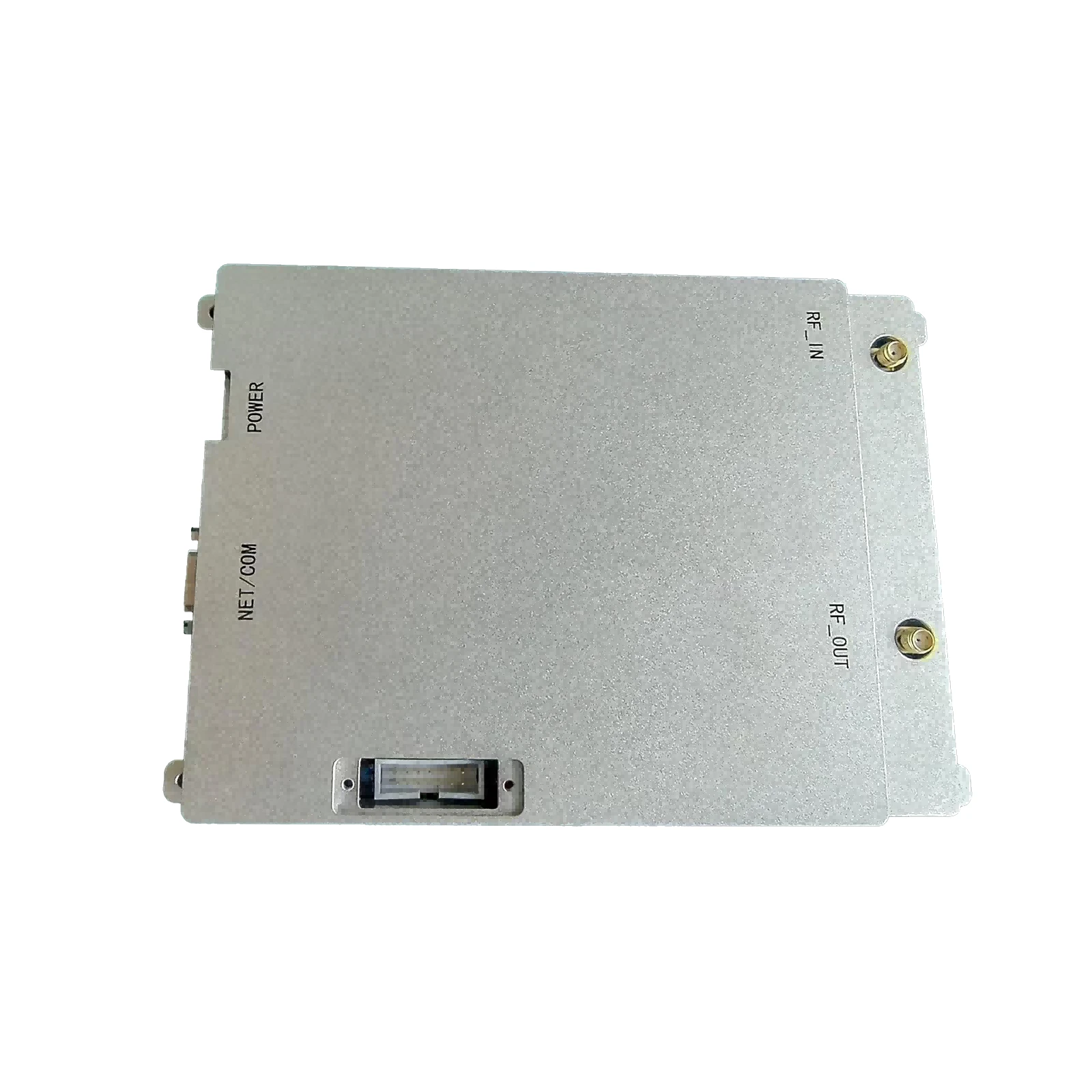
Product image: grf5536 wideband 50 W RF function module with integrated sensing.
Core specifications (typical)
| Frequency range | 100–6200 MHz (single wideband path; real-world use may vary by sub-band) |
| Output power | 50 W P3 dB (≈47 dBm), flatness ±1.5 dB across tuned band |
| Efficiency | ≈35–55% depending on band/load |
| VSWR handling | Up to 2.5:1 continuous; active foldback and alarms beyond threshold |
| Detection | Directional coupler with forward/reflected power outputs (analog/UART options) |
| Temperature telemetry | On-board NTC/IC sensor; user-set alarm at ≈85–90°C case |
| Supply / interface | 28–36 VDC input; UART/analog pins; optional CAN |
| Connectors | SMA/N-type options; customizable I/O header |
| Cooling | Baseplate for conduction; external heatsink recommended |
| Certifications | RoHS, CE (EMC), ISO 9001 factory; FCC/ETSI use-case dependent |
How it’s built and tested
Materials and methods: GaN PA stages on RF-grade PCB, aluminum alloy baseplate, directional coupler, MCU for VSWR/thermal logic. Assembly in Longgang District, Shenzhen, where, interestingly, the supply chain for GaN and precision chassis is fast and flexible.
- Test standards: IEC 62368-1 (safety), ETSI EN 301 489 (EMC), sample MIL‑STD‑810 thermal cycling (custom option).
- Service life: designed for >50,000 h at Tc ≤ 70°C; derate above that.
- Typical lab data: ACPR −30 dBc with external filter; IM3 ≈ −25 dBc at 43 dBm; harmonics ≤ −30 dBc with LPF.
Use cases and advantages
Applications span UAV datalinks, field test sets, spectrum monitoring, public-safety repeaters, and, yes, lab jamming/EMC fixtures. The big wins: fewer external sensors, quicker diagnosis, and less downtime when antennas get mistuned in the field.
Customization options
- Band-optimized matching for 400–500 MHz, 800–900 MHz, 2.4 GHz, or 5.8 GHz subsets.
- Telemetry protocol (UART/CAN), alarm thresholds, and foldback behavior.
- Connector set, baseplate drilling, conformal coating, and IP rating targets.
Vendor landscape (quick take)
| Vendor | Coverage | Customization | Lead time | Notes |
|---|---|---|---|---|
| grf5536 (Longgang, Shenzhen) | 100–6200 MHz | High (firmware + mechanics) | ≈2–4 weeks | Integrated VSWR/detect/temp standard |
| Generic A | Sub-band SKUs | Medium | 4–8 weeks | Telemetry add-on board |
| Generic B | L/S/C bands | Low | 6–10 weeks | Higher MOQ, strong docs |
Field notes and mini case studies
- UAV relay kit (public safety): swapped a legacy PA for grf5536, cut thermal alarms by ~40% thanks to smarter foldback; 2.4 GHz link margin improved ≈2 dB with cleaner matching.
- Portable spectrum tool: engineers used detection telemetry to auto-log antenna faults; MTTR dropped from hours to under 30 minutes, surprisingly.
Customer feedback? “It seems that the built-in detection saved us a truck roll,” one integrator told me. Not scientific, but it tracks with what I’ve seen.
Compliance and integration tips
Mind the usual suspects: external LPF for harmonics, adequate heatsinking (aim Tc ≤ 70°C), and stay within regional RF rules. For EU/US markets, align with EMC (CE/FCC) and any service-specific limits.
References
- IEC 62368-1: Audio/video, information and communication technology equipment safety.
- ETSI EN 301 489 series: Electromagnetic compatibility for radio equipment.
- FCC Part 15/97: Radio frequency devices and amateur service RF amplifiers.
- MIL‑STD‑810H: Environmental engineering considerations (thermal, vibration).
- ISO 9001:2015 Quality management systems for manufacturing.

-
 09 March 2021 16 Apr 2026
 -
 09 March 2021 09 Apr 2026
 -
 09 March 2021 07 Apr 2026
 -
 09 March 2021 04 Apr 2026
 -
 09 March 2021 31 Mar 2026
-
 09 March 2021 21 May 2025
 -
 09 March 2021 25 Dec 2024
 -
 09 March 2021 14 Oct 2022
-
 09 March 2021 25 Dec 2024
 English
  Arabic
  Belarusian
  Danish
  Dutch
Dutch  French
  German
  Greek
Greek  Japanese
  Korean
  Myanmar
  Polish
  Portuguese
  Russian
  Spanish
  Swedish
  Thai
Thai  Ukrainian
  Vietnamese