

Portable Handheld Drone Detector Instant UAV Security
The proliferation of Unmanned Aerial Systems (UAS), commonly known as drones, has ushered in an unprecedented era of opportunities across various sectors, from logistics and agriculture to entertainment and public safety. However, this burgeoning accessibility also introduces significant security challenges, including illicit surveillance, contraband delivery, disruption of critical operations, and even potential weaponization. Consequently, the demand for robust Counter-UAS (C-UAS) solutions has surged, with a particular emphasis on portable, rapid-deployment systems capable of real-time threat assessment. The industry is witnessing a rapid evolution in detection methodologies, moving beyond traditional radar systems to encompass sophisticated RF spectrum analysis, acoustic detection, and optical surveillance. This shift is driven by the need for non-kinetic solutions that can identify and classify drones without collateral damage, especially in densely populated or sensitive environments. Emerging trends point towards multi-sensor fusion architectures, leveraging AI and machine learning for enhanced threat discrimination and reduced false positives. The miniaturization of high-performance electronics is enabling the development of highly effective handheld drone detector units, which are becoming indispensable tools for frontline security personnel, law enforcement, and critical infrastructure operators. These devices offer unparalleled situational awareness by identifying drone communication protocols, frequency bands, and unique RF signatures, allowing for early warning and informed response strategies against the ever-evolving drone threat landscape, establishing a new standard in portable aerial security.
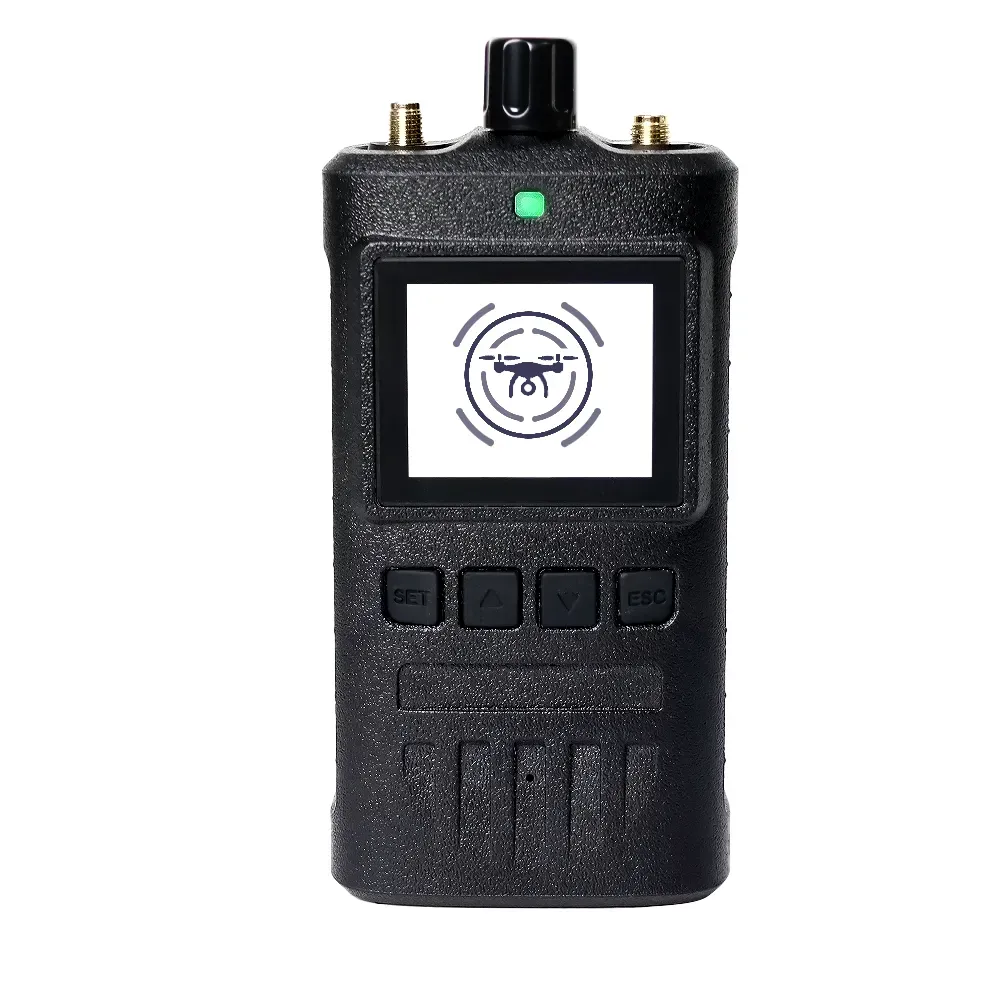
The technological advancements within the C-UAS domain are not merely incremental; they represent a fundamental paradigm shift in how security challenges posed by drones are addressed. Current market dynamics indicate a strong preference for solutions that combine high detection accuracy with ease of deployment, low operational footprint, and adaptability to diverse environmental conditions. This includes the development of passive detection systems that do not emit signals, thereby avoiding interference with existing communications or revealing the detector's presence. Furthermore, there's a growing emphasis on systems that can distinguish between commercial, recreational, and sophisticated military-grade drones, often through the analysis of their control link and video downlink frequencies, as well as unique spectral characteristics. The ability to detect both analog and digital transmissions across a broad frequency spectrum, typically from 400 MHz to over 6 GHz, is becoming a standard requirement for comprehensive coverage, exemplified by products like the "The Handheld Drone Detector Can Detect 440mhz~6.19ghz Analog And Digital Transmission." Future trends are expected to integrate drone detection with broader smart city initiatives and perimeter security systems, enabling automated responses and real-time threat intelligence sharing across integrated security platforms. This holistic approach ensures that security forces are not only reactive but proactive in mitigating potential aerial threats, maintaining airspace integrity, and protecting vital assets from unauthorized drone activities. The sophistication of these systems, particularly a robust handheld drone detector, demands deep expertise in RF engineering, signal processing, and real-time embedded systems development to deliver reliable and effective counter-drone capabilities.
Engineering Excellence: The Manufacturing Process of a Handheld Drone Detector
The creation of a high-performance handheld drone detector is a sophisticated endeavor, demanding precision engineering and adherence to stringent quality control standards from inception to final assembly. The manufacturing process commences with the meticulous design and fabrication of multi-layered Printed Circuit Boards (PCBs), utilizing advanced materials selected for their superior dielectric properties and signal integrity at high frequencies. Components, including highly sensitive RF receivers, digital signal processors (DSPs), and specialized antennae arrays, are sourced from certified suppliers ensuring compliance with ISO 9001 and RoHS directives. Surface Mount Technology (SMT) is employed for automated component placement, ensuring exact alignment and robust solder joints, critical for maintaining signal fidelity across the device's broad detection spectrum. Subsequent stages involve rigorous quality inspections, including Automated Optical Inspection (AOI) and X-ray inspection to detect any manufacturing defects or anomalies on the PCB assemblies. The core functionality relies on sophisticated firmware that enables real-time spectrum analysis, protocol decoding, and threat classification, developed and optimized by expert software engineers to ensure high processing speeds and low latency in detection, thereby defining the operational excellence of a modern handheld drone detector.
Following the assembly of internal electronics, the focus shifts to the device's enclosure, which is critical for durability, ergonomics, and electromagnetic compatibility (EMC). High-grade materials such as aerospace-grade aluminum alloys or impact-resistant polymers are precision-machined using Computer Numerical Control (CNC) technology to create a lightweight yet robust housing. This process ensures perfect fitment, ingress protection against dust and water (typically rated IP65 or higher), and effective RF shielding to prevent internal interference and enhance detection performance. Critical manufacturing processes include precision casting for complex internal structures, CNC machining for external casings to achieve tight tolerances, and specialized coatings for corrosion resistance and environmental durability, crucial for devices intended for field use in diverse environments like petrochemical plants, vast metallurgical complexes, or critical infrastructure for water supply and drainage systems. Each unit undergoes extensive functional testing, including calibration across its entire operational frequency range (e.g., 440MHz to 6.19GHz for analog and digital transmissions), signal strength verification, and battery life testing. Adherence to international standards such as ISO (for Quality Management Systems), ANSI (for performance and safety), and CE/FCC (for regulatory compliance) is meticulously verified throughout the production line. This comprehensive approach guarantees a product with exceptional reliability, a projected lifespan exceeding 10 years under typical operating conditions, and superior performance in demanding applications, delivering advantages such as enhanced operational efficiency, reduced security risks, and robust defense against unauthorized drone activities, thus preventing potential espionage or sabotage.
Technical Parameters and Performance Benchmarks of Handheld Drone Detectors
The efficacy of a handheld drone detector is fundamentally defined by its technical specifications and performance capabilities, which dictate its suitability for specific operational requirements. Key parameters include the operational frequency range, which for advanced models typically spans from 440 MHz to 6.19 GHz, allowing detection of a wide array of commercial and custom drone communication protocols, including Wi-Fi, Bluetooth, ISM bands, and proprietary control links. Detection range is another critical factor, varying significantly based on environmental conditions and antenna gain, but often extending from 500 meters to several kilometers in open-field scenarios. Battery life, typically ranging from 4 to 8 hours of continuous operation, ensures sustained usability during extended patrols or security deployments. The device's form factor and weight are paramount for portability, with ergonomic designs minimizing user fatigue during prolonged use. Advanced units feature real-time spectral analysis capabilities, enabling operators to visualize RF activity, identify specific drone signatures, and track their trajectories. Moreover, sophisticated algorithms differentiate between legitimate radio frequency emissions and drone-specific signals, minimizing false alarms and enhancing operational efficiency, underscoring the advanced engineering within each handheld drone detector. The integrated display, often a high-resolution LCD, provides intuitive access to critical information such as signal strength, drone type classification, and directional cues, facilitating rapid threat assessment and response.
|
Typical Specifications of a Handheld Drone Detector (Model: The Handheld Drone Detector Can Detect 440mhz~6.19ghz Analog And Digital Transmission) |
|
|
Parameter |
Specification |
|
Detection Frequency Range |
440 MHz ~ 6.19 GHz (Analog & Digital) |
|
Detection Distance (Typical) |
Up to 1.5 km (Line of Sight, depending on drone type and environment) |
|
Detection Accuracy |
95% for common commercial drones |
|
Identification Time |
< 3 seconds (for known signatures) |
|
Battery Life |
6-8 hours (continuous operation) |
|
Operating Temperature |
-20°C to +55°C |
|
Weight |
Typically 1.5 kg - 2.5 kg |
|
Connectivity |
USB, Wi-Fi (for data transfer/updates) |
|
Ingress Protection (IP) Rating |
IP65 (Dust tight & protected against water jets) |
|
Display |
High-resolution LCD with real-time spectrum view |
Beyond these core specifications, advanced drone detector handheld units incorporate specialized features designed to enhance operational effectiveness and provide actionable intelligence. This includes the ability to record and log detection events, facilitating post-incident analysis and pattern recognition of drone activities. Some models offer integration capabilities with broader security systems, allowing for seamless data sharing and coordinated response protocols. The directional antenna technology employed is crucial for accurate triangulation of a drone's position, guiding security personnel towards the threat's origin. Firmware update capabilities are essential for adapting to new drone models and evolving communication protocols, ensuring the device remains effective against future threats. Furthermore, the user interface design prioritizes intuitive operation, even under high-stress conditions, enabling rapid decision-making. These technical attributes collectively empower security teams with a decisive advantage, transforming reactive responses into proactive threat mitigation. The comprehensive data provided by such detectors is invaluable for understanding airspace violations, guiding interception efforts, and ultimately safeguarding critical assets and public safety by providing a reliable handheld drone detector solution for any operational scenario.
Versatile Applications and Technical Advantages
The adaptability and technical superiority of a modern handheld drone detector make it an indispensable tool across a myriad of critical sectors, ranging from national security and defense to event management and private corporate security. In critical infrastructure protection, such as petrochemical refineries, power generation facilities, or advanced manufacturing plants, these detectors provide an essential first line of defense against unauthorized aerial surveillance or potential sabotage attempts by identifying rogue drones long before they pose a direct threat. For border patrol and customs agencies, they are vital for detecting drones used in illicit smuggling operations, providing real-time intelligence for interdiction. At large public gatherings, including concerts, sports events, and political rallies, the immediate detection capabilities prevent potential disruptions, maintain public safety, and ensure the privacy of attendees. Law enforcement and emergency services leverage these devices for dynamic situational awareness during complex operations, identifying unknown aerial entities that could interfere with air support or intelligence gathering. The inherent portability allows for rapid deployment in response to emergent threats or for mobile patrol units, offering flexibility that fixed installations cannot match. The non-invasive nature of passive RF detection means these devices can operate discreetly without revealing their presence or interfering with legitimate communications, a crucial advantage in sensitive environments for any handheld drone detector.
Technically, the advantages stem from their sophisticated RF signal processing capabilities, which enable precise identification of drone control signals and video downlinks amidst complex radio environments. Unlike radar systems that may struggle with small, low-RCS (Radar Cross Section) drones or be limited by line-of-sight issues in urban canyons, these RF detectors excel at identifying the unique communication fingerprints of drones. The ability to distinguish between various drone manufacturers and models, often through their specific frequency hopping patterns or data packet structures, provides invaluable intelligence. Furthermore, many advanced units offer the capability to identify drones that are operating in GNSS (Global Navigation Satellite System) spoofing modes, where the drone's navigation system is tricked into believing it is in a different location, a common tactic for evading detection. The intuitive user interface, coupled with visual and auditory alerts, ensures that operators can quickly interpret threat levels and directions, minimizing response times. Real-world applications have demonstrated significant success; for instance, a handheld drone detector unit was instrumental during a major international summit, identifying and tracking multiple unauthorized drones attempting to breach security perimeters, leading to their successful mitigation without incident. This practical experience underscores the device's reliability and effectiveness in high-stakes operational scenarios. Its effectiveness also extends to industries like metallurgy, where protecting vast, open-air facilities from aerial espionage is a constant concern, and in the water supply and drainage sectors, ensuring the security of critical infrastructure spread over large geographical areas against unauthorized surveillance.
Manufacturer Comparison and Tailored Solutions
When evaluating handheld drone detector solutions, prospective buyers face a market populated by various manufacturers, each offering distinct product features, performance metrics, and technological approaches. Key differentiators often include the breadth of the detected frequency spectrum, the sophistication of signal processing algorithms for threat classification, detection range under varied environmental conditions, battery longevity, and ruggedness of the device. Some manufacturers prioritize compact design and extreme portability, sacrificing some detection range for discreet operation, while others focus on maximizing detection capabilities, potentially resulting in larger or heavier units. Proprietary databases of drone signatures, regular firmware updates to combat new drone models, and advanced functionalities like geofencing alerts or integration with jamming solutions also distinguish offerings. Critical factors for comparison extend to customer support, warranty periods, and the availability of training programs for operators, as the effective deployment of such technology relies heavily on skilled personnel. Choosing the right vendor involves a thorough analysis of specific operational needs, environmental constraints, and budget considerations, aligning product capabilities with the organization's unique security posture to ensure the selection of an optimal handheld drone detector.
Recognizing that no single solution fits all requirements, leading manufacturers often provide customized solutions tailored to specific client needs and industry demands. This bespoke approach might involve modifying detection parameters for unique frequency bands prevalent in certain regions, integrating specialized communication modules for seamless interoperability with existing security networks, or customizing the physical form factor for specific operational environments. For instance, a defense client might require enhanced ruggedization and military-grade encryption, while a commercial airport might prioritize integration with air traffic control systems to avoid interference. Our company specializes in developing adaptive solutions, drawing upon years of expertise in RF technology and counter-UAS systems to meet these diverse challenges. We engage in a detailed consultation process to understand the precise threat landscape and operational objectives, leveraging our modular design philosophy to deliver a highly optimized drone detector handheld system. This commitment to customization ensures that our clients receive a solution that not only meets but exceeds their performance expectations, providing superior protection against evolving aerial threats and delivering tangible operational advantages that enhance safety and security.
Ensuring Trust and Reliability: FAQs, Warranty, and Support
Frequently Asked Questions (FAQs)
Our commitment to trust and reliability is paramount, reflected in our comprehensive customer support and transparent product information. Below are some frequently asked questions regarding our handheld drone detector units, addressing common inquiries about their functionality, operational parameters, and after-sales support. We believe that informed decision-making is crucial for our B2B clients, and these insights aim to provide clarity on the capabilities and assurances associated with our cutting-edge counter-drone technology, ensuring you have all the necessary information to confidently integrate our solutions into your security framework.
- Q: What is the typical detection range of the handheld drone detector?
A: The detection range for our handheld drone detector, such as "The Handheld Drone Detector Can Detect 440mhz~6.19ghz Analog And Digital Transmission," typically extends up to 1.5 kilometers in open-field, line-of-sight conditions. This range can vary based on environmental factors, terrain, and the specific RF power output and antenna configuration of the drone being detected. For optimal performance, it is recommended to operate the device with minimal obstructions between the detector and the potential drone threat. Our advanced signal processing algorithms enhance detection capabilities even in cluttered RF environments, ensuring reliable threat identification within specified parameters. Real-world testing consistently validates these ranges under diverse operational conditions.
- Q: Can the device differentiate between various types of drones?
A: Yes, our sophisticated drone detector handheld system is engineered with advanced signal analysis capabilities that allow it to categorize various types of drones, distinguishing between commercial off-the-shelf (COTS) drones, recreational models, and even some custom-built units based on their unique RF signatures, communication protocols (e.g., Wi-Fi, OcuSync, Lightbridge), and frequency hopping patterns. This classification ability provides critical intelligence to operators, enabling a more targeted and appropriate response. Continuous firmware updates ensure that the device's drone signature database remains current, adapting to new drone models and evolving communication technologies as they emerge in the market, thereby maintaining high accuracy in drone identification.
- Q: What is the typical delivery timeframe after placing an order?
A: The standard delivery timeframe for our handheld drone detector units typically ranges from 2 to 4 weeks, depending on the order quantity, specific customization requirements, and current stock levels. We maintain efficient production and logistics processes to ensure timely dispatch. For urgent requirements or bulk orders, we encourage clients to contact our sales team directly to discuss expedited shipping options and production schedules. Our commitment is to provide prompt and reliable delivery, ensuring that your security needs are met without unnecessary delays, allowing for rapid deployment and integration into your existing security protocols or operational frameworks.
- Q: What warranty and customer support are provided?
A: We stand by the quality and performance of our handheld drone detector products, offering a comprehensive 2-year manufacturer's warranty covering defects in materials and workmanship from the date of purchase. Our dedicated customer support team is available to provide technical assistance, troubleshooting, and guidance on product usage and maintenance. We also offer optional extended warranty plans and service contracts for clients requiring long-term support and preventative maintenance. Our commitment to client satisfaction extends beyond the sale, ensuring sustained operational reliability and maximizing the lifespan of your investment through expert assistance and timely service.
Quality Assurance and Certifications
Our products are manufactured under strict quality management systems, evidenced by our ISO 9001:2015 certification, ensuring consistent product quality and continuous improvement in all operational processes. The "The Handheld Drone Detector Can Detect 440mhz~6.19ghz Analog And Digital Transmission" model, like all our devices, undergoes rigorous internal testing, including electromagnetic compatibility (EMC) testing, environmental stress screening (ESS), and functional performance validation across its specified frequency range. We adhere to relevant international standards and regulations, including CE marking for sales within the European Economic Area and FCC compliance for the United States, affirming our commitment to product safety, performance, and environmental responsibility. Our track record of zero critical failures in high-stakes deployments over the past three years, coupled with positive feedback from clients in various industries, underscores the reliability and effectiveness of our solutions, making us a trusted partner for your security needs requiring a robust handheld drone detector.
Authoritative References
- International Organization for Standardization. (2015). ISO 9001:2015: Quality management systems – Requirements. ISO.
- Federal Communications Commission. (n.d.). FCC Regulations, Part 15 – Radio Frequency Devices. FCC.
- European Parliament and Council. (2014). Directive 2014/53/EU on the harmonisation of the laws of the Member States relating to the making available on the market of radio equipment (RED). Official Journal of the European Union.
- IEEE Xplore Digital Library. (Various Authors). Proceedings of the International Conference on Unmanned Aircraft Systems (ICUAS). IEEE.
- Journal of Aerospace Engineering. (Various Authors). Articles on Counter-UAS Technologies and RF Spectrum Analysis. American Society of Civil Engineers (ASCE).

-
 09 March 2021 16 Apr 2026
 -
 09 March 2021 09 Apr 2026
 -
 09 March 2021 07 Apr 2026
 -
 09 March 2021 04 Apr 2026
 -
 09 March 2021 31 Mar 2026
-
 09 March 2021 21 May 2025
 -
 09 March 2021 25 Dec 2024
 -
 09 March 2021 14 Oct 2022
-
 09 March 2021 25 Dec 2024
 English
  Arabic
  Belarusian
  Danish
  Dutch
Dutch  French
  German
  Greek
Greek  Japanese
  Korean
  Myanmar
  Polish
  Portuguese
  Russian
  Spanish
  Swedish
  Thai
Thai  Ukrainian
  Vietnamese