

RF Power Supply Design: Global Insights, Trends & Applications
Understanding RF Power Supply Design: The Backbone of Modern Wireless Systems
When we talk about RF power supply design, we're diving into the electrical heart of countless wireless technologies. RF, or radio frequency, power supplies are crucial for everything from cellular networks to radar systems and satellite communications. Understanding how to design these power sources effectively is not just an academic pursuit — it’s a global imperative as wireless communication underpins everything in both civilian infrastructure and critical industries.
Frankly, with billions of devices relying on radio waves to transfer data, the significance of RF power supply design stretches across continents and economies. Efficient and reliable RF power supplies mean better connectivity, safer communications in emergencies, and more energy-conscious solutions for a world growing increasingly wireless.
Introduction: Why RF Power Supply Design Matters Globally
According to the International Telecommunication Union (ITU), over 5 billion people worldwide access mobile broadband technology, a figure steadily climbing each year. But what ensures these devices get the power they need to transmit signals is — you guessed it — RF power supply design. The challenge arises because RF components must operate under intense conditions, providing stable and precise power while maintaining efficiency.
Yet, there’s an efficiency gap. Industry reports suggest that many RF power supplies waste upwards of 30-40% of energy as heat, which is a significant challenge both environmentally and operationally. Addressing these inefficiencies can reduce global energy demand and improve the reliability of wireless infrastructure in underserved regions.
Defining RF Power Supply Design
In simple terms, rf power supply design refers to the creation of electrical power modules tailored specifically to generate and regulate radio frequency energy for electronic systems. These designs ensure that devices like transmitters produce signals at precise frequencies and power levels suited to their application — all the while keeping size, heat, and cost under control.
This design touches many industries — from defense, where radar systems rely on robust RF power supplies, to humanitarian aid, where portable communication devices help disaster-stricken areas stay connected.
Core Components and Key Factors in RF Power Supply Design
1. Efficiency
The prime objective is to convert input power to RF energy with minimal loss. High efficiency extends battery life in mobile devices and reduces cooling requirements. Engineers often choose Class-D, Class-E, or Class-F amplifier designs for efficiency gains.
2. Frequency Stability
RF power supplies must deliver precise frequencies, as even minor drifts can disrupt communication and radar systems. Components like crystal oscillators and phase-locked loops are typically integrated.
3. Power Output & Scalability
Power ratings vary based on use — from milliwatts in IoT devices up to kilowatts or more in broadcasting. Scalability ensures designers can adapt to different system sizes.
4. Thermal Management
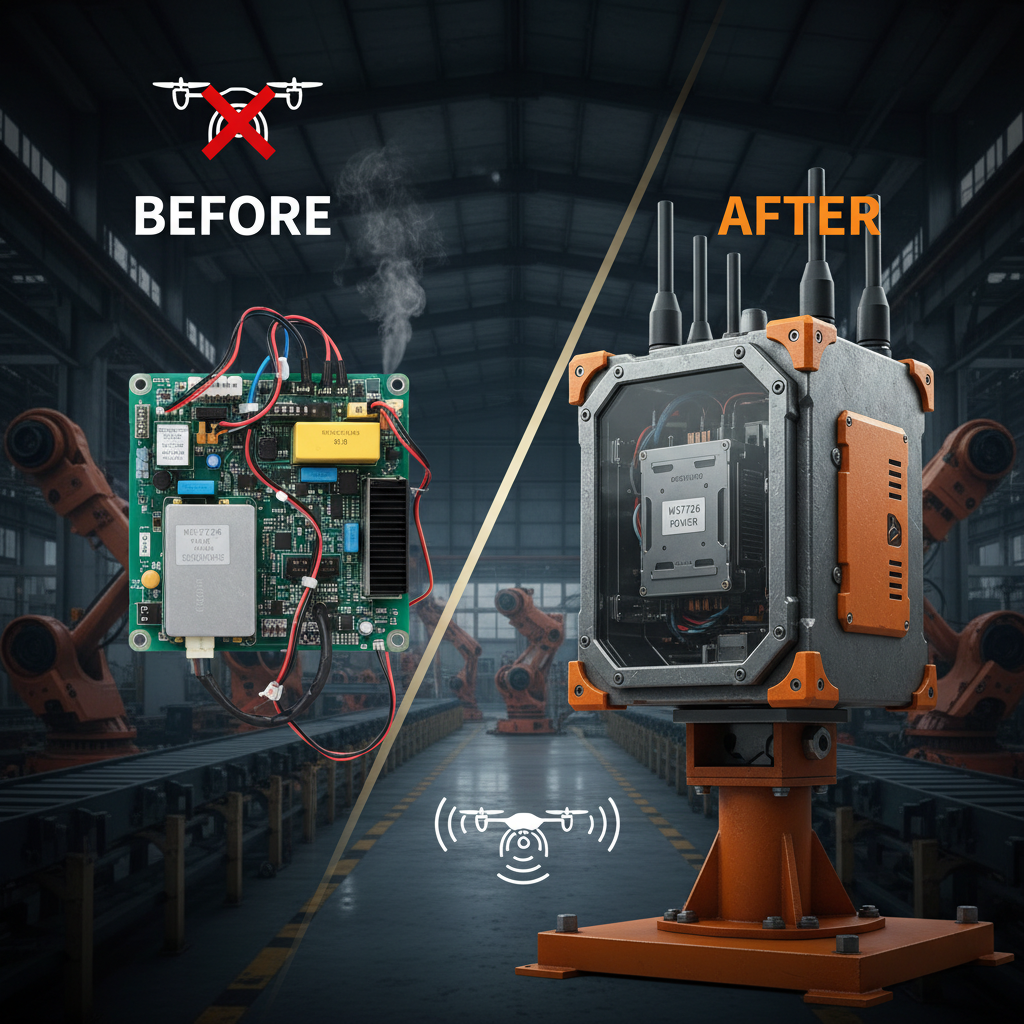
Because RF components generate heat, thermal mitigation strategies including heatsinking, airflow design, or advanced materials like graphene are essential for longevity.
5. Cost Efficiency
While performance is critical, the cost must align with customer requirements and production volume, balancing high-tech materials with mass-production techniques.
6. Durability and Environmental Resistance
Devices used outdoors or in harsh environments require careful design to resist moisture, temperature swings, and electromagnetic interference.
| Specification | Value / Range | Notes |
|---|---|---|
| Output Power | 0.1 W – 10 kW | Application-dependent |
| Frequency Range | 3 kHz – 300 GHz | Ranging across RF spectrum |
| Efficiency | 60% – 90% | Higher is better |
| Thermal Management | Active / Passive Cooling | Depends on power level |
| Size | Compact designs evolving | Smaller preferred in mobile |
Global Applications & Use Cases
RF power supply design impacts diverse sectors worldwide:
- Telecommunications: In Asia and Africa, expanding cellular networks hinge on reliable RF power modules for base stations, supporting millions of connections daily.
- Defense & Aerospace: The US and EU deploy RF power systems for radar and satellite communications, enabling national security and meteorological forecasting.
- Disaster Relief: Organizations like the UN’s ITU use portable RF power supplies in temporary communication hubs to maintain contact when infrastructure falters.
- Industrial Automation: Remote energy facilities use RF links powered by smart RF supply designs to monitor equipment in harsh conditions.
Oddly enough, in remote regions of South America and Oceania, solar-powered RF systems are evolving as critical tools to bridge connectivity gaps.
Vendor Comparison: Leading RF Power Supply Makers
| Vendor | Efficiency | Frequency Range | Typical Applications | Price Range |
|---|---|---|---|---|
| RF Power Corp. | 85%+ | 300 MHz – 3 GHz | Cellular networks, IoT | $$$ |
| WaveTech Solutions | 75% – 80% | 1 GHz – 30 GHz | Radar and satellite | $$$$ |
| EcoRF Inc. | 90%+ | 100 MHz – 2 GHz | Green energy & IoT | $$ |
Advantages & Long-Term Value of RF Power Supply Design
The tangible upsides of good RF power supply design are manifold. There’s direct cost savings — higher energy efficiency means less waste and smaller power bills, especially critical for large networks. Sustainability is another big one: minimizing wasted energy not only reduces carbon footprints but also aids in reaching global climate targets set by bodies like the UNFCCC.
On a more human level, reliable RF power supplies mean dependable communications in crises — think emergency responders coordinating rescue or farmers accessing weather forecasts remotely. It’s about safety, dignity, and trust. Plus, the technological innovation embedded fosters smarter cities, smarter factories, and a smarter planet.
Future Trends & Innovations in RF Power Supply Design
Looking ahead, several exciting trends are shaping RF power supply design. One is the rise of GaN (Gallium Nitride) semiconductors, which offer higher power density and efficiency than traditional silicon components. Another is the integration of AI to dynamically adjust power output, optimizing performance and reducing wastage.
The green energy wave also influences design, with solar-powered or energy harvesting RF units becoming more common. Digital transformation and 5G/6G rollout push suppliers toward ultra-compact designs that still pack a punch. All this aligns with wider sustainability efforts across industries.
Challenges & Solutions in RF Power Supply Design
Despite advances, challenges remain. Heat dissipation is still a major hurdle at high powers, potentially reducing component lifespan. Moreover, cost vs. performance balance is tricky, especially for developing markets needing affordable, durable products.
Innovative cooling technologies, like liquid cooling or novel thermal interface materials, offer solutions. Modular design approaches allow easier customization to different use cases. Industry collaborations and R&D investments also play critical roles in overcoming these barriers.
FAQ: Frequently Asked Questions About RF Power Supply Design
- What distinguishes RF power supplies from regular power supplies?
- RF power supplies specialize in providing energy at specific radio frequencies with very tight tolerances, unlike general power supplies that deliver steady DC or AC power without frequency control.
- How long do standard RF power supplies last in industrial settings?
- With proper thermal management and usage within specs, many RF power supplies can last 5+ years, though harsh environments can shorten lifespan without robust design.
- Are RF power supplies scalable for different industries?
- Yes, designs range from tiny modules for IoT devices to high-power units for broadcasting, making them highly adaptable and customizable.
- Can RF power supply design reduce environmental impact?
- Absolutely. Efficiency improvements reduce wasted energy, lower carbon emissions, and enable integration with renewable power sources.
- How can companies ensure compliance with international RF standards?
- By following guidelines from bodies like the FCC, CE, and ITU, and using certified components, companies can meet regulatory requirements.
Conclusion
RF power supply design stands at the crossroads of innovation, efficiency, and global connectivity. By enhancing the performance and reliability of wireless systems, it not only boosts technology but also supports humanitarian, industrial, and environmental causes worldwide. For those interested in diving deeper, exploring rf power supply design resources from trusted vendors and technical communities is a great next step.
Stay curious — after all, the future of wireless power depends on the designs we build today.
Key Takeaways:
- RF power supply design is fundamental for the functioning of wireless communication worldwide.
- Efficiency, thermal management, and cost are critical design factors.
- Applications span from telecommunications and defense to disaster relief.
- Emerging materials and AI-driven control systems are shaping future innovations.
- Challenges like heat dissipation persist but are steadily being addressed.
References:
1. RF Power Amplifier - Wikipedia
2. ITU ICT Statistics
3. UNFCCC Paris Agreement

-
 09 March 2021 16 Apr 2026
 -
 09 March 2021 09 Apr 2026
 -
 09 March 2021 07 Apr 2026
 -
 09 March 2021 04 Apr 2026
 -
 09 March 2021 31 Mar 2026
-
 09 March 2021 21 May 2025
 -
 09 March 2021 25 Dec 2024
 -
 09 March 2021 14 Oct 2022
-
 09 March 2021 25 Dec 2024

 English
  Arabic
  Belarusian
  Danish
  Dutch
Dutch  French
  German
  Greek
Greek  Japanese
  Korean
  Myanmar
  Polish
  Portuguese
  Russian
  Spanish
  Swedish
  Thai
Thai  Ukrainian
  Vietnamese