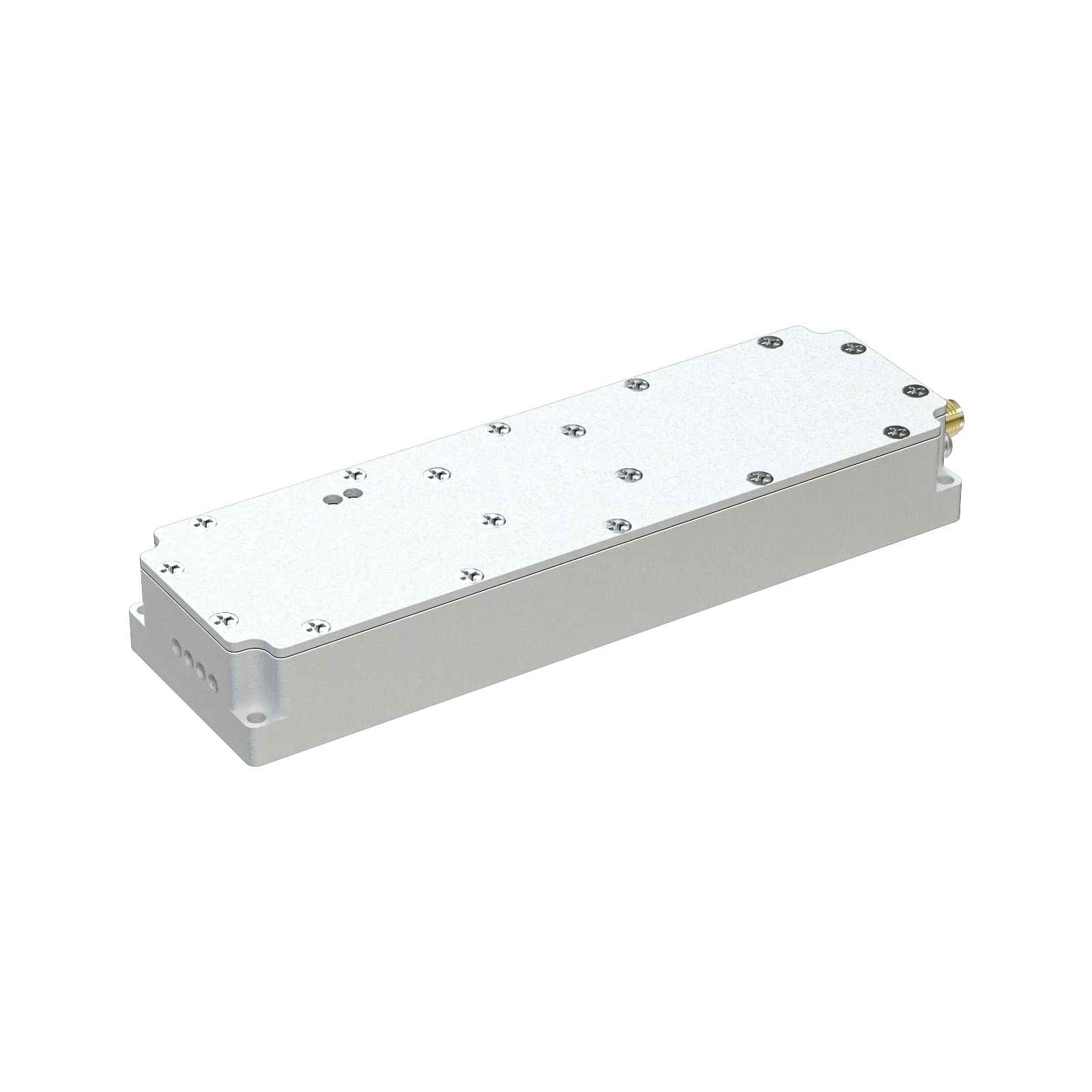
Advanced RF Connectivity Solutions for cyrf6936 module in Singapore

Empowering Singapore's Smart City Infrastructure with High-Precision Wireless Communication and Industrial-Grade RF Transceiver Technology.

Advanced RF Connectivity Solutions for cyrf6936 module in Singapore

Providing cutting-edge wireless transmission components tailored for the dense urban environment of Singapore, ensuring seamless data flow and minimal interference for critical infrastructure.

RF Manufacturing Landscape in Singapore

Analyzing the demand for specialized wireless modules in Southeast Asia's leading tech hub.

Singapore's unique position as a global logistics and financial center has driven a massive surge in the adoption of the cellular transceiver module. The city-state's high humidity and tropical climate require hardware with exceptional thermal stability and corrosion resistance to maintain signal integrity in outdoor deployments.

The local industry is currently transitioning from generic components to a specialized oem rf module approach. With the government's "Smart Nation" initiative, there is a critical need for low-power, wide-area networks (LPWAN) that can penetrate high-density concrete structures common in HDB estates and commercial skyscrapers.

Consequently, the market is seeing a rise in demand for highly configurable chips like the cc1120 module, which allows local engineers to optimize frequency bands to avoid the crowded 2.4GHz spectrum prevalent in the densely populated Singaporean urban core.
Evolution of Wireless Transmission Technology

Tracing the trajectory from basic radio frequency tools to intelligent software-defined modules.

Market Development History

In the early 2000s, the Singaporean market relied heavily on basic diy rf module kits for simple telemetry and remote control applications, characterized by fixed frequencies and limited range.

By 2010-2015, the shift toward industrial automation led to the integration of sophisticated transceivers. The introduction of the cyrf6936 module marked a pivotal point, offering better power efficiency and flexible modulation schemes for the growing IoT sector.

From 2018 to the present, the focus has shifted toward "Integrated Intelligence." RF hardware is no longer just about transmission but about adaptive frequency hopping and energy harvesting, aligning with Singapore's Green Plan 2030.

Future Development Trends

AI-Driven Spectrum Management

Integration of machine learning within the RF stack to automatically switch channels based on real-time interference patterns in urban environments.

Ultra-Low Power Sub-GHz Communication

A move toward modules that can operate for over a decade on a single coin cell, critical for Singapore's vast network of environmental sensors.

Hybrid Connectivity Architectures

The convergence of short-range RF and long-range cellular protocols within a single hardware ecosystem to ensure redundant fail-safes.

Industry Trends and Future Outlook

Forecasting the next generation of wireless communication for the Singaporean market.

Edge Computing Integration
Processing RF data at the source to reduce latency for Singapore's autonomous vehicle networks.
6G Pre-standardization
Early adoption of Terahertz frequencies for ultra-high-speed data transmission in financial districts.
Quantum-Safe Encryption
Implementing post-quantum cryptography in RF modules to protect government data transmissions.
Miniaturization Trends
Development of SoC (System-on-Chip) RF modules to reduce the physical footprint in wearable medical devices.

Industry Outlook

Based on Google search trends in the APAC region, there is a significant increase in queries regarding "low-latency industrial RF." This indicates a shift toward real-time monitoring in Singapore's Jurong Island petrochemical complex, where reliability is non-negotiable.

We anticipate that within the next 3-5 years, the market will move toward fully autonomous, self-healing wireless meshes that can dynamically reconfigure themselves during urban construction or infrastructure upgrades.

Localized Application Scenarios in Singapore

Practical implementations of RF technology across the city-state's key sectors.

01. Smart HDB Estate Management

Utilizing low-power RF modules for automated waste management and energy monitoring across high-rise residential blocks, ensuring efficient city services.

02. Port of Singapore Automation

Deploying high-reliability transceivers for the remote operation of quay cranes and AGVs (Automated Guided Vehicles) in Tuas Port.

03. Urban Heat Island Monitoring

Implementing a network of wireless sensors across the downtown core to monitor micro-climates and trigger cooling systems.

04. Changi Airport Baggage Tracking

Integrating specialized RF identification and transmission systems to optimize luggage flow and reduce transit times.

05. Marina Bay Financial District Security

Developing secure, encrypted wireless communication links for high-security government and financial installations.

Brand Story

Global Development History of Shenzhen Jiajinn Communication Co., Ltd.

Foundation & Vision

Established with the mission to solve signal attenuation in dense urban environments, specializing in high-precision RF engineering.

Technical Breakthroughs

Developed proprietary noise-reduction algorithms that significantly enhanced the range of industrial wireless modules.

Market Expansion

Successfully entered the Southeast Asian market, providing localized RF solutions for Singapore's smart infrastructure.

Innovation Leadership

Pioneered the integration of software-defined radio (SDR) into affordable OEM modules for mid-sized enterprises.

Global Sustainability

Now focusing on eco-friendly manufacturing and ultra-low power modules to support global carbon neutrality goals.

Singapore Local RF Technical FAQ

Expert answers to the most common challenges in wireless deployment.

How to optimize a cc1120 module for high-density urban areas in Singapore?

To optimize for Singapore's urban core, we recommend using narrow-band modulation and implementing a frequency-hopping spread spectrum (FHSS) strategy to mitigate interference from other wireless devices.

Which cellular transceiver module is best for Singapore's Smart Nation IoT projects?

Modules supporting NB-IoT or LTE-M are ideal, as they provide the necessary penetration for underground parking and basement utility rooms common in Singaporean architecture.

Can the cyrf6936 module handle Singapore's extreme humidity?

Yes, when paired with an industrial-grade conformal coating, the module is designed to resist moisture and prevent oxidation in tropical environments.

What are the advantages of using an oem rf module over off-the-shelf components?

OEM modules allow for customized antenna tuning and power management tailored specifically to the deployment site, reducing energy waste and improving signal reliability.

Is it possible to build a prototype using a diy rf module for local testing?

Absolutely. DIY modules are excellent for initial PoC (Proof of Concept) stages to validate signal range and data throughput before moving to a full industrial design.

What regulatory standards must RF modules meet for use in Singapore?

All modules must comply with the Infocomm Media Development Authority (IMDA) standards regarding frequency allocation and electromagnetic compatibility (EMC).

Consult Our Wireless Experts

Get a customized RF integration plan for your business in Singapore.

Contact Us Now

If you are interested in our products, you can choose to leave your information here, and we will be in touch with you shortly.


en_USEnglish