

Advanced RF Power Amplifier Design Using ADS for High Performance Systems
RF Power Amplifier Design Using ADS
Designing high-performance RF power amplifiers is crucial in many wireless communication systems. Advanced Design System (ADS) from Keysight provides a powerful platform for this task, offering sophisticated simulation and analysis tools. This article will explore the key considerations and methodologies for RF power amplifier design using ADS, covering everything from initial circuit selection to layout optimization. Effective amplifier design ensures optimal power efficiency, linearity, and stability, all vital for reliable system performance. We’ll examine how ADS streamlines this complex process, enabling engineers to rapidly prototype and refine their designs.
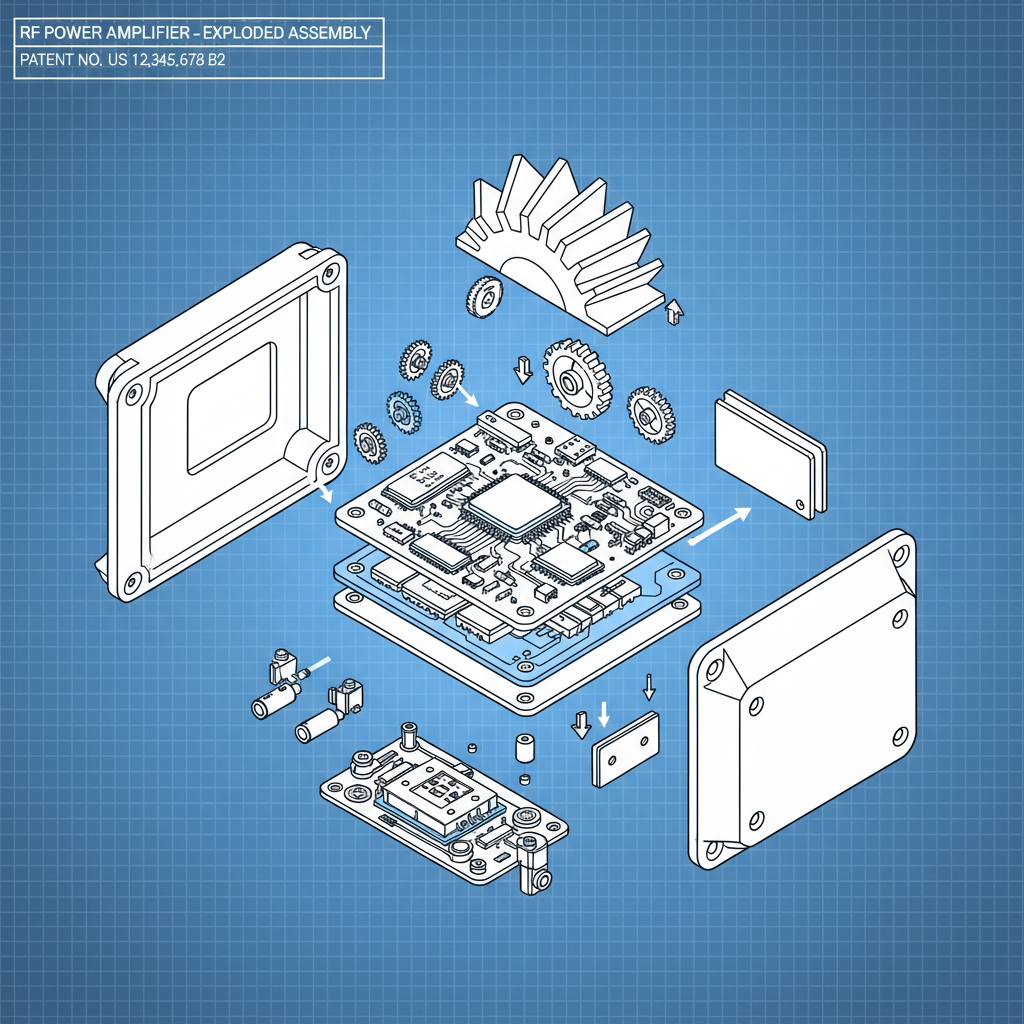
Understanding the Design Flow in ADS
The design flow in ADS typically starts with defining the amplifier specifications, including frequency of operation, output power, gain, and linearity requirements. Next, a suitable transistor technology is selected based on the desired performance characteristics and cost considerations. ADS allows for importing transistor models from various foundries. The circuit topology is then chosen, often starting with a simple single-stage design and progressively adding stages for increased power output. ADS’s harmonic balance simulation is invaluable for analyzing the amplifier’s performance, including power gain, output power, and distortion products. Finally, stability analysis ensures the amplifier doesn't oscillate, and layout considerations are incorporated to minimize parasitic effects. Drone-System specializes in optimizing these design flows for diverse applications.
Key Highlights: ADS offers comprehensive tools for circuit simulation, layout, and electromagnetic analysis, facilitating efficient RF power amplifier design.
Choosing the Right Amplifier Topology
Selecting the appropriate amplifier topology is a critical first step. Common topologies include Class A, Class B, Class AB, Class C, and more advanced options like Doherty and Envelope Tracking. Each class offers a different trade-off between power efficiency and linearity. Class A offers the highest linearity but the lowest efficiency, while Class C provides the highest efficiency but suffers from significant distortion. Doherty and Envelope Tracking amplifiers aim to combine high efficiency with reasonable linearity. ADS provides simulation capabilities to evaluate the performance of different topologies and optimize them for specific applications. The choice also depends on the target application: for broadcast, high efficiency is key, while for wireless communications, linearity is paramount. The expert team at Drone-System can help you select the best topology.
Amplifier Topology Comparison:
• Class A: High linearity, low efficiency
• Class B: Moderate linearity, moderate efficiency
• Class AB: Compromise between linearity and efficiency
• Class C: High efficiency, low linearity
• Doherty: High efficiency, good linearity
RF Power Amplifier Design Using ADS: Simulation Techniques
ADS provides several powerful simulation techniques for RF power amplifier design. Harmonic Balance (HB) simulation is essential for analyzing the amplifier’s large-signal performance, including output power, gain, and distortion products (IMD, harmonics). Envelope Tracking (ET) simulation helps optimize the supply voltage modulation to maximize efficiency. Transient simulation can reveal potential stability issues and switching behavior. ADS’s X-parameters allow for accurate modeling of active and passive components, while EM simulation provides insights into the impact of layout parasitics. By leveraging these techniques, engineers can thoroughly analyze and optimize their designs before fabrication. Our engineers at Drone-System use these simulations daily.
Layout Considerations for Optimal Performance
The physical layout of the amplifier significantly impacts its performance. Minimizing trace lengths, particularly in the input and output matching networks, reduces signal loss and improves impedance matching. Proper grounding techniques are essential to prevent ground loops and minimize noise. Decoupling capacitors should be placed close to the active device to provide a stable supply voltage. ADS provides electromagnetic (EM) simulation capabilities to analyze the impact of layout parasitics and optimize the design for best performance. Careful consideration of these layout aspects is vital for achieving the desired amplifier characteristics. Drone-System's layout experts utilize ADS to ensure optimal results.
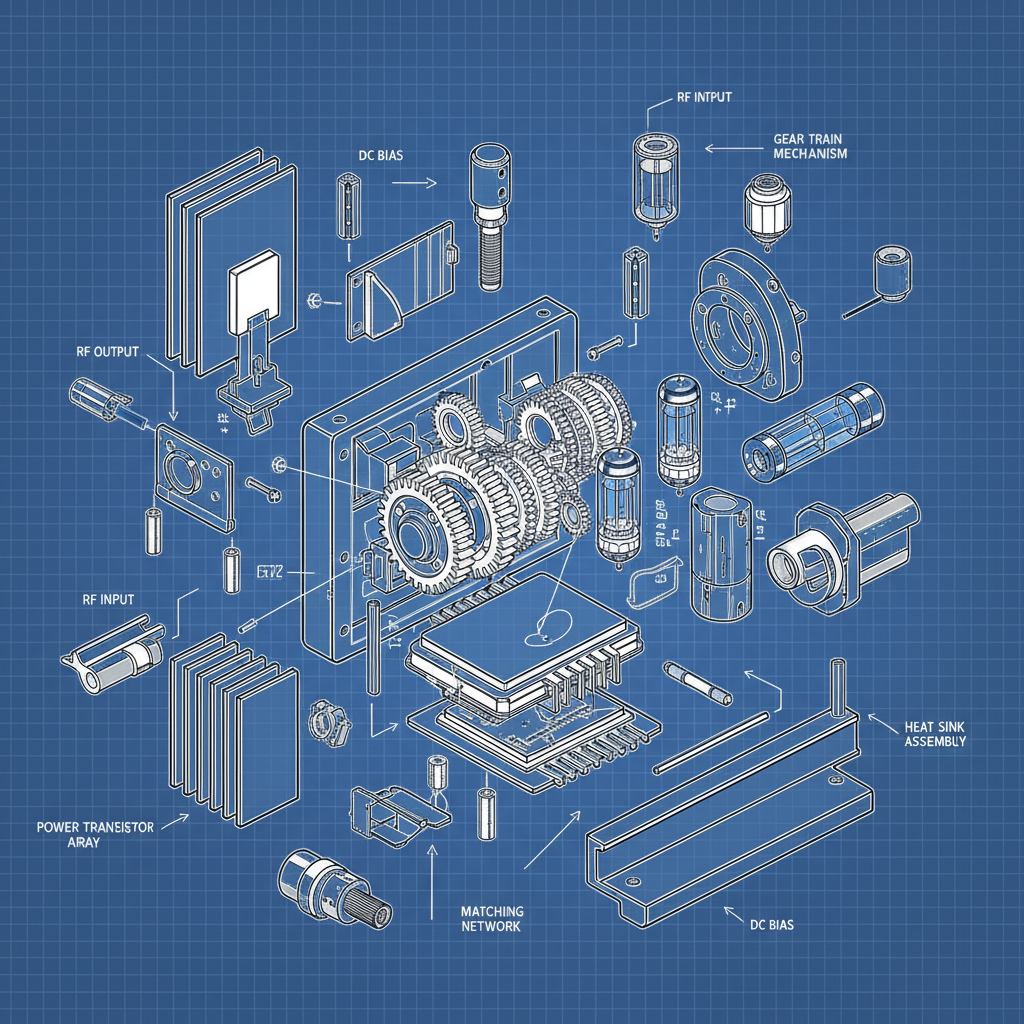
ADS and the Future of RF Power Amplifier Design
ADS continues to evolve, incorporating new features and capabilities to address the challenges of modern RF power amplifier design. Integration with machine learning algorithms is enabling automated optimization and performance prediction. Advanced simulation techniques, such as co-simulation with system-level tools, allow for more accurate modeling of real-world performance. As wireless communication systems become increasingly complex, the role of powerful design tools like ADS will become even more critical. Drone-System remains at the forefront of these advancements.
Conclusion: Leveraging ADS for Cutting-Edge Amplifier Design
Utilizing ADS effectively is paramount for designing high-performance RF power amplifiers. By mastering its simulation techniques, understanding topology trade-offs, and carefully considering layout aspects, engineers can create amplifiers that meet the demanding requirements of modern wireless communication systems.
Frequently Asked Questions (FAQs)
What are the key benefits of using ADS for RF power amplifier design?
ADS offers a comprehensive suite of tools for simulating and optimizing RF power amplifiers, including harmonic balance, envelope tracking, and electromagnetic simulation. It supports a wide range of transistor models and allows for accurate modeling of circuit parasitics. The integrated design flow streamlines the development process, reducing time-to-market. Further, ADS’s advanced analysis capabilities help ensure amplifier stability, linearity, and efficiency.
How important is impedance matching in RF power amplifier design?
Impedance matching is critically important for maximizing power transfer and minimizing signal reflections. Poor impedance matching can lead to reduced output power, increased VSWR, and potential instability. ADS provides Smith chart tools and optimization algorithms to facilitate impedance matching network design. Careful consideration of source and load impedances is essential for achieving optimal amplifier performance.
What is the role of EM simulation in amplifier design?
Electromagnetic (EM) simulation is used to analyze the impact of layout parasitics, such as trace inductance and capacitance, on amplifier performance. These parasitics can significantly affect impedance matching and stability, especially at higher frequencies. ADS’s EM simulation capabilities allow engineers to optimize the layout to minimize parasitic effects and improve performance. This is particularly important for high-frequency amplifiers where layout effects are more pronounced.
How can I ensure the stability of my RF power amplifier design in ADS?
ADS provides several tools for stability analysis, including stability circles, input/output stability factors, and S-parameter simulations. These tools help identify potential instability issues and guide the design of stabilization networks. Proper grounding, impedance matching, and careful component selection are also crucial for ensuring amplifier stability. It's essential to thoroughly analyze the stability of the amplifier before fabrication to avoid oscillations.

-
 09 March 2021 16 Apr 2026
 -
 09 March 2021 09 Apr 2026
 -
 09 March 2021 07 Apr 2026
 -
 09 March 2021 04 Apr 2026
 -
 09 March 2021 31 Mar 2026
-
 09 March 2021 21 May 2025
 -
 09 March 2021 25 Dec 2024
 -
 09 March 2021 14 Oct 2022
-
 09 March 2021 25 Dec 2024
 English
  Arabic
  Belarusian
  Danish
  Dutch
Dutch  French
  German
  Greek
Greek  Japanese
  Korean
  Myanmar
  Polish
  Portuguese
  Russian
  Spanish
  Swedish
  Thai
Thai  Ukrainian
  Vietnamese