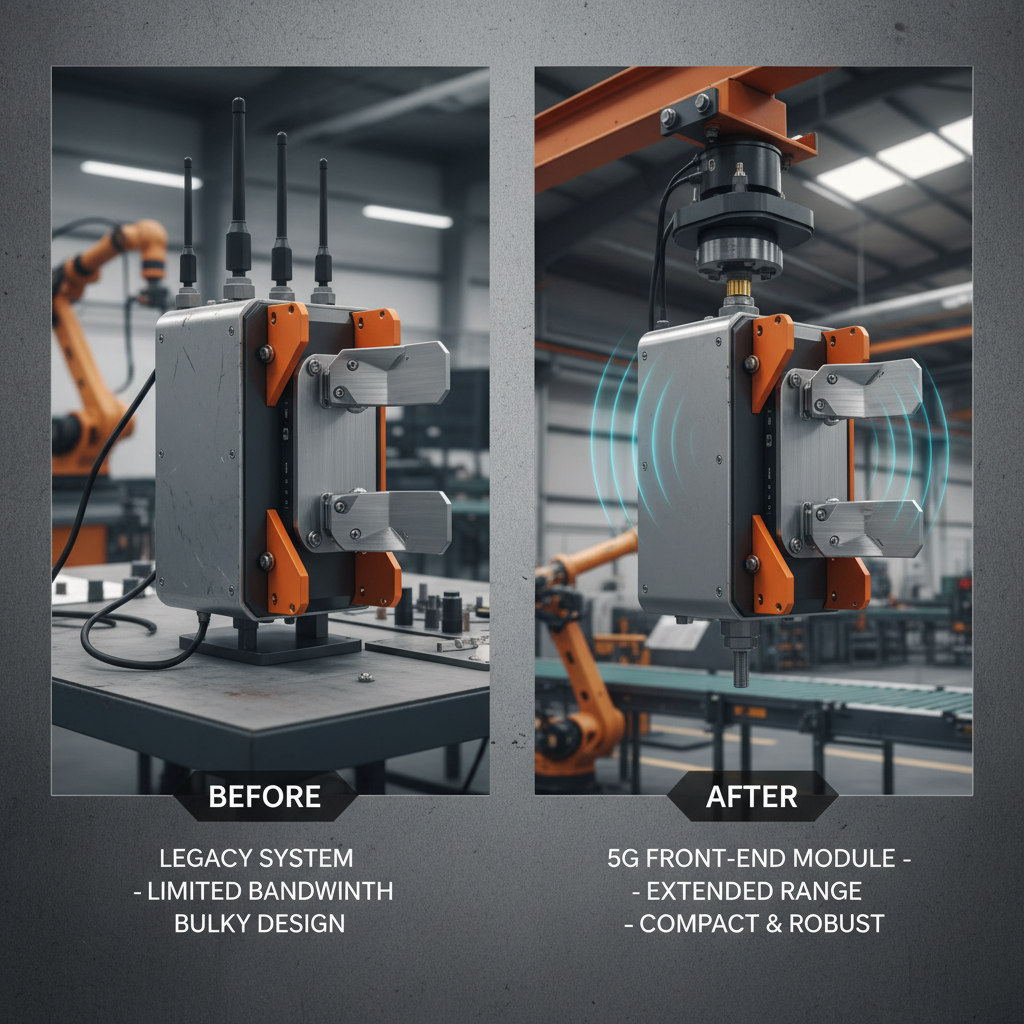
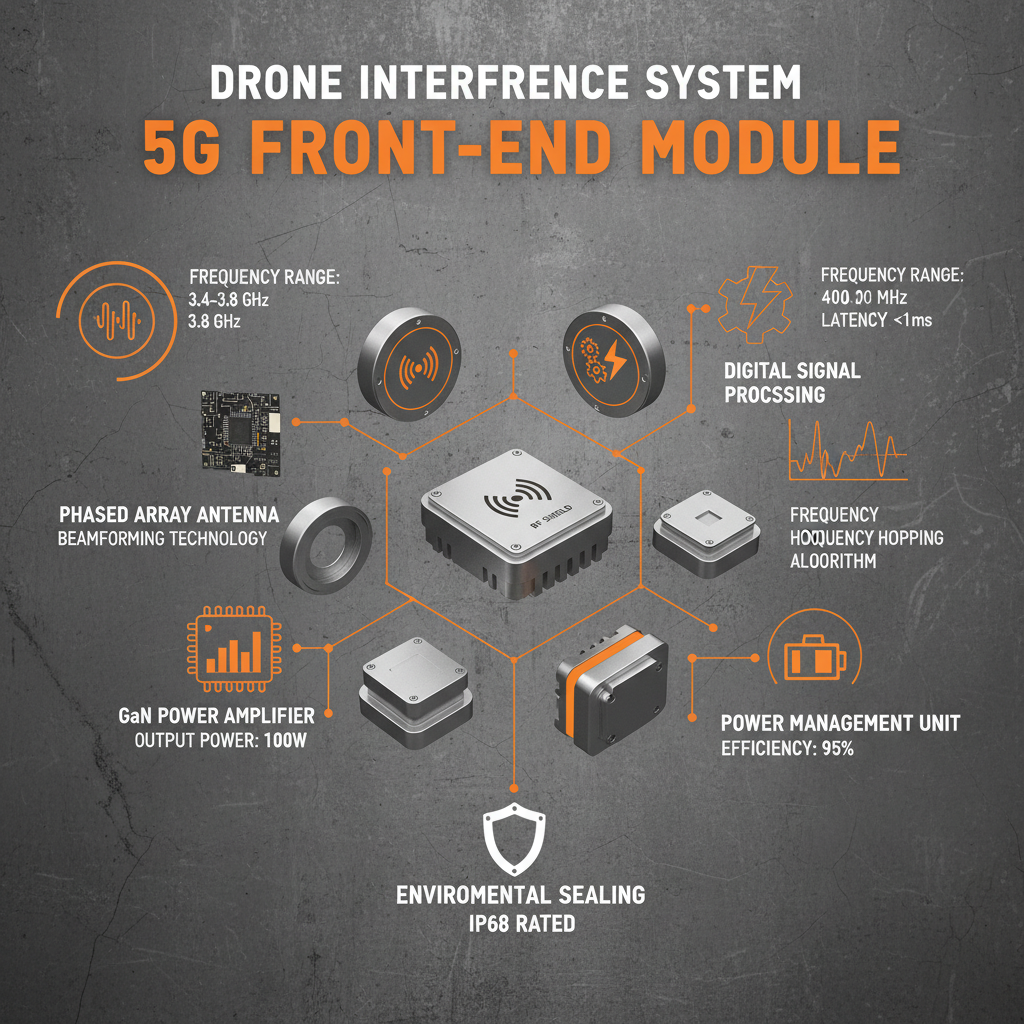
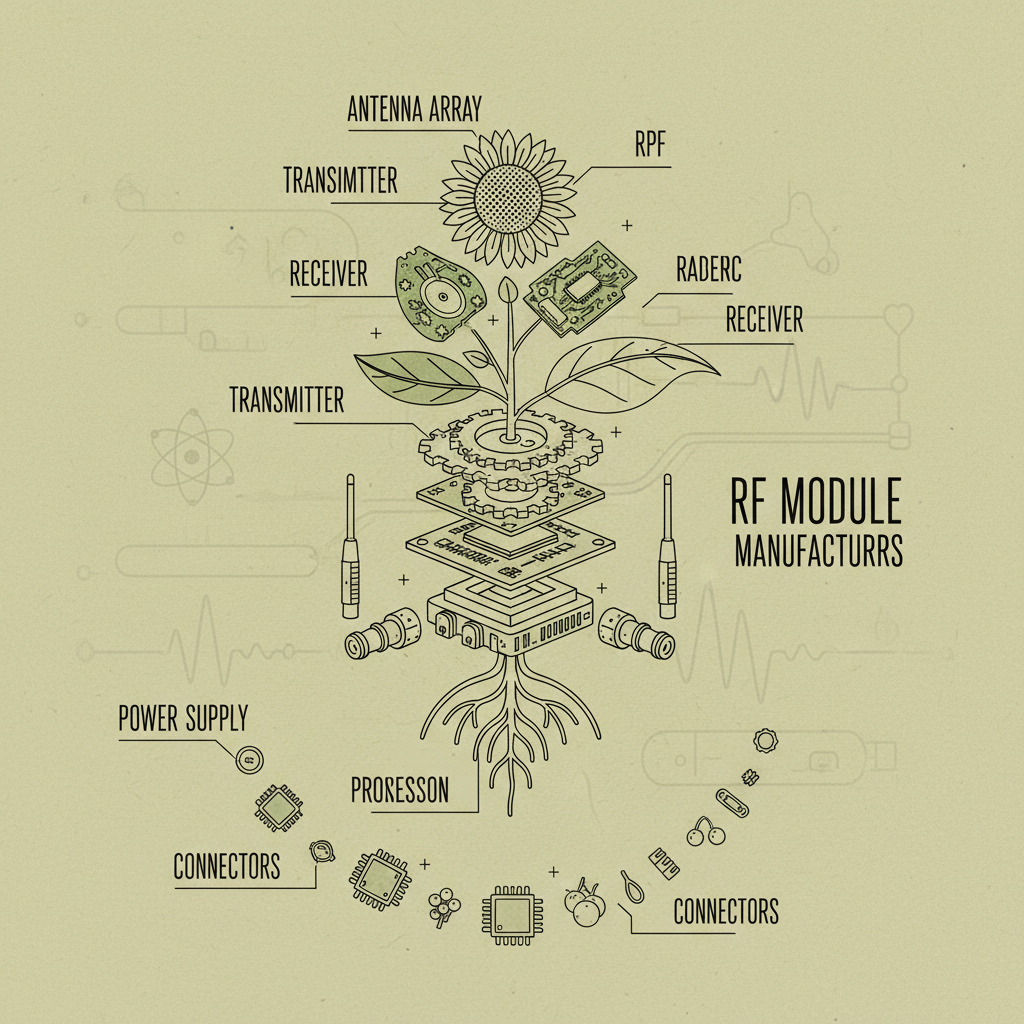
The 5G front end module represents a pivotal advancement in wireless communication technology, enabling faster data speeds, lower latency, and increased network capacity. Its importance extends across numerous sectors, from enhancing mobile broadband experiences to facilitating the widespread adoption of Internet of Things (IoT) devices and mission-critical applications. Understanding the intricacies of the 5g front end module is crucial for businesses, researchers, and policymakers alike, as it unlocks new opportunities for innovation and economic growth.
Globally, the deployment of 5G networks is accelerating, driven by increasing demand for data-intensive services and the need for more reliable connectivity. The 5g front end module is the cornerstone of this infrastructure, responsible for converting radio frequency signals into digital data and vice versa. According to the GSMA, 5G is projected to contribute $1.7 trillion to the global economy by 2030, highlighting the significant economic impact of this technology.
The 5g front end module serves as a critical link between wireless devices and the 5G network core. By optimizing signal processing and minimizing interference, it enables seamless communication and a superior user experience. This technology addresses the challenges of growing mobile data traffic and the need for enhanced network performance in diverse environments, paving the way for a more connected and efficient world.
Introduction to 5g front end module
The 5g front end module is a complex system integrating multiple components designed to efficiently manage radio frequency signals within a 5G network. This module is not just about speed; it's about providing reliable, low-latency connections crucial for emerging applications like autonomous vehicles and remote surgery. Its design emphasizes spectral efficiency and interference mitigation, which are critical in densely populated areas with numerous wireless devices.
Properly designed and implemented, the 5g front end module enhances the overall performance and capacity of 5G networks. It translates signals from the air to digital data and back, while employing advanced techniques for signal conditioning and filtering. The continual improvement of these modules ensures the 5G network can support the increasing demands of data transfer.
Global Relevance and Challenges
The global rollout of 5G is a massive undertaking, with significant implications for economic development and societal progress. Countries worldwide are vying to be at the forefront of this technology, recognizing its potential to transform industries and improve quality of life. However, the implementation is not without its hurdles, including the need for substantial infrastructure investment, spectrum allocation challenges, and concerns around security and privacy. The 5g front end module plays a vital role in overcoming these challenges, by offering solutions for efficient spectrum usage and secure data transmission.
According to the International Telecommunication Union (ITU), 5G is expected to connect over 25 billion devices by 2025, creating a massive network of interconnected sensors, machines, and people. This exponential growth in connectivity will require robust and scalable 5g front end module solutions to handle the increased data traffic and ensure reliable network performance. The UN Sustainable Development Goals also rely on improved connectivity for advancements in areas such as healthcare, education, and environmental sustainability, making 5G and its supporting technologies like the 5g front end module integral to global progress.
One of the key challenges is ensuring interoperability between different vendors and technologies. The 5g front end module needs to be compatible with a wide range of devices and network equipment to facilitate seamless communication. Standards bodies like 3GPP are working to address this issue, but ongoing collaboration and testing are essential to ensure a smooth and efficient deployment of 5G networks worldwide.
Defining the 5g front end module
In its simplest form, a 5g front end module is the radio frequency (RF) interface that connects a wireless device to the 5G network. However, it's far more sophisticated than a simple connector. It comprises a suite of integrated circuits and components, including power amplifiers, low-noise amplifiers, filters, mixers, and analog-to-digital converters. These components work together to transmit and receive signals across a wide range of frequencies, efficiently managing power and minimizing interference.
The 5g front end module is essentially the ‘ears and mouth’ of a 5G device, responsible for converting digital data into radio waves for transmission and converting received radio waves back into digital data. Its performance directly impacts the quality, range, and reliability of the wireless connection. A well-designed 5g front end module is critical for supporting the demanding requirements of 5G applications.
Modern 5g front end modules are designed to support a variety of 5G technologies, including millimeter wave (mmWave), sub-6 GHz, and massive MIMO. They also incorporate advanced features like beamforming and carrier aggregation to optimize performance and enhance network capacity. These modules bridge the gap between the digital realm of processing and the analog world of radio frequencies, enabling the seamless transfer of information.
Key Characteristics of 5g front end module
Several key characteristics define the performance and capabilities of a 5g front end module. Firstly, spectral efficiency is paramount, as 5G networks operate in increasingly crowded frequency bands. Efficient use of the spectrum is crucial for maximizing capacity and minimizing interference. Secondly, low latency is essential for applications like autonomous driving and industrial automation, demanding near-instantaneous communication. A high-performing 5g front end module is designed to minimize signal processing delays.
Another crucial aspect is power efficiency. Mobile devices need to operate for extended periods on a single battery charge. The 5g front end module must be designed to minimize power consumption without compromising performance. Scalability is also vital, as 5G networks need to support a massive number of connected devices. Modules must be adaptable to changing network demands.
5g front end module Performance Metrics
Applications of 5g front end module
The applications of 5g front end module are incredibly diverse, spanning multiple industries and sectors. In enhanced mobile broadband (eMBB), they deliver faster data speeds and improved user experiences for streaming video, online gaming, and virtual reality applications. For massive machine-type communications (mMTC), they enable the connection of millions of IoT devices, supporting smart cities, industrial automation, and precision agriculture.
In ultra-reliable low-latency communications (URLLC), 5g front end module are crucial for mission-critical applications like autonomous vehicles, remote surgery, and industrial control systems. These applications demand extremely reliable and low-latency connections, which can be achieved through advanced modulation techniques and optimized network architectures. For example, in post-disaster relief operations, a reliable 5g front end module can facilitate real-time communication and coordination between emergency responders, saving lives and minimizing damage.
Advantages and Long-Term Impact
The adoption of 5g front end module offers numerous tangible benefits, including increased network capacity, reduced latency, and improved energy efficiency. These advantages translate into cost savings for operators, enhanced user experiences for consumers, and new opportunities for innovation across various industries. Furthermore, the improved reliability and security of 5G networks enhance trust and confidence in wireless communication.
Looking ahead, 5g front end module will play a pivotal role in enabling the widespread adoption of emerging technologies like artificial intelligence (AI), augmented reality (AR), and the metaverse. These technologies require high-bandwidth, low-latency connections, which 5G and its supporting infrastructure are uniquely positioned to provide. The long-term impact of 5g front end module extends beyond technological advancements; it promises to create a more connected, efficient, and sustainable world.
Future Trends and Innovations
The future of the 5g front end module is characterized by continued innovation in materials, design, and integration. Researchers are exploring new materials like gallium nitride (GaN) and silicon carbide (SiC) to improve power efficiency and performance. Advanced packaging techniques, such as chiplet integration, are also gaining traction, enabling the creation of more compact and scalable modules.
Another key trend is the integration of AI and machine learning (ML) into 5g front end module design and operation. AI algorithms can be used to optimize signal processing, predict network demand, and dynamically allocate resources, leading to improved network performance and efficiency. Furthermore, the convergence of 5G with other technologies like edge computing and network slicing will create new opportunities for innovative applications and services.
The ongoing pursuit of sustainability is also driving innovation in 5g front end module design. Researchers are focused on reducing the energy consumption of these modules and developing environmentally friendly manufacturing processes. This commitment to sustainability aligns with global efforts to mitigate climate change and promote a circular economy.
FAQS
5G front end modules offer significant improvements over 4G modules, primarily in terms of speed, latency, and capacity. They support much higher data rates, enabling faster downloads and streaming, while also reducing latency for real-time applications. Additionally, 5G modules can handle a larger number of connected devices, making them ideal for IoT and smart city deployments. The advanced beamforming and MIMO technologies employed in 5g front end module further enhance signal quality and network performance.
Designing a high-performance 5g front end module presents several challenges, including managing signal complexity, achieving high power efficiency, and minimizing interference. The need to support a wide range of frequencies and bandwidths requires sophisticated RF circuitry and advanced signal processing algorithms. Thermal management is also a critical concern, as high-power components can generate significant heat. Furthermore, ensuring interoperability with different 5G network standards and devices requires careful design and testing.
The 5g front end module significantly contributes to network efficiency by optimizing signal transmission and reception. Its ability to filter noise, amplify signals, and dynamically adjust power levels minimizes interference and maximizes spectrum utilization. By supporting advanced technologies like beamforming and MIMO, it increases network capacity and improves data throughput. Efficient power management within the module also reduces energy consumption, leading to lower operating costs for network operators.
Millimeter wave (mmWave) is a key component of 5G, offering extremely high bandwidths and enabling ultra-fast data rates. However, mmWave signals are susceptible to atmospheric absorption and require specialized 5g front end module to effectively transmit and receive them. These modules incorporate advanced beamforming techniques to focus the signal and overcome path loss. They also require sophisticated antenna designs and signal processing algorithms to maximize performance in challenging environments.
Emerging trends in materials for 5g front end module include the use of gallium nitride (GaN) and silicon carbide (SiC). These wide-bandgap semiconductors offer superior power handling capabilities, higher frequencies, and better thermal performance compared to traditional silicon-based materials. They enable the design of more efficient and compact 5g front end module, crucial for supporting the demanding requirements of 5G networks. Research is also ongoing to explore new materials and fabrication techniques to further enhance performance and reduce costs.
Integrating Artificial Intelligence (AI) and Machine Learning (ML) into 5g front end module allows for dynamic optimization of performance. AI/ML algorithms can predict network conditions, optimize signal processing parameters, and adaptively allocate resources. This results in improved data throughput, reduced latency, and enhanced energy efficiency. AI/ML can also be used for predictive maintenance, identifying potential failures before they occur and ensuring network reliability.
Conclusion
The 5g front end module is a cornerstone of the 5G revolution, enabling faster speeds, lower latency, and increased network capacity. Its impact spans numerous industries, from mobile broadband and IoT to autonomous vehicles and industrial automation. Understanding the key characteristics, applications, and future trends of 5g front end module is crucial for anyone involved in the development, deployment, or utilization of 5G technology.
As 5G networks continue to expand and evolve, the 5g front end module will remain a critical area of innovation. Further advancements in materials, design, and integration will unlock even greater performance and efficiency, paving the way for a more connected and intelligent future. To learn more about our 5g front end module solutions and how we can help you unlock the full potential of 5G, visit our website: www.drone-system.com.