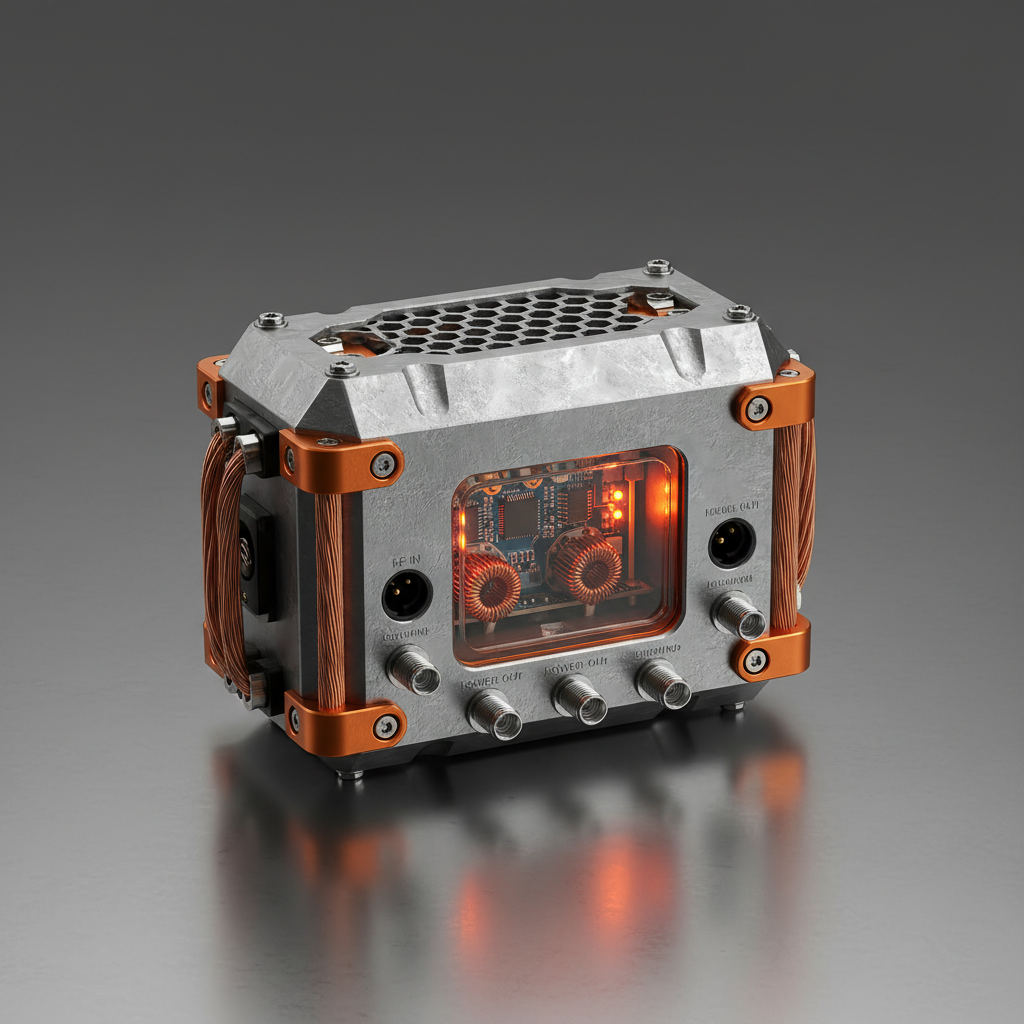
The realm of radio frequency (RF) technology is pervasive in modern life, underpinning everything from mobile communications and broadcasting to radar systems and medical imaging. At the heart of many of these systems lies the rf amplifier module, a critical component responsible for boosting the power of RF signals. Understanding these modules is crucial for engineers, technicians, and anyone involved in designing, implementing, or maintaining RF systems. The consistent advancement of rf amplifier module technology directly impacts the performance, efficiency, and reliability of countless applications we rely on daily.
The demand for high-performance RF amplification is driven by the exponential growth in wireless communication, specifically 5G and beyond. As data rates increase and network complexity expands, the need for efficient and reliable rf amplifier modules to deliver stronger signals and wider coverage becomes paramount. Globally, industries like telecommunications, aerospace, and defense are heavily invested in RF technology, driving continuous innovation and a robust market.
Challenges exist in minimizing signal distortion, improving power efficiency, and reducing the size and cost of these modules. Solving these challenges unlocks opportunities for improved communication, advanced sensing, and more efficient energy utilization across numerous sectors. Proper understanding of rf amplifier module will enhance our quality of life and industrial performance.
The Core Principles of rf amplifier module
At its core, an rf amplifier module takes a weak RF signal and increases its power. This amplification is achieved using active devices like transistors or vacuum tubes, configured in various amplifier classes (A, B, AB, C) to optimize performance characteristics such as linearity, efficiency, and output power. The design of an rf amplifier module involves careful impedance matching, bias network design, and thermal management to ensure stable and efficient operation.
Understanding key parameters like gain, bandwidth, noise figure, and input/output impedance is essential for selecting the appropriate rf amplifier module for a specific application. These parameters directly impact signal quality, system sensitivity, and overall performance.
Global Significance and Market Dynamics
The global market for RF amplifiers is substantial and continually growing, fueled by expanding applications in telecommunications, defense, aerospace, and industrial sectors. North America currently holds a significant market share due to strong investment in 5G infrastructure and defense technologies, but Asia-Pacific is rapidly emerging as a key growth region, driven by increasing demand from China and India. According to recent market reports, the RF amplifier market is projected to reach several billion dollars in the coming years, demonstrating its strategic importance.
The rise of 5G networks is a major driver of demand for high-performance rf amplifier modules capable of operating at higher frequencies and delivering wider bandwidths. Furthermore, the increasing adoption of radar systems for autonomous vehicles, weather forecasting, and security applications is creating new opportunities for RF amplifier manufacturers. The geopolitical landscape and national security concerns further contribute to the demand for advanced RF technologies.
However, challenges such as supply chain disruptions, component shortages, and increasing manufacturing costs pose significant hurdles for the industry. Companies are actively investing in research and development to overcome these challenges and maintain a competitive edge.
Defining the rf amplifier module
An rf amplifier module is a self-contained electronic circuit designed to amplify radio frequency (RF) signals. It typically consists of one or more active amplifying devices, such as transistors or integrated circuits, along with passive components like resistors, capacitors, and inductors, all packaged into a single module. The module provides a defined level of gain, typically expressed in decibels (dB), to increase the signal's power.
Unlike simple discrete amplifier circuits, an rf amplifier module is often designed and optimized for specific applications, providing pre-matched impedances and integrated filtering to minimize signal reflections and ensure efficient power transfer. This modular approach simplifies system integration and reduces design time for RF engineers.
The connection to modern industry and humanitarian needs is profound. Reliable RF amplification is essential for wireless communication, medical devices, satellite communications, and countless other technologies. In humanitarian efforts, RF amplifiers facilitate emergency communication networks and remote sensing applications, aiding in disaster relief and infrastructure development.
Key Characteristics of rf amplifier module
Several key characteristics define the performance and suitability of an rf amplifier module. Gain refers to the amount of signal amplification provided, measured in decibels. Linearity indicates how faithfully the amplifier reproduces the signal without introducing distortion. Bandwidth determines the range of frequencies the amplifier can effectively amplify.
Noise Figure represents the amount of noise added by the amplifier to the signal, a critical factor for sensitive receiver applications. Power Efficiency indicates how effectively the amplifier converts DC power into RF output power. These parameters are interlinked, and optimizing them requires careful trade-offs based on the specific application requirements.
rf amplifier module Performance Metrics
Practical Applications Across Industries
The applications of rf amplifier modules are incredibly diverse. In telecommunications, they are crucial for cellular base stations, satellite communication systems, and microwave links, ensuring reliable signal transmission. In the aerospace and defense sectors, they are used in radar systems, electronic warfare equipment, and communication systems for aircraft and spacecraft.
Furthermore, RF amplifiers play a vital role in medical devices such as MRI machines and radiation therapy equipment, providing the necessary power for imaging and treatment. In industrial applications, they are used in process control systems, remote monitoring equipment, and scientific instruments. In remote industrial zones, reliable RF amplification is essential for maintaining communication links and controlling remote equipment.
Long-Term Advantages and Value Proposition
Investing in high-quality rf amplifier modules delivers significant long-term advantages. Improved signal quality and reliability translate to enhanced system performance and reduced downtime, leading to cost savings. Increased power efficiency reduces energy consumption and lowers operating expenses. The ability to support higher data rates and wider bandwidths future-proofs systems, ensuring they can adapt to evolving technologies.
From a societal perspective, robust RF communication infrastructure enhances public safety, supports economic growth, and improves access to information and essential services. The trust placed in these technologies demands reliability and longevity, making a strategic investment in quality amplification modules paramount.
Future Trends in rf amplifier module Technology
The future of rf amplifier module technology is focused on several key areas. Gallium Nitride (GaN) and Silicon Carbide (SiC) technologies are gaining prominence due to their superior power handling capabilities and efficiency compared to traditional silicon-based amplifiers. Integration of artificial intelligence (AI) and machine learning (ML) algorithms to optimize amplifier performance in real-time is also emerging.
Another trend is the development of highly integrated rf amplifier modules combining amplification, filtering, and other functionalities into a single chip, reducing size and complexity. Furthermore, research is focused on developing more energy-efficient and sustainable amplifier designs to minimize environmental impact. The development of new materials and fabrication techniques will drive further advancements in this field.
The drive towards sustainability is influencing the design of rf amplifier modules, with a focus on reducing power consumption and utilizing eco-friendly materials. The convergence of RF technology with digital transformation and automation is creating opportunities for smarter and more connected systems.
Summary of rf amplifier module Key Characteristics
| Characteristic |
Description |
Typical Value Range |
Impact on System Performance |
| Gain |
The amount of signal amplification. |
10-30 dB |
Determines signal strength and range. |
| Linearity |
How faithfully the amplifier reproduces the signal. |
Measured in dBc (decibels relative to carrier) |
Minimizes signal distortion and ensures data integrity. |
| Bandwidth |
The range of frequencies the amplifier can effectively amplify. |
MHz or GHz |
Determines the range of signals that can be processed. |
| Noise Figure |
The amount of noise added by the amplifier. |
dB |
Impacts system sensitivity and signal-to-noise ratio. |
| Power Efficiency |
How efficiently the amplifier converts DC power into RF output power. |
Percentage (%) |
Reduces energy consumption and heat dissipation. |
| Impedance Matching |
Ensuring optimal power transfer between source and load. |
Measured in Ohms (Ω) |
Maximizes signal strength and minimizes reflections. |
FAQS
The lifespan of an rf amplifier module varies depending on operating conditions, quality of components, and thermal management. Generally, well-maintained modules can operate effectively for 5-10 years, or even longer in less demanding applications. Factors such as high operating temperatures, excessive voltage swings, and prolonged exposure to harsh environments can significantly reduce lifespan. Regular maintenance and proper cooling are crucial for maximizing longevity.
Temperature plays a critical role in the performance of rf amplifier modules. Elevated temperatures can reduce gain, increase noise figure, and even lead to thermal runaway and device failure. Conversely, excessively low temperatures can affect component characteristics and reduce efficiency. Proper thermal management, including heat sinks, fans, and careful component selection, is essential for maintaining stable and reliable operation across a wide temperature range.
Class A amplifiers offer the highest linearity but the lowest efficiency. Class B amplifiers provide higher efficiency but suffer from increased distortion. Class C amplifiers maximize efficiency but have significant distortion and are typically used in applications where linearity is not critical. The choice of amplifier class depends on the specific application requirements, balancing the need for linearity, efficiency, and output power.
Impedance matching is the process of ensuring that the input and output impedances of an rf amplifier module are matched to the source and load impedances, respectively. This maximizes power transfer and minimizes signal reflections. Mismatched impedances can lead to reduced gain, increased standing wave ratio (SWR), and potential damage to the amplifier. Proper impedance matching is crucial for optimal performance and reliability.
Selecting the appropriate rf amplifier module requires careful consideration of several factors, including frequency, bandwidth, gain, linearity, noise figure, power efficiency, and impedance. Start by defining your application requirements and then comparing the specifications of different modules to find the best fit. Consider factors like operating voltage, temperature range, and physical size. Consulting with an RF engineer can help ensure you make the optimal choice.
Regular maintenance for an rf amplifier module typically involves visual inspection for any signs of damage, cleaning to remove dust and debris, and monitoring operating temperatures. Periodic testing of key performance parameters like gain and noise figure can help identify any degradation in performance. Proper cooling and ventilation are essential for preventing overheating and ensuring long-term reliability.
Conclusion
In conclusion, the rf amplifier module remains a foundational component in modern technology, driving advancements across a vast spectrum of industries. Its ability to enhance signal strength and reliability is pivotal to the functionality of countless systems, from mobile communications to medical devices. Understanding its core principles, key characteristics, and emerging trends is crucial for engineers, researchers, and anyone involved in the RF technology landscape.
As we look to the future, the continuous innovation in materials, design, and integration techniques promises even more efficient, powerful, and versatile rf amplifier modules. Investing in research and development, embracing new technologies like GaN and SiC, and prioritizing sustainable practices will be key to unlocking the full potential of this essential component. Visit our website at www.drone-system.com to explore our range of cutting-edge rf amplifier module solutions.