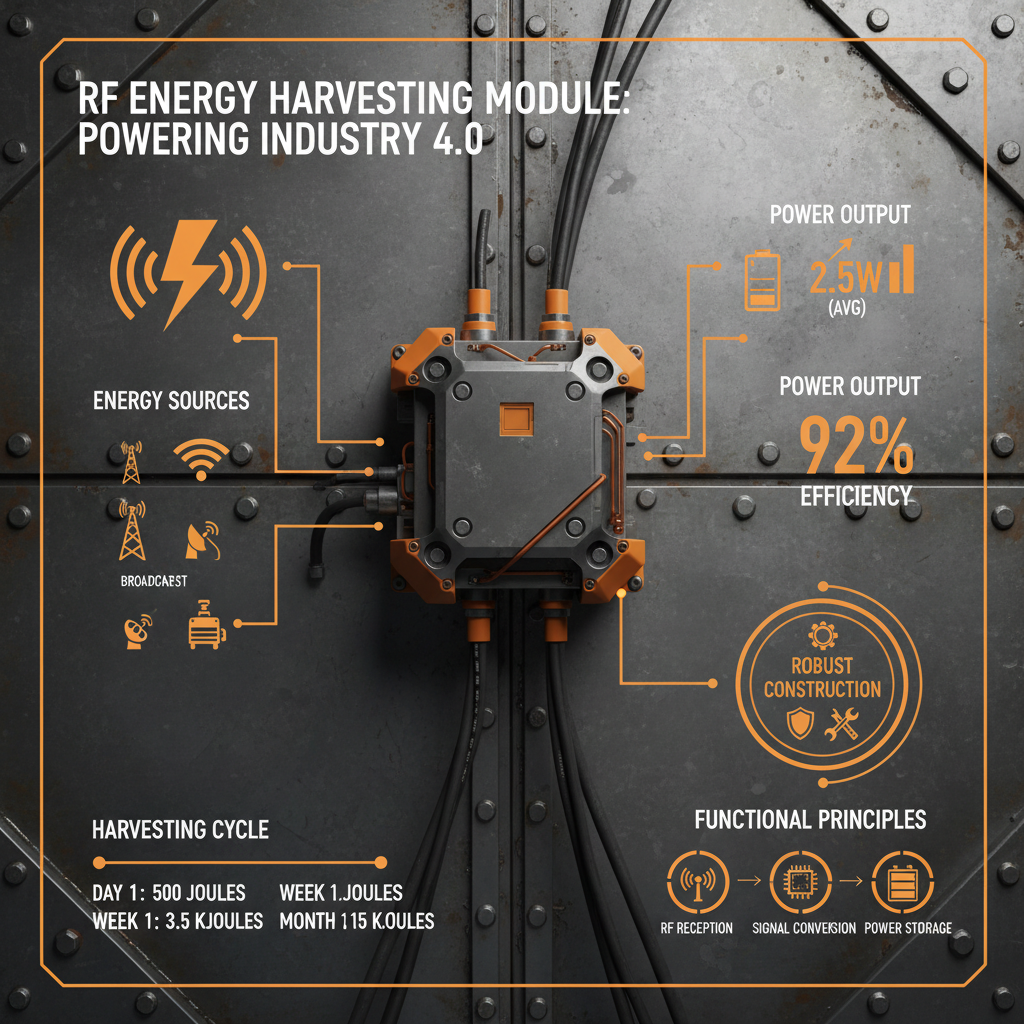
The world is increasingly reliant on wireless technology, creating a vast, often untapped, source of energy in the form of radio frequency (RF) signals. rf energy harvesting module technologies are emerging as a potential solution to power low-energy devices, reducing reliance on batteries and enabling truly wireless sensor networks. This has profound implications for a wide range of applications, from environmental monitoring to industrial automation and beyond.
The need for sustainable and self-powered devices is driven by several factors, including the environmental impact of battery waste and the logistical challenges of replacing batteries in remote or inaccessible locations. rf energy harvesting module offers a promising pathway towards a future where devices can operate autonomously, drawing power from the ambient RF energy present in their surroundings. The efficiency and practicality of these modules are continuously improving, driving their adoption across multiple sectors.
Understanding the principles and potential of rf energy harvesting module is becoming crucial for engineers, researchers, and anyone involved in the development of next-generation wireless systems. This technology presents a unique opportunity to create self-sufficient and environmentally friendly solutions, addressing growing concerns about energy sustainability and device maintenance.
The Fundamentals of rf energy harvesting module
At its core, rf energy harvesting module involves capturing and converting ambient radio frequency signals into usable electrical energy. These signals are ubiquitous, emanating from sources such as television and radio broadcasts, cellular networks, and Wi-Fi routers. The amount of energy available is typically small, requiring sophisticated techniques to efficiently capture and convert it.
The process involves several key stages: antenna reception, RF-to-DC conversion, and power management. The antenna is designed to maximize the capture of RF energy, while the conversion circuit rectifies the AC RF signal into DC power. Power management circuitry then regulates and stores the harvested energy for use by the target device.
The Global Landscape of rf Energy Harvesting
The global market for energy harvesting technologies, including rf energy harvesting module, is experiencing significant growth. Driven by the increasing demand for wireless sensor networks, the Internet of Things (IoT), and sustainable energy solutions, the market is projected to reach substantial valuations in the coming years. North America and Europe currently lead in research and development, with Asia-Pacific emerging as a major manufacturing hub.
According to recent reports, the wireless sensor network market alone is expanding rapidly, fueling the need for self-powered devices. The United Nations Sustainable Development Goals (SDGs), particularly those related to affordable and clean energy (SDG 7) and sustainable cities and communities (SDG 11), also contribute to the demand for innovative energy harvesting solutions.
Challenges remain in widespread adoption, including the limited power output and the need for efficient energy storage. However, advancements in materials science and circuit design are continuously improving the performance and practicality of rf energy harvesting module technologies.
Defining rf energy harvesting module: A Core Technology
rf energy harvesting module is the process of capturing ambient radio frequency (RF) energy – electromagnetic radiation emitted by various sources like TV broadcasts, radio stations, mobile phone towers, and Wi-Fi routers – and converting it into usable electrical power. It differs from traditional energy harvesting methods like solar or vibration harvesting in its reliance on a readily available, though often low-intensity, energy source.
This technology is particularly relevant to the burgeoning field of the Internet of Things (IoT), where a vast network of interconnected devices requires a sustainable and cost-effective power source. Traditional batteries pose limitations in terms of lifespan, maintenance, and environmental impact, making rf energy harvesting module an attractive alternative.
The concept aligns with broader humanitarian needs as well, offering the potential to power remote sensors in environmental monitoring, disaster relief efforts, and healthcare applications in areas with limited access to conventional power infrastructure. The ability to operate without relying on grid electricity or battery replacements has significant benefits in such scenarios.
Key Components of Effective rf energy harvesting module
Several key factors determine the effectiveness of an rf energy harvesting module system. Firstly, Antenna Efficiency is paramount. The antenna must be designed to maximize the capture of RF energy across a broad frequency spectrum, requiring careful impedance matching and optimization.
Secondly, Rectifier Circuit Design is critical. The rectifier converts the alternating current (AC) RF signal into direct current (DC) power. The efficiency of this conversion process directly impacts the overall power output of the system. Schottky diodes are commonly used due to their low forward voltage drop.
Comparison of rf energy harvesting module Methods
Real-World Applications of rf energy harvesting module
rf energy harvesting module is finding application in a diverse range of fields. In environmental monitoring, it powers remote sensors that track temperature, humidity, and air quality, transmitting data wirelessly without the need for battery replacements.
In smart homes, it can power low-power devices like wireless light switches and sensors, contributing to greater energy efficiency and convenience. Industrial applications include powering wireless sensors for predictive maintenance, reducing downtime and improving operational efficiency.
Benefits and the Long-Term Value Proposition
The advantages of rf energy harvesting module extend beyond cost savings. By reducing reliance on batteries, it minimizes environmental waste and promotes sustainable practices. It also enhances the reliability of wireless systems, eliminating the need for frequent battery replacements in remote or difficult-to-access locations.
From a societal perspective, this technology can empower communities in developing countries by providing access to essential monitoring and communication systems. The increased longevity and reduced maintenance requirements contribute to long-term cost savings and improved system resilience, fostering trust and innovation.
Future Trends and Innovations in rf energy harvesting module
Ongoing research focuses on improving the efficiency of RF-to-DC conversion and developing new antenna designs that can capture a wider range of frequencies. The integration of artificial intelligence (AI) and machine learning (ML) is also promising, enabling adaptive power management and optimized energy harvesting strategies.
Advancements in metamaterials and nanotechnology are expected to yield even more efficient and compact rf energy harvesting module systems. Policy initiatives promoting green energy and sustainable technologies are likely to accelerate the adoption of this technology across various sectors.
The convergence of rf energy harvesting module with other emerging technologies, such as 5G and edge computing, will create new opportunities for innovative applications and further drive its market growth.
Summary of Challenges and Potential Solutions in rf energy harvesting module Development
| Challenge |
Impact on rf energy harvesting module Performance |
Potential Solution |
Implementation Difficulty (1-5, 5=highest) |
| Low Power Density |
Limits the range of devices that can be powered. |
Advanced antenna design and multi-band harvesting. |
3 |
| Frequency Selectivity |
Difficulty harvesting energy from multiple sources simultaneously. |
Broadband antenna designs and dynamic frequency selection. |
4 |
| Rectifier Efficiency |
Significant energy loss during the AC to DC conversion process. |
Utilizing low-threshold Schottky diodes and impedance matching. |
2 |
| Energy Storage |
Intermittent energy harvesting requires efficient storage. |
Supercapacitors or micro-batteries for energy buffering. |
3 |
| Environmental Interference |
Noise and interference reduce harvesting efficiency. |
Filtering techniques and shielding to minimize interference. |
2 |
| Cost of Components |
High initial investment can hinder widespread adoption. |
Material optimization and economies of scale in manufacturing. |
4 |
FAQS
The power output from an rf energy harvesting module is highly dependent on factors like antenna efficiency, RF signal strength, and the conversion circuitry used. Typically, current modules generate microwatts to milliwatts of power. While this isn’t enough to power high-demand devices, it’s sufficient for low-power sensors, microcontrollers, and wireless communication modules. Improvements in technology are continually increasing this output.
Currently, powering devices like smartphones or laptops solely with rf energy harvesting module is not feasible due to their high energy demands. These devices require significantly more power than can be reliably harvested from ambient RF sources. However, it could potentially supplement battery life in the future or power auxiliary functions, like Bluetooth connectivity, in conjunction with other power sources.
Most rf energy harvesting module designs target common frequencies used for wireless communication, such as those used by cellular networks (e.g., 900 MHz, 1800 MHz, 2.4 GHz), Wi-Fi (2.4 GHz, 5 GHz), and broadcasting signals. However, the optimal frequency range depends on the specific application and the RF environment. Broadband antennas are designed to capture energy across a wider range of frequencies.
The primary limitations are the relatively low power density of ambient RF signals and the efficiency of the energy harvesting process. Signal strength varies significantly depending on location and proximity to RF sources. Conversion losses in the rectifier circuit also reduce overall efficiency. Furthermore, energy storage can be challenging due to the intermittent nature of RF energy availability.
Yes, rf energy harvesting module is considered an environmentally friendly power source because it utilizes existing ambient energy instead of relying on finite resources like fossil fuels. It reduces the need for disposable batteries, thereby minimizing environmental waste and pollution. By enabling self-powered devices, it contributes to a more sustainable and circular economy.
While generally secure, rf energy harvesting module systems could potentially be vulnerable to intentional interference or jamming attacks. A malicious actor could disrupt the harvesting process by emitting strong signals that overwhelm the receiver. Security measures, such as signal filtering and encryption, can be implemented to mitigate these risks.
Conclusion
rf energy harvesting module represents a paradigm shift in how we power low-energy devices, offering a sustainable and cost-effective alternative to traditional battery-based systems. Its ability to harness ambient RF energy opens up new possibilities for a wide range of applications, from environmental monitoring to smart homes and industrial automation. While challenges remain, ongoing advancements in materials science, circuit design, and AI are continuously improving its performance and practicality.
Looking ahead, rf energy harvesting module is poised to play a significant role in the future of the Internet of Things and sustainable energy solutions. Further research and development, coupled with supportive policy initiatives, will accelerate its adoption and unlock its full potential. To learn more about our rf energy harvesting module solutions and how they can benefit your projects, visit our website today!