

Comprehensive Guide to RF Amplifier Circuit Design – Principles, Applications & Trends
Understanding RF Amplifier Circuit Design: The Backbone of Modern Communication
RF amplifier circuit design might sound like a mouthful, but at its core, it’s the wizard behind the curtains that makes wireless communication happen — from your smartphone calls to satellite broadcasts and even emergency rescue signals. The importance of mastering this design isn’t just academic; it's global. As we steadily move into an age reliant on instant data and continuous connectivity, knowing how to efficiently design these amplifiers means improved signal clarity, energy efficiency, and broader reach. The key benefits? Enhanced network reliability, cost savings, and the ability to innovate with newer communication tech.
Global Context: Why RF Amplifier Circuit Design Matters Today
Even the United Nations has highlighted access to dependable communication technology as crucial for economic development and disaster response (1). According to recent data from the International Telecommunication Union (ITU), there are over 5 billion mobile phone users worldwide, and that number’s only growing. Behind that explosive connectivity are countless RF amplifiers optimizing signals daily.
However, challenges like signal degradation in dense urban areas or energy wastage in power-hungry designs plague the telecom industry. Effective rf amplifier circuit design directly addresses these challenges by creating circuits that amplify weak signals without excessive noise or distortion, thereby improving overall system performance.
What Exactly Is RF Amplifier Circuit Design?
Simply put, RF amplifier circuit design is the process of creating electronic circuits that boost radio frequency signals. Unlike audio amplifiers that you find in speakers, RF amplifiers operate in the high-frequency spectrum (from about 3 kHz to 300 GHz). This amplification allows weak signals, like those from a distant satellite or a mobile phone tower, to be strengthened for clearer reception.
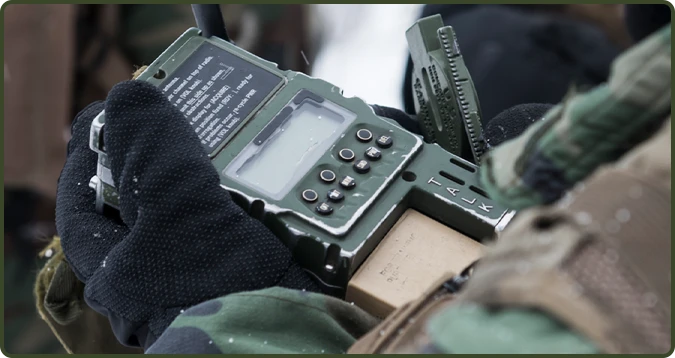
This design touches a variety of industries: telecommunications, aerospace, defense, even medical devices. For example, humanitarian organizations rely on RF amplifiers in radios for disaster-struck, infrastructure-poor regions — making communication possible when it matters most.
Core Components of Effective RF Amplifier Circuit Design
1. Gain and Linearity
The ability to amplify signals without distortion is critical. Engineers strive for a high gain (signal boost) while keeping linearity — meaning the amplified output remains a faithful representation of the input signal.
2. Noise Figure
Amplifiers introduce some noise, but the design’s goal is to minimize it — crucial in weak signal environments. Lower noise figures enhance clarity, especially in satellite or deep-space communications.
3. Power Efficiency
Power consumption often poses logistical challenges, especially for remote installations. Efficient design reduces energy waste, extends battery life, and lowers operational costs.
4. Bandwidth
RF amplifiers need to support specific frequency bands tailored to application demands — whether narrowband for point-to-point links or broadband for Wi-Fi and cellular systems.
5. Durability and Thermal Management
As these circuits generate heat during operation, good thermal design ensures longevity and reduces failures in harsh environments.
Mini Takeaway:
Mastering these components allows engineers to tailor RF amplifier designs that meet specific application needs — balancing power, clarity, and efficiency.
Global Applications: Where and How RF Amplifier Circuit Design Makes a Difference
- Telecommunications: Cellular towers use specialized RF amplifiers to improve call quality and data throughput worldwide — particularly vital in quickly expanding markets like Southeast Asia.
- Emergency Response: NGOs deploy portable radio systems with ruggedized amplifiers during disasters in Africa and the Caribbean, enabling disaster relief teams to coordinate operations in devastated zones.
- Broadcasting: Radio and TV stations rely on high-power RF amplifiers to cover extensive areas, reaching millions daily.
- Space Exploration: Space agencies in the US, Europe, and Asia design ultra-low-noise amplifiers for deep-space probes to receive signals billions of miles away.
- Industrial IoT: Remote mines or oil fields use RF amplifiers in wireless sensor networks to monitor critical equipment, often in places where wired solutions are impractical.
Oddly enough, even rural healthcare systems in developing countries benefit from these technologies by transmitting patient data over long distances using RF-based devices.
Advantages and Long-Term Value of Robust RF Amplifier Circuit Design
First off, well-designed RF amplifiers minimize dropouts and dead zones—which means more trustworthy communication. This reliability is especially critical in medical and emergency contexts, where lives depend on clear, uninterrupted signals.
Cost-wise, efficiency gains translate directly into lower energy bills and maintenance expenses. Over time, that adds up, making green sustainability programs possible, especially for telecom operators under increasing regulatory pressures to reduce carbon footprints (2).
There's also a social dimension: better connectivity enables educational, economic, and social inclusion for remote or marginalized communities, supporting dignity and access to opportunity. It feels like technology contributing tangible kindness.
Product Specification Table: Typical Parameters of a High-Performance RF Amplifier
| Parameter | Value | Units | Notes |
|---|---|---|---|
| Frequency Range | 2 - 6 | GHz | Suitable for cellular & satellite |
| Gain | 30 | dB | Typical mid-power value |
| Noise Figure | 3 | dB | Low noise amplifier |
| Power Consumption | 1.2 | W | Efficient operation |
| Operating Temperature | -40 to 85 | °C | Suitable for harsh environments |
Vendor Comparison: Leading RF Amplifier Circuit Designers
| Vendor | Frequency Range (GHz) | Max Gain (dB) | Typical Noise Figure (dB) | Power Efficiency | Product Focus |
|---|---|---|---|---|---|
| AmplifyTech | 1 - 8 | 35 | 2.8 | High | Wireless Comm. |
| SignalWorks | 2 - 18 | 28 | 3.2 | Medium | Satcom & IoT |
| PowerAmp Corp | 0.5 - 6 | 40 | 3.5 | Low | Broadcasting |
Future Trends in RF Amplifier Circuit Design
The journey doesn’t stop here — current research focuses heavily on integration with 5G and 6G technologies, which demand ultra-wide bandwidths and even lower noise floors. Moreover, the push towards greener electronics is evident: we’re seeing amplifiers fabricated with novel semiconductor materials like gallium nitride (GaN) that withstand higher power densities and operate more efficiently.
Automation through AI-driven optimization tools is also emerging, allowing circuit designs that adapt dynamically to conditions, which could revolutionize how we build amplifiers for space or harsh environments.
Challenges and How Industry Experts Tackle Them
Frankly, one of the biggest hurdles is balancing power output and thermal dissipation—boosting gain often means more heat, which can degrade performance or shorten lifespan. Engineers deploy advanced cooling solutions, including heat sinks and novel packaging materials, to manage this. There's also the persistent struggle of maintaining linearity at very high gain levels—some mitigate this with feedback circuits or multi-stage amplification.
Another challenge is cost: affordable amplifiers for developing nations can’t sacrifice performance. Modular designs and local manufacturing partnerships are promising solutions too.
FAQ: Frequently Asked Questions About RF Amplifier Circuit Design
- What factors influence the choice of RF amplifier for telecom applications?
- Key factors include frequency range compatibility, gain requirements, noise figure, power consumption, and environmental conditions. Designers often prioritize low noise and energy efficiency for telecom signals, especially in urban areas with heavy interference.
- How does noise figure impact communication quality?
- Noise figure determines how much unwanted noise an amplifier adds to the signal. Lower noise figures mean clearer, more reliable communications, crucial for applications like satellite reception or medical telemetry.
- Can RF amplifier circuits be customized for harsh environments?
- Absolutely. By selecting durable semiconductor materials, implementing proper thermal management, and rugged packaging, amplifiers can operate reliably under extreme temperatures, humidity, or mechanical stress.
- What innovations are pushing RF amplifier efficiency forward?
- The use of GaN transistors, digital predistortion techniques, and AI-driven circuit simulations helps boost efficiency, reduce power loss, and improve overall circuit performance.
- How important is scalability in RF amplifier circuit design?
- Very important. Scalable designs allow easy adaptation from small portable devices to large fixed installations, making it easier to meet diverse industry demands without complete redesigns.
Conclusion: Why Understanding RF Amplifier Circuit Design Is a Long-Term Investment
Looking ahead, as the world leans deeper into connected devices, smart cities, and space tech, smart RF amplifier circuit design becomes less of a luxury and more of a necessity. The tangible benefits — from cost savings to social inclusion — make it a frontier worth investing in. If you’re curious about how expert design can elevate your communication systems, feel free to explore more at our site.
In the noises and signals of our modern world, it’s the amplifier design that often makes all the difference — a feat of engineering quietly shaping our connected future.
References

-
 09 March 2021 16 Apr 2026
 -
 09 March 2021 09 Apr 2026
 -
 09 March 2021 07 Apr 2026
 -
 09 March 2021 04 Apr 2026
 -
 09 March 2021 31 Mar 2026
-
 09 March 2021 21 May 2025
 -
 09 March 2021 25 Dec 2024
 -
 09 March 2021 14 Oct 2022
-
 09 March 2021 25 Dec 2024

 English
  Arabic
  Belarusian
  Danish
  Dutch
Dutch  French
  German
  Greek
Greek  Japanese
  Korean
  Myanmar
  Polish
  Portuguese
  Russian
  Spanish
  Swedish
  Thai
Thai  Ukrainian
  Vietnamese