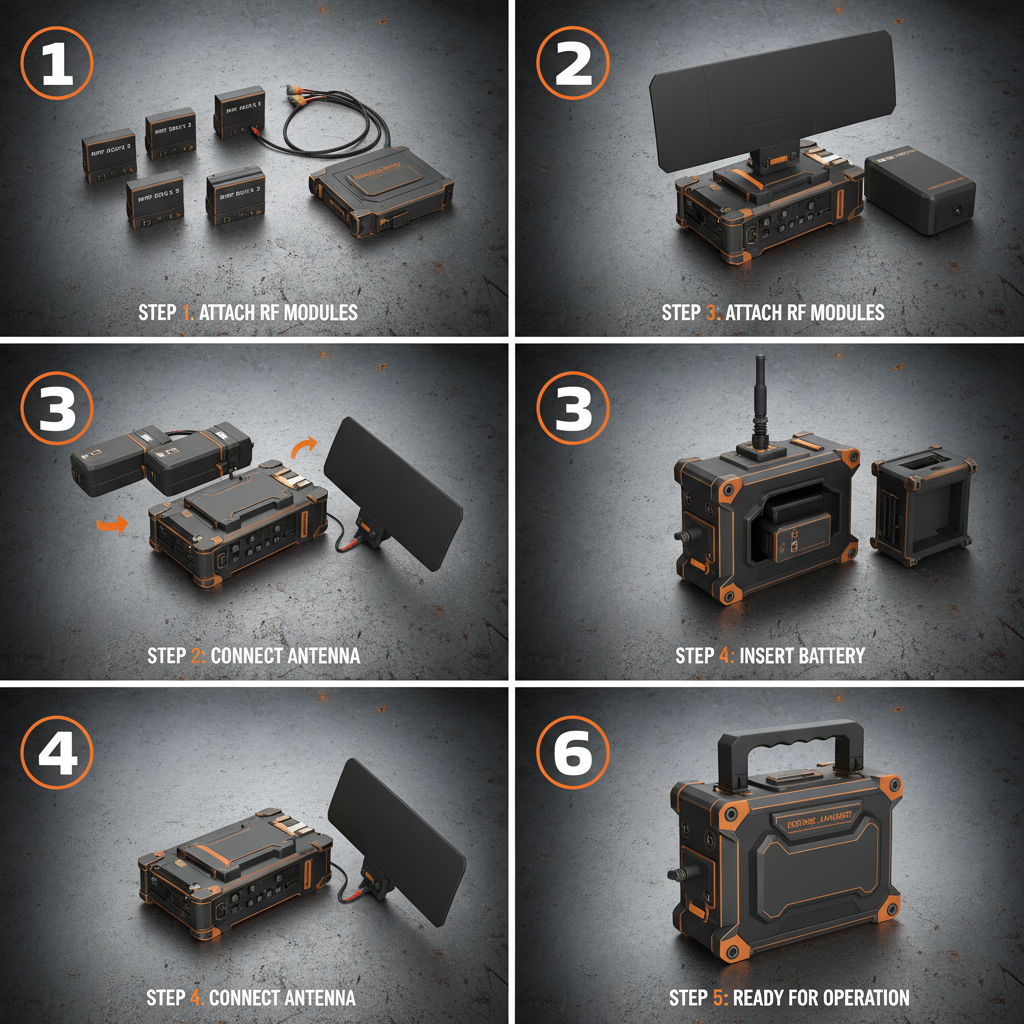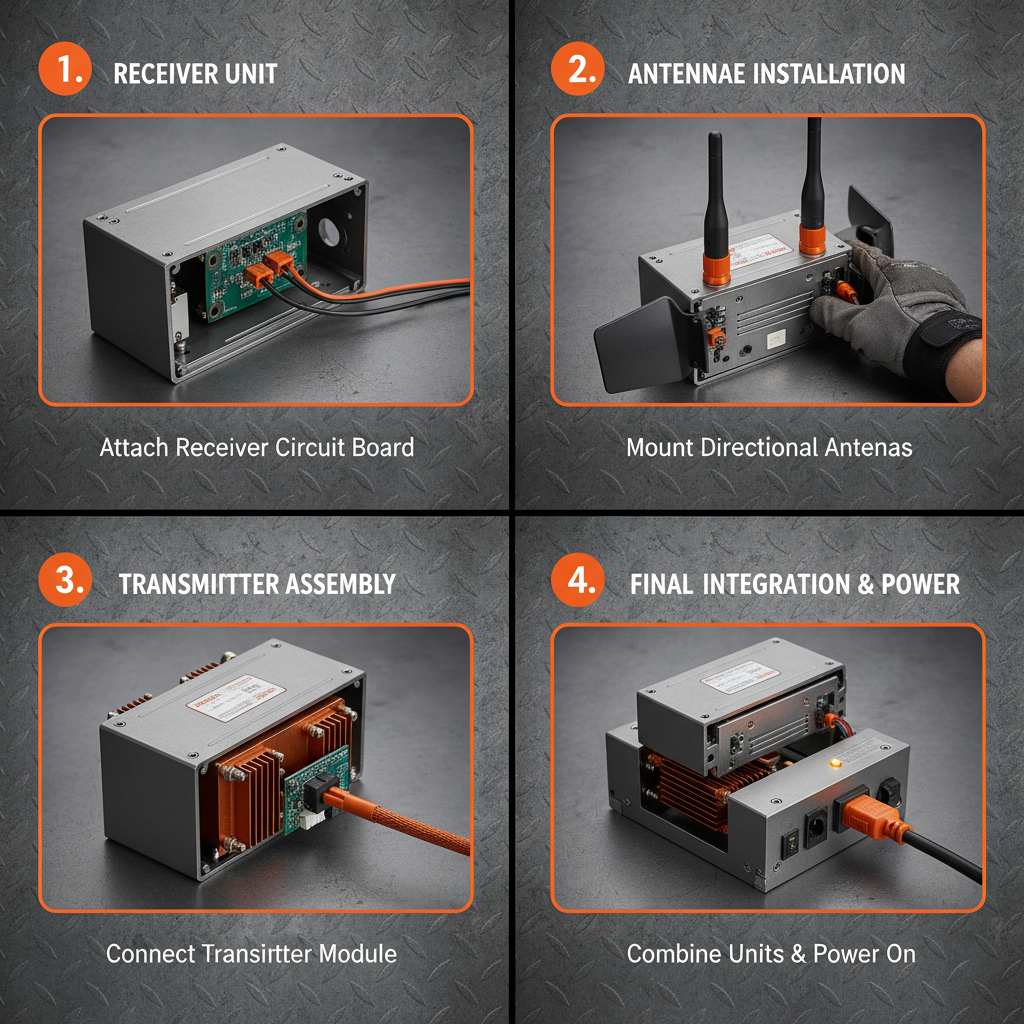

When evaluating the procurement of wireless communication components, the variance in rf module 433mhz price often reflects a deeper divide between consumer-grade hobbyist parts and industrial-grade RF solutions. For professionals in the electronic equipment manufacturing sector, price is rarely the primary driver; instead, the focus shifts toward signal integrity, power stability, and thermal endurance.
The 433MHz ISM band remains a cornerstone for low-power, short-range data transmission. However, as security requirements for critical infrastructure and drone detection systems increase, the demand for high-performance amplifiers and detectors within these frequency ranges has evolved. The market now distinguishes between simple modulation modules and complex RF front-ends capable of handling significant power loads.
To navigate this landscape, it is essential to understand the technical parameters that justify cost differences and how these components integrate into larger systems. This analysis examines the intersection of cost, performance, and industrial application in modern RF module selection.


The 433MHz band is part of the unlicensed Industrial, Scientific, and Medical (ISM) radio bands. While common in consumer electronics for remote keys and simple sensors, industrial applications require significantly higher reliability. In these environments, the primary challenge is not the frequency itself, but the congestion and interference typical of unlicensed bands.
Professional-grade hardware must implement advanced filtering to maintain a clean signal. When comparing a basic rf module 433mhz price with a professional system, the cost difference usually lies in the quality of the SAW filters, the stability of the crystal oscillators, and the shielding against electromagnetic interference (EMI).
The value of an RF module is fundamentally tied to its power efficiency and linearity. In high-performance systems, such as those developed by Shenzhen Yiyuan, the focus is on the Power Added Efficiency (PAE) and the ability to maintain gain flatness across the operating bandwidth. A module that can deliver a stable 50W output with minimal harmonic distortion is vastly more valuable than a low-power transceiver.
Another critical factor is the VSWR (Voltage Standing Wave Ratio). A low output VSWR, typically 2:1 or better, ensures that the maximum amount of power is transferred to the antenna rather than reflecting back into the amplifier, which could lead to catastrophic hardware failure. Professional modules incorporate protection circuitry to handle these impedance mismatches.
Furthermore, operating voltage stability is paramount. Industrial modules are often designed to operate within a specific range (e.g., 24V to 32V DC) to accommodate fluctuations in vehicle-mounted power systems or remote industrial grids, ensuring that the current consumption remains predictable even at peak output power.
Transitioning from a basic 433MHz module to a wideband power amplifier changes the system's operational capabilities entirely. While a module handles the logic and basic transmission, a dedicated power amplifier—such as those covering 100-6000MHz—is required to push signals over long distances or through dense obstructions.
Industrial RF performance is measured by the balance between Peak Output Power (Psat) and Spurious Level. High-power systems must suppress harmonics (often to -12dBc or -15dBc) to avoid interfering with adjacent frequency bands, making the quality of the output filter a primary cost driver.
This scaling is evident in the design of drone detection and jammer systems. A handheld drone detector may rely on sensitive RF detectors to identify signals, while a vehicle-mounted jammer requires heavy-duty power amplifiers to create a denial-of-service zone for unauthorized frequencies.
Evaluating the efficiency of RF hardware requires a standardized metric. For instance, an efficiency rate of 50% to 55% is considered high for power amplifiers in the 50W range, as the remaining energy is dissipated as heat, necessitating robust thermal management solutions like heat sinks or active cooling.
When analyzing the "value index" of different RF tiers, we look at the ratio of gain stability to cost. A professional Narrowband Power Amplifier might offer a power gain of 47±3dB, providing a level of predictability that consumer-grade 433MHz modules cannot match.
In a typical industrial security setting, RF modules are integrated into larger AOA (Angle of Arrival) Passive Spectrum Detectors. These systems monitor the 433MHz band and others to identify the presence of unauthorized drones. The requirement here is not just transmission, but high-sensitivity detection and precise frequency analysis to triangulate the source of the signal.
Conversely, in a defense application involving a GPS spoofer or a vehicle-mounted jammer, the hardware must withstand extreme vibration and temperature fluctuations. Here, the "price" of the module includes the cost of military-grade housing and the integration of Tx/Rx Spoofing Modules that can dynamically adapt to the target's frequency.
The trajectory of Sub-GHz RF technology is moving toward "Software Defined" versatility. We are seeing a shift from fixed-frequency modules to broadband customized solutions that can cover ranges from 300MHz up to 6000MHz. This allow users to deploy a single hardware chassis that can be reprogrammed for different spectral tasks.
Another emerging trend is the integration of AI-driven signal analysis within RF detectors. Instead of simple threshold-based detection, new systems can identify the "fingerprint" of a specific drone model or communication protocol, significantly reducing false alarm rates in complex urban environments.
As power requirements increase, the industry is exploring new Gallium Nitride (GaN) semiconductors to replace traditional silicon-based amplifiers. GaN offers higher power density and better thermal conductivity, which will likely push the boundaries of efficiency beyond the current 55% ceiling.
Choosing the right RF hardware requires a structured trade-off analysis. A buyer focusing solely on the rf module 433mhz price may overlook the Total Cost of Ownership (TCO), which includes power consumption, heat dissipation requirements, and the potential cost of system failure due to poor VSWR.
The decision matrix should prioritize the application environment first. A handheld drone detector requires compact, energy-efficient components, whereas a fixed chassis jammer system prioritizes raw output power and long-term thermal stability.
Ultimately, the goal is to align the hardware specification—such as operating bandwidth and spurious level—with the actual mission requirements to avoid over-engineering or under-performing.
| Tier | Primary Focus | Key Constraint | Typical Application |
|---|---|---|---|
| Entry-Level | Low Cost | High Interference | Smart Home Sensors |
| Industrial | Stability | Limited Range | Factory Automation |
| High-Power | Signal Reach | Thermal Load | Broadband Amplifiers |
| Security | Detection Sensitivity | Spectral Noise | Drone Detectors |
| Defense | Signal Denial | Power Consumption | Vehicle Jammers |
| Custom ODM | Specific Specs | Lead Time | Specialized Aerospace |
The price is primarily driven by the hardware's grade. Consumer modules use cheap oscillators and minimal filtering. Industrial-grade modules incorporate high-precision crystals, SAW filters for interference rejection, and superior shielding. Additionally, the output power capability and the quality of the PCB materials (such as using high-frequency laminates) significantly increase the cost but ensure stability in harsh environments.
VSWR (Voltage Standing Wave Ratio) measures how efficiently RF power is transmitted from the amplifier to the antenna. A high VSWR means a significant portion of the signal is reflected back toward the source. In high-power systems, this reflected energy can cause overheating or permanent damage to the power amplifier. A ratio of 2:1 or lower is generally required for industrial stability.
An RF module typically includes the transmitter/receiver (TR) and the modulation logic to send data. A Power Amplifier (PA) is a separate stage designed specifically to increase the signal strength of an existing RF signal. While a module might output milliwatts, an industrial PA can boost that signal to 50W or more to achieve long-distance transmission or signal jamming.
A basic module can detect the presence of a signal, but professional drone detection requires more than just a transceiver. It requires a high-sensitivity RF detector and often an AOA (Angle of Arrival) system to determine the direction of the drone. Industrial solutions integrate these detectors with wideband amplifiers to monitor multiple frequencies simultaneously.
Harmonics are unwanted multiples of the fundamental frequency. For a 433MHz signal, the second harmonic is 866MHz. If not suppressed (e.g., to -15dBc), these signals can interfere with other communication services or violate regulatory standards. High-quality amplifiers use low-pass filters to ensure that only the intended frequency is transmitted.
Look for suppliers that provide detailed technical parameters, including gain flatness, efficiency, and VSWR. The ability to offer OEM/ODM services is also crucial, as industrial applications often require customized frequency ranges or specific chassis designs (e.g., vehicle-mounted or handheld) to meet operational requirements.
The disparity in rf module 433mhz price is a direct reflection of the engineering rigor required for different application tiers. While low-cost modules suffice for simple tasks, the demands of modern security, defense, and industrial communication necessitate hardware that prioritizes spectral purity, thermal efficiency, and power stability.
As the industry moves toward wideband, software-defined solutions and higher power densities, the focus will continue to shift from basic connectivity to advanced signal management. Investing in high-performance RF front-ends is no longer just about range, but about ensuring reliability in an increasingly congested electromagnetic environment.