

Integrating Radio Frequency Modules Into IoT Devices
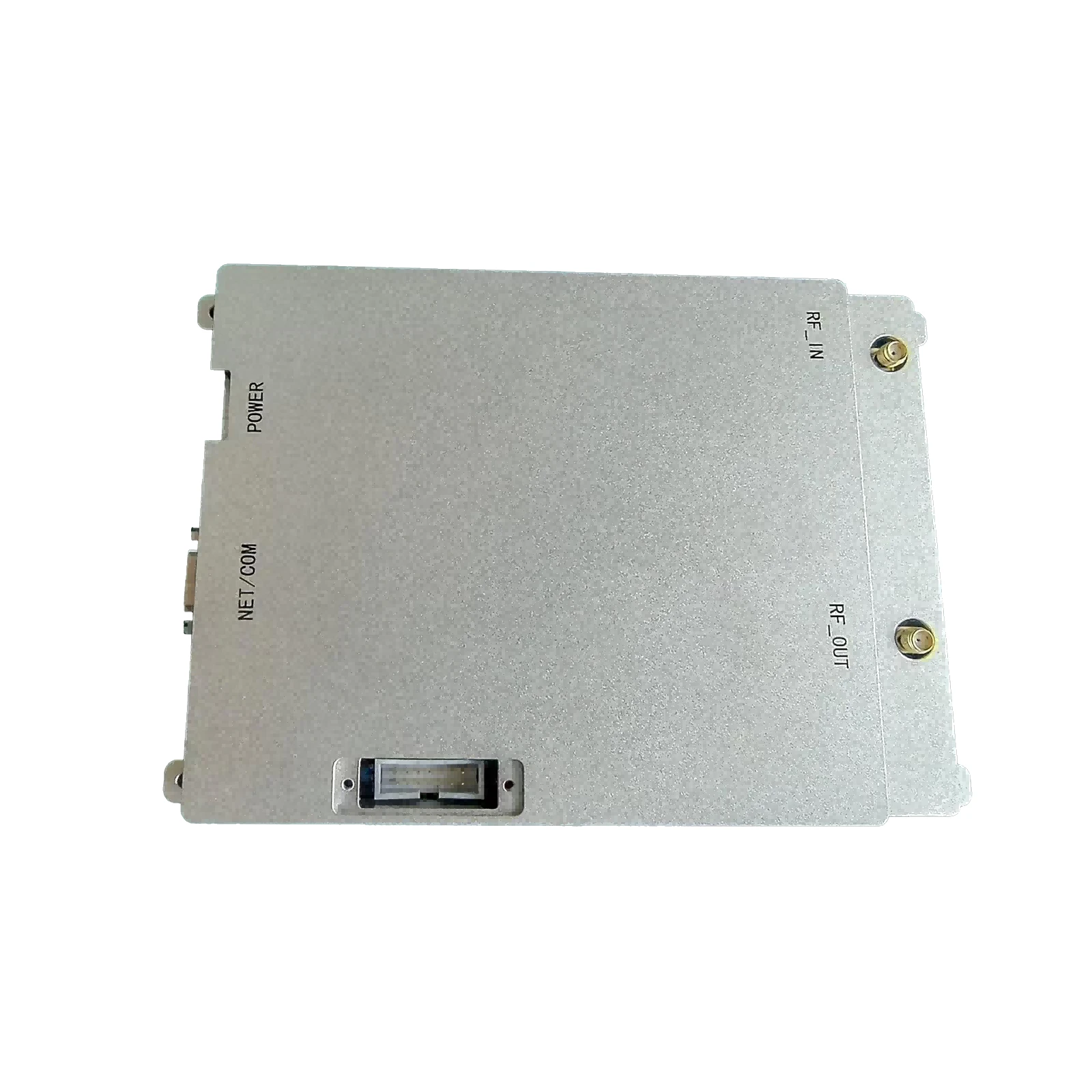
Shenzhen Yiyuan is a leading technology company specializing in the research, development, and manufacturing of high-performance radio frequency module solutions. Since our inception, we have focused on pushing the boundaries of RF engineering to serve modern communication, security, and defense applications. Our portfolio spans rf amplifier module designs, rf power module platforms, detectors, and jammers—all engineered for reliability, miniaturization, and energy efficiency.
Our mission is to deliver cutting-edge RF solutions that empower industries and protect critical infrastructures, while our vision is to become a globally recognized leader in RF technology. By continually refining our radio frequency module architectures, we help IoT device makers shorten development cycles, reduce power budgets, and future-proof their products against evolving wireless standards.
Core Design Principles for RF Amplifier Module Integration in IoT Nodes
A successful IoT product must balance sensitivity, range, and battery life. Shenzhen Yiyuan’s rf amplifier module portfolio achieves this balance through three core design principles:
Ultra-Low Noise Figure – Our modules deliver industry-leading noise performance (<1.5 dB typical), ensuring weak GNSS or sensor signals are amplified without introducing significant distortion.
Dynamic Bias Control – Adaptive bias circuits automatically scale current draw from 3 mA in standby to 28 mA at maximum gain, extending coin-cell life by up to 40 %.
Harmonic Filtering – Integrated 7-pole low-pass filters suppress harmonics below −55 dBc, meeting stringent coexistence requirements in crowded ISM bands.
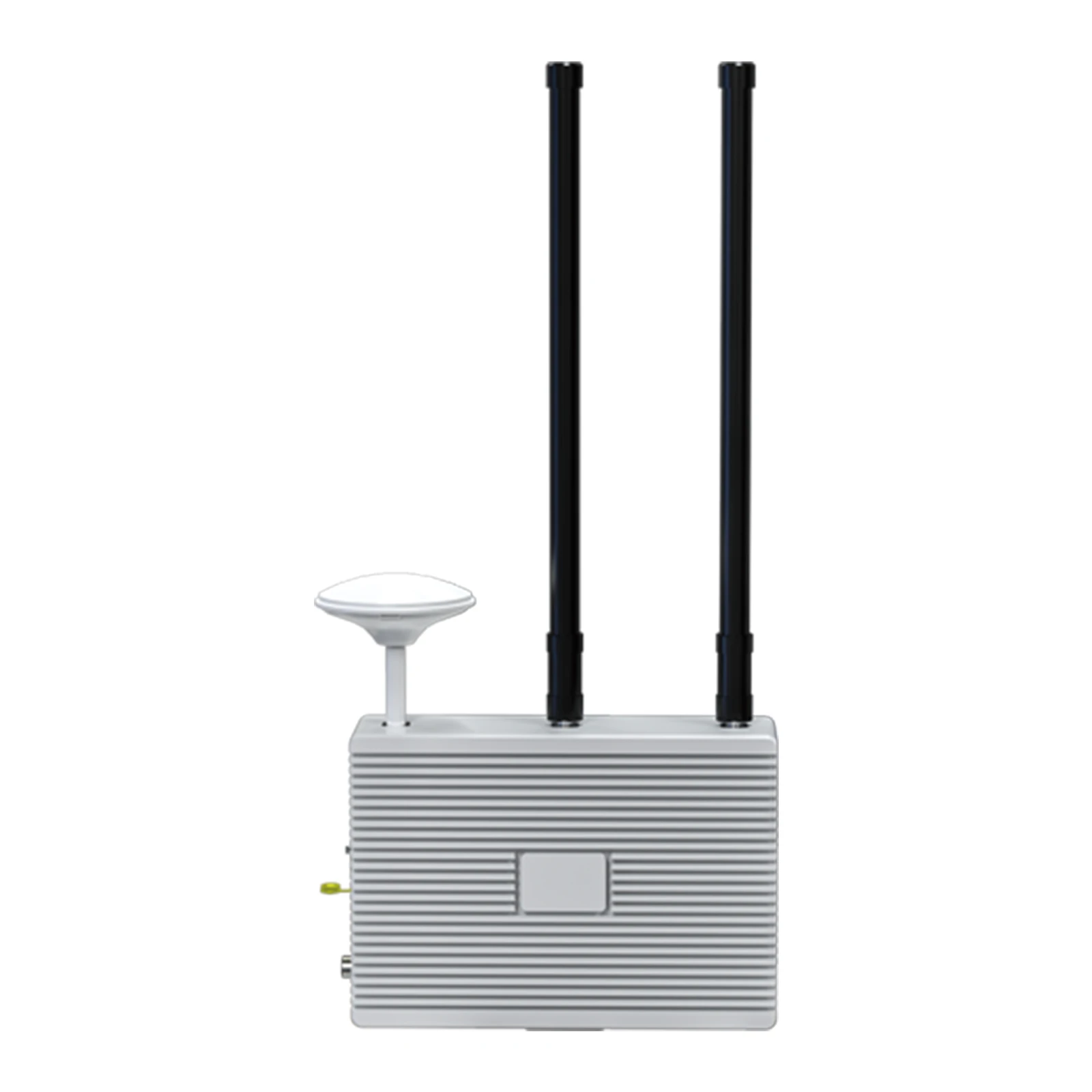
These principles are embodied in our latest rf amplifier module reference design that supports multi-constellation GNSS (GPS/L1, BDS/B1, GLONASS/G1, GALILEO/E1) and offers a deceptive distance of >500 m at 10 dBm output. The table below summarizes key parameters:
|
Parameter |
Specification |
|
Supported Bands |
GPS/L1 (1575.42 MHz ±1.023 MHz), BDS/B1 (1561.098 MHz ±2.046 MHz), GLONASS/G1 (1602 MHz ±4 MHz), GALILEO/E1 (1575.42 MHz ±12.276 MHz) |
|
Modes |
Directional dispersal, Navigation interference, Navigation forced landing, Circling function |
|
Deceptive Distance |
>500 m (10 dBm) |
|
Power-on Initialization |
<10 s RMS |
|
Communication |
UDP protocol (custom serial support) |
Optimizing Power Efficiency with RF Power Module Architectures
Power efficiency is the lifeblood of battery-operated IoT devices. Shenzhen Yiyuan’s rf power module family leverages GaN-on-SiC and envelope-tracking technologies to deliver >45 % drain efficiency at 1 W output while maintaining spectral purity. Key techniques include:
Envelope Tracking – Real-time modulation of supply voltage reduces average current by 30 % compared with fixed-bias amplifiers.
Deep-Sleep Modes – Sub-µA leakage currents achieved through integrated load switches that isolate the rf power module from the battery during idle periods.
Thermal Coupling – Direct-bond copper (DBC) substrates dissipate heat to the enclosure wall, eliminating the need for bulky heat sinks in compact wearables.
By integrating our rf power module with Nordic nRF52-class MCUs, customers have realized 5-year battery life in LoRaWAN trackers operating at 868 MHz with +20 dBm transmit power.
Security and Coexistence Strategies for Radio Frequency Module Deployment
As IoT networks scale, security and spectrum coexistence become paramount. Shenzhen Yiyuan embeds the following safeguards into every radio frequency module:
Secure Boot & Firmware Encryption – AES-256 hardware acceleration prevents unauthorized firmware updates.
Adaptive Frequency Hopping – Algorithms detect interference and switch channels within 2 ms, ensuring robust links in 2.4 GHz Zigbee or Wi-Fi environments.
RF Fingerprinting – Unique device signatures mitigate spoofing attacks on GNSS receivers.
These features are validated in our GNSS simulation platform that supports directional dispersal, navigation interference, and forced-landing modes—ideal for drone or asset-tracking applications requiring anti-jamming resilience.
FAQ About Radio Frequency Module Solutions
How does the rf amplifier module improve GNSS sensitivity?
Our rf amplifier module offers <1.5 dB noise figure and 28 dB gain, boosting weak satellite signals above the receiver’s noise floor. Integrated SAW filters reject out-of-band LTE interference, enabling −148 dBm cold-start sensitivity in urban canyons.
What battery-life gains can I expect from the rf power module?
Typical LoRaWAN sensors see 30–40 % longer battery life thanks to envelope-tracking efficiency and 0.5 µA sleep current. A 2400 mAh Li-SOCl₂ cell can exceed 10 years at 15-minute TX intervals.
Is the radio frequency module certified for global markets?
Yes. All radio frequency module variants are pre-certified for FCC (US), CE (EU), SRRC (China), and TELEC (Japan), slashing certification time and cost for OEMs.
Can the radio frequency module coexist with Wi-Fi/BLE?
Adaptive frequency hopping and programmable notch filters ensure <1 % packet loss in 2.4 GHz coexistence tests with 802.11n and BLE 5.2 traffic.
How quickly can I integrate the radio frequency module into my PCB?
Our 3 mm × 3 mm LGA package, reference schematics, and Nordic SDK drop-in drivers enable first-pass prototypes in under one week; evaluation boards ship within 48 hours.

-
 09 March 2021 16 Apr 2026
 -
 09 March 2021 09 Apr 2026
 -
 09 March 2021 07 Apr 2026
 -
 09 March 2021 04 Apr 2026
 -
 09 March 2021 31 Mar 2026
-
 09 March 2021 21 May 2025
 -
 09 March 2021 25 Dec 2024
 -
 09 March 2021 14 Oct 2022
-
 09 March 2021 25 Dec 2024
 English
  Arabic
  Belarusian
  Danish
  Dutch
Dutch  French
  German
  Greek
Greek  Japanese
  Korean
  Myanmar
  Polish
  Portuguese
  Russian
  Spanish
  Swedish
  Thai
Thai  Ukrainian
  Vietnamese