

Understanding RF Power Combiner Schematic for Optimized Signal Transmission
Understanding the RF Power Combiner Schematic
In the realm of radio frequency (RF) engineering, efficiently combining power from multiple sources is often crucial. An RF power combiner schematic is the blueprint for achieving this. These combiners are vital in applications like cellular base stations, radar systems, and satellite communications. This article delves into the fundamental principles, common topologies, design considerations, and practical applications of RF power combiners. We’ll explore how understanding the schematic is essential for optimizing performance and ensuring reliable RF signal transmission.
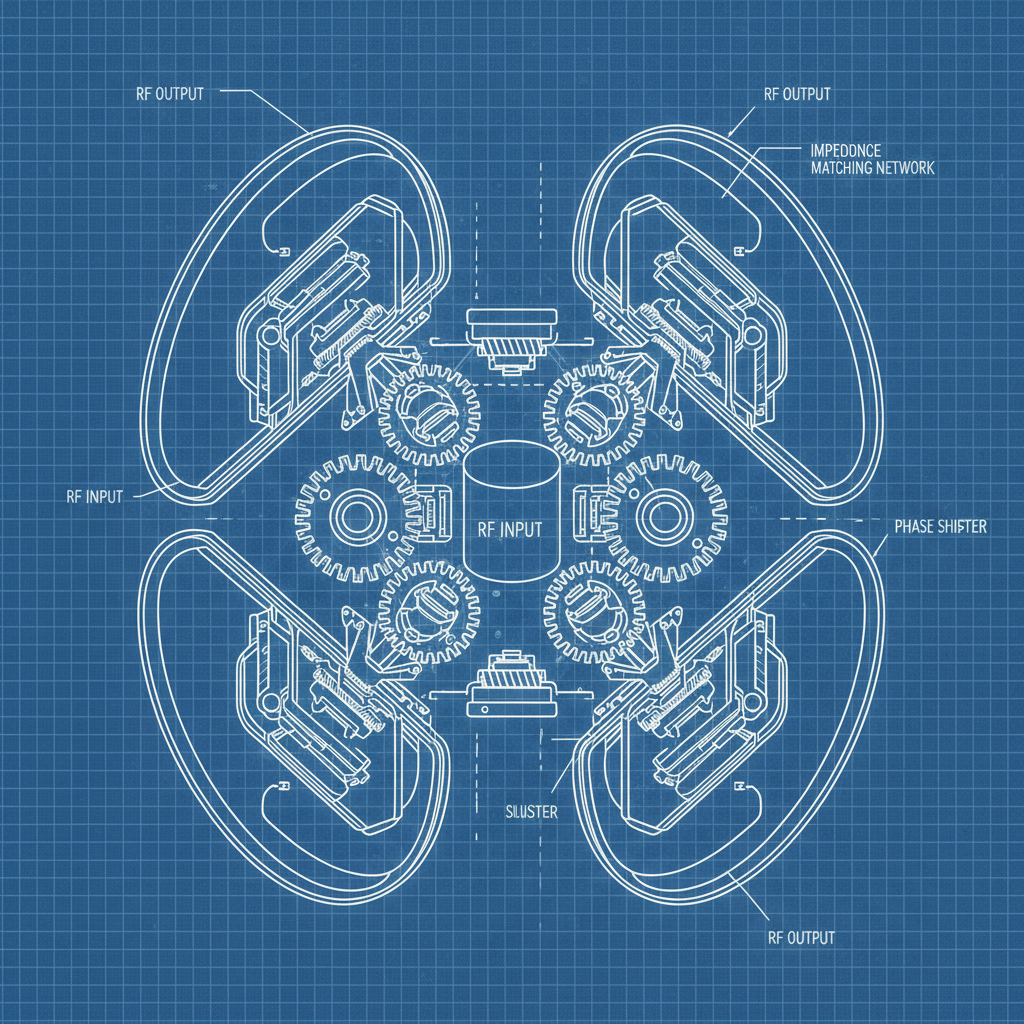
Fundamentals of RF Power Combining
RF power combiners take the output of several amplifiers and merge them into a single, higher-power signal. This is often more efficient and cost-effective than building a single, high-power amplifier. The key parameters to consider include insertion loss (the signal power lost within the combiner), isolation (the amount of power leakage between the inputs), input and output VSWR (Voltage Standing Wave Ratio, indicating impedance matching), and power handling capability. A well-designed RF power combiner minimizes insertion loss and maximizes isolation, ensuring optimal power transfer and signal integrity. Careful attention to component selection and layout is paramount.
Key Benefits: Increased power output, improved efficiency compared to single high-power amplifiers, redundancy (if one amplifier fails, the others continue operating), and modularity allowing for easier scaling and maintenance.
Common RF Power Combiner Topologies
Several topologies are commonly employed for RF power combining, each with its advantages and disadvantages. These include Wilkinson power dividers/combiners, hybrid couplers (90-degree and 180-degree), and N-way combiners. Wilkinson combiners are relatively simple and offer good isolation but are limited to a small number of inputs. Hybrid couplers provide excellent isolation and impedance matching but can be more complex to implement. N-way combiners are suitable for a larger number of inputs but generally have higher insertion loss and lower isolation.
Common Combiner Types:
• Wilkinson Power Divider/Combiner
• 90-Degree Hybrid Coupler
• 180-Degree Hybrid Coupler
• N-Way Combiner
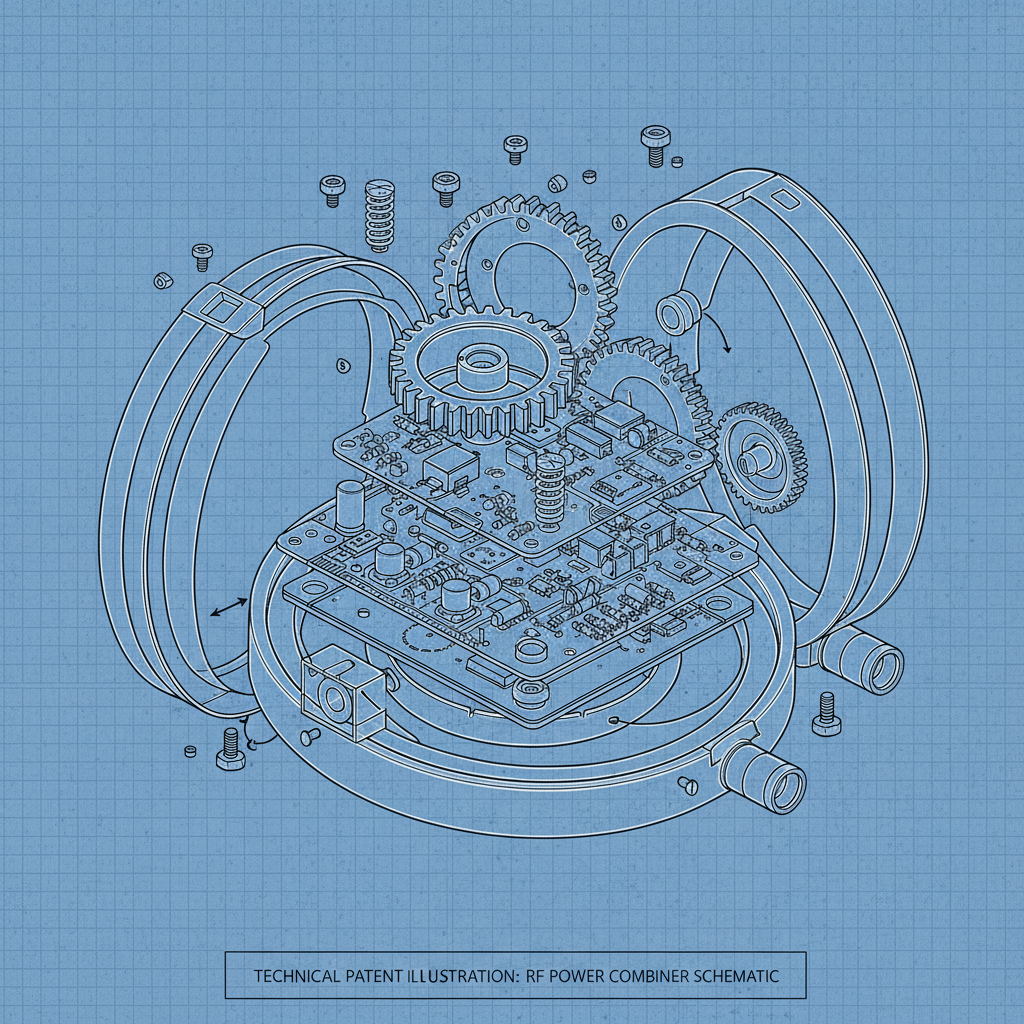
Analyzing the RF Power Combiner Schematic
Decoding an RF power combiner schematic requires understanding the symbols used for RF components like resistors, capacitors, inductors, and transmission lines. The schematic will show how these components are interconnected to achieve the desired combining function. It's critical to verify that the impedance matching networks are correctly designed to minimize reflections and maximize power transfer. Pay close attention to the placement of isolation resistors in Wilkinson combiners and the coupling networks in hybrid couplers. A clear schematic with accurate component values is the foundation of a successful RF power combining design.
Design Considerations for Optimal Performance
Several factors are critical during the design phase. Impedance matching is paramount to prevent signal reflections, which degrade performance. Component tolerances can also affect performance, so selecting high-quality components with tight tolerances is recommended. Thermal management is also essential, especially for high-power applications. Proper heat sinking and airflow are crucial to prevent overheating and ensure reliable operation. Simulation software is commonly used to optimize the design and predict performance before building a physical prototype.
Applications in Modern RF Systems
RF power combiners are used extensively in modern RF systems. In cellular base stations, they combine the output of multiple power amplifiers to achieve the required transmission power. They are also used in radar systems to increase the signal strength and improve detection range. Satellite communications rely on power combiners to efficiently transmit signals over long distances. Drone systems, as offered by Drone-System, also benefit from efficient power combining to maximize signal range and reliability. The ongoing demand for higher data rates and increased coverage will continue to drive innovation in RF power combining technology.
Conclusion
Understanding the RF power combiner schematic is crucial for any RF engineer. By carefully considering the topology, design parameters, and applications, you can optimize the performance and reliability of your RF systems. The future of RF power combining will likely involve more compact, efficient, and intelligent designs, driven by the ever-increasing demands of wireless communication and other RF applications.
Frequently Asked Questions (FAQs)
What is the impact of component tolerances on RF power combiner performance?
Component tolerances can significantly affect the performance of an RF power combiner, particularly isolation and impedance matching. Variations in resistor and capacitor values can shift the operating frequency and degrade isolation. Using components with tighter tolerances (e.g., 1% resistors instead of 5%) will improve the combiner’s predictability and consistency. Simulation software can help analyze the sensitivity of the design to component variations. Careful component selection and characterization are essential for achieving optimal performance.
How does thermal management affect the reliability of RF power combiners?
RF power combiners, especially those handling high power levels, generate significant heat. Excessive temperature can degrade component performance, reduce lifespan, and even cause catastrophic failure. Effective thermal management techniques, such as using heat sinks, thermal vias, and forced air cooling, are crucial. Proper layout and component placement can also help dissipate heat effectively. Thermal simulations can identify potential hotspots and guide the design of an efficient thermal management system.
What is VSWR and why is it important in RF power combining?
VSWR (Voltage Standing Wave Ratio) is a measure of impedance matching. A low VSWR (close to 1:1) indicates a good match, meaning most of the power is transferred from the source to the load. High VSWR indicates a mismatch, leading to reflections and power loss. In RF power combining, maintaining low VSWR at both the input and output of the combiner is critical for maximizing power transfer efficiency and preventing damage to the amplifiers. Impedance matching networks are used to minimize VSWR.
Are there any new trends in RF power combiner technology?
Several trends are emerging in RF power combiner technology. These include the use of GaN (Gallium Nitride) amplifiers, which offer higher power density and efficiency, necessitating improved thermal management in combiners. Miniaturization is also a key trend, driven by the demand for smaller wireless devices. Researchers are exploring new materials and fabrication techniques to create more compact and efficient combiners. Beamforming technology, which uses phase shifters in combiners to steer the RF beam, is also gaining prominence.

-
 09 March 2021 16 Apr 2026
 -
 09 March 2021 09 Apr 2026
 -
 09 March 2021 07 Apr 2026
 -
 09 March 2021 04 Apr 2026
 -
 09 March 2021 31 Mar 2026
-
 09 March 2021 21 May 2025
 -
 09 March 2021 25 Dec 2024
 -
 09 March 2021 14 Oct 2022
-
 09 March 2021 25 Dec 2024
 English
  Arabic
  Belarusian
  Danish
  Dutch
Dutch  French
  German
  Greek
Greek  Japanese
  Korean
  Myanmar
  Polish
  Portuguese
  Russian
  Spanish
  Swedish
  Thai
Thai  Ukrainian
  Vietnamese