

Wide Band Amplifiers: Versatile Signal Boosters for Modern Communication
The Rise of Wide Band Amplifiers: Why They Matter Today
Wide band amplifiers are quietly powering some of the most critical technology we rely on every day, yet they rarely get the spotlight they deserve. These devices boost signals across a broad range of frequencies, and that versatility translates to robust applications in telecommunications, scientific instrumentation, defense, and even humanitarian efforts.
From enabling clearer long-distance calls to supporting complex radar systems, understanding wide band amplifiers is not just for engineers—it's a doorway to appreciating how modern communication and sensing infrastructures stay reliable and adaptive. Globally, the demand for faster, more resilient data transmission grows every year. According to the International Telecommunication Union (ITU), global internet traffic has been doubling every two years, a trend only accelerated by recent digital transformations.[1] And guess what supports much of that traffic? Yep, you guessed it—the humble, yet powerful wide band amplifier.
Understanding Wide Band Amplifiers: The Basics
So, what exactly are wide band amplifiers? Think of them as the muscle behind a signal’s journey through various devices, capable of amplifying frequencies across a wide spectrum rather than just one narrow band. This wide frequency range is vital for modern systems that use diverse and rapidly changing signals — like broadband communication, multi-standard wireless devices, or advanced radar. Unlike narrow band amplifiers, which focus on a single frequency chunk, wide band amplifiers are versatile multitaskers.
This versatility becomes crucial in industries such as emergency response communication networks, where devices must adapt to different frequency channels seamlessly, or in sophisticated aerospace communication equipment that relies on low-noise, wide frequency coverage for safe flight operations.
Mini takeaway:
- Wide band amplifiers enhance signals across many frequencies
- They support varied real-world applications from telecom to defense
- Global connectivity relies on these devices increasing reliability and reach
Breaking Down Key Features of Wide Band Amplifiers
1. Broad Frequency Range
The defining trait, obviously. Typical ranges can span from several kHz to multiple GHz. This ensures compatibility with diverse signal types — whether you’re transmitting voice, data, or radar pulses.
2. Low Noise Figure
Amplifying signals without adding much noise is a big engineering challenge. Lower noise figures mean the amplifier preserves signal clarity — which is critical in satellite communication or sensitive sensor arrays.
3. High Linearity
This prevents signal distortion, especially important in multi-carrier transmission where signals coexist side-by-side.
4. Power Efficiency
With growing wireless networks and portable devices, power consumption isn't just an environmental concern — it affects operational costs and heat management too.
5. Durability and Environmental Stability
Wide band amplifiers often operate in harsh environments — from remote industrial sites to disaster zones — so ruggedness ensures consistent performance over time.
6. Scalability and Integration
Modern systems demand amplifiers that can be integrated on chips (MMICs) or customized to specific application needs, offering system designers flexibility.
Mini takeaway:
- Frequency range, noise, linearity, and power are core specs
- Durability and integration readiness boost real-world usability
Real-World Uses for Wide Band Amplifiers Around the Globe
Applications of wide band amplifiers span continents and sectors:
- Telecommunications: In Africa and Southeast Asia, where infrastructure is rapidly developing, wide band amplifiers help maintain quality broadband signals despite limited physical wiring.
- Disaster Relief Communications: NGOs deploy mobile communication kits with wide band amplifiers to keep networks alive in post-disaster zones, ensuring emergency teams stay coordinated.
- Scientific Research: Observatories and remote sensing installations from the Arctic Circle to deserts rely on these amplifiers to boost faint cosmic or environmental signals to measurable levels.
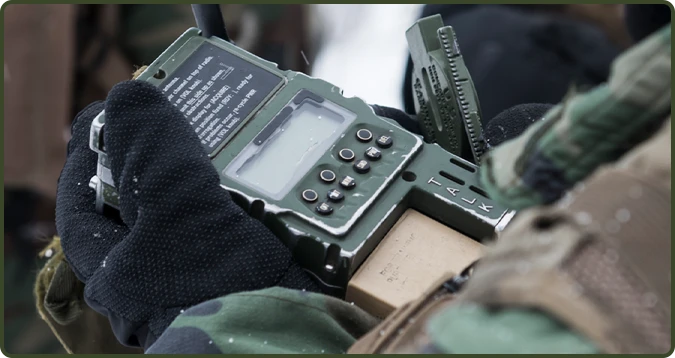
- Defense and Aerospace: Systems globally employ these amplifiers in radar, sonar, and satellite devices, where signal integrity directly impacts safety and mission success.
For example, a remote mineral exploration team in Canada might use wide band amplifiers to boost signals that send geological data from a rugged site back to base. This eliminates the need for expensive infrastructure and speeds up decision-making.
Mini takeaway:
- Wide band amplifiers enable connectivity in hard-to-reach places
- They support critical operations from disaster zones to aerospace
- Across sectors, these amplifiers improve data quality and timeliness
Product Specification Table: A Snapshot of Popular Wide Band Amplifiers
| Model | Frequency Range | Noise Figure (dB) | Gain (dB) | Power Consumption (W) | Operating Temperature (°C) |
|---|---|---|---|---|---|
| AmplifyX WB-200 | 50 MHz – 2 GHz | 1.8 | 25 | 5.5 | -40 to +85 |
| SignalBoost Pro WB-500 | 100 MHz – 5 GHz | 2.1 | 28 | 7.8 | -30 to +70 |
| EcoAmp WB-Lite | 20 MHz – 1.5 GHz | 2.5 | 20 | 3.2 | -20 to +60 |
Comparing Top Vendors for Wide Band Amplifiers
| Vendor | Product Range (GHz) | Custom Solutions | Warranty | Global Support |
|---|---|---|---|---|
| AmpTech Solutions | 0.05 - 6 | Yes | 3 years | Yes (50+ countries) |
| SignalWave Corp. | 0.1 - 10 | Limited | 2 years | Yes (EMEA, NA) |
| WideAmp Systems | 0.02 - 5 | Yes | 5 years | Global |
Benefits and Long-Term Value of Using Wide Band Amplifiers
Let’s be frank: investing in quality amplifiers isn’t just about specs on paper. It's about longevity, trust, and the ability to innovate confidently.
- Cost Efficiency: Reducing downtime and maintenance saves money long term.
- Sustainability: More efficient amplifiers mean less wasted power equals greener operations—always a win.
- Social Impact: Better communication means improved safety, disaster response, and overall connectivity, especially in underserved regions.
- Reliability: In critical infrastructure, dependable amplifiers prevent signal loss that can cost lives or cause major economic disruption.
There’s an emotional element too — users feel secure knowing their systems won’t fail in the clutch. And engineers appreciate components that ‘just work’ without fuss.
What Lies Ahead: Future Trends in Wide Band Amplifiers
Innovation doesn’t sleep. We’re seeing several exciting directions:
- Integration with Green Energy: Amplifiers optimized for low power are crucial as solar-powered or battery-operated systems become mainstream.
- Digital Signal Processing (DSP): Hybrid amplifiers leveraging DSP help further minimize noise and distortion dynamically.
- Automation & AI: Predictive maintenance and self-calibration could soon be standard, reducing manual oversight.
- New Materials: Advances in wide bandgap semiconductors such as GaN (gallium nitride) improve power handling and efficiency.
Overcoming Challenges in Wide Band Amplifier Deployment
Like all technology, wide band amplifiers come with their quirks:
- Trade-offs Between Gain and Noise: Boosting signals too much can increase distortion; finding the sweet spot is tricky.
- Cost vs Performance: Ultra-wide frequency coverage may come at a premium.
- Environmental Stress: Extreme temperatures or humidity can degrade performance over time.
Experts recommend modular designs allowing rapid replacement and advanced coatings or heat sinks to tackle environmental challenges. In the end, a balance of innovation and practical engineering solves most headaches.
FAQ: Your Quick Guide to Wide Band Amplifiers
- What distinguishes a wide band amplifier from a conventional one?
- A wide band amplifier covers a broader frequency range, allowing it to boost multiple signal types efficiently — whereas conventional amplifiers usually target a specific, narrow range.
- How do noise figures affect amplifier performance?
- The noise figure measures how much unwanted noise the amplifier adds. The lower the noise figure, the clearer and more reliable the signal after amplification.
- Are wide band amplifiers suitable for portable communication devices?
- Yes, especially those designed with low power consumption and ruggedness in mind. They help maintain clear signals in mobile or field environments.
- Can wide band amplifiers be customized for specific industry needs?
- Absolutely. Many manufacturers offer custom solutions tailored to frequency ranges, power requirements, and environmental conditions.
- What maintenance is typically required?
- Periodic testing for signal quality, checking heat dissipation components, and ensuring connectors are secure usually suffice to keep these amplifiers in top shape.
Final Thoughts and Next Steps
Whether you’re designing a new communication network, upgrading industrial sensing equipment, or supporting disaster response teams, wide band amplifiers offer a reliable, flexible solution for modern signal amplification needs. Their ability to handle multiple frequencies without sacrificing clarity is increasingly valuable in our interconnected world. I’d say investing time in understanding their specs and vendor options pays off in smarter, more sustainable system designs.
Curious to dive deeper or scout the latest models? Visit our website for expert advice and quality products: https://www.drone-system.com.
References

-
 09 March 2021 16 Apr 2026
 -
 09 March 2021 09 Apr 2026
 -
 09 March 2021 07 Apr 2026
 -
 09 March 2021 04 Apr 2026
 -
 09 March 2021 31 Mar 2026
-
 09 March 2021 21 May 2025
 -
 09 March 2021 25 Dec 2024
 -
 09 March 2021 14 Oct 2022
-
 09 March 2021 25 Dec 2024

 English
  Arabic
  Belarusian
  Danish
  Dutch
Dutch  French
  German
  Greek
Greek  Japanese
  Korean
  Myanmar
  Polish
  Portuguese
  Russian
  Spanish
  Swedish
  Thai
Thai  Ukrainian
  Vietnamese