

Build Your Own Wireless Systems with a Comprehensive DIY RF Module Guide
DIY RF Module: A Comprehensive Guide for Enthusiasts
Building your own radio frequency (RF) module can open up a world of possibilities for wireless communication projects. From remote control systems to data transmission, the ability to customize and control your RF technology is invaluable. This article will guide you through the basics of DIY RF modules, covering component selection, design considerations, and potential applications. We’ll explore the benefits of creating your own RF solutions and resources available at Drone-System.com to help you get started.

Understanding the Basics of RF Modules
At their core, RF modules are miniaturized transmitters and receivers that operate on radio frequencies. They consist of several key components: an antenna, a radio frequency integrated circuit (RFIC), and supporting circuitry. The antenna is responsible for radiating and capturing radio waves, while the RFIC handles the modulation, demodulation, and amplification of signals. Different RF modules operate on different frequency bands, each with its own characteristics and applications. Common frequency bands include 433MHz, 2.4GHz, and 915MHz. Choosing the right frequency band depends on your specific project requirements, such as range, data rate, and regulatory compliance.
Key Considerations: Understanding frequency bands, modulation techniques, and antenna characteristics are crucial for successful DIY RF module design.
Key Components for Building a DIY RF Module
To build a DIY RF module, you'll need several essential components. These include: an RF transmitter/receiver IC (like the nRF24L01), an antenna (matched to your chosen frequency), a microcontroller (Arduino, ESP32, etc.) for control, and various passive components (resistors, capacitors, inductors) for signal conditioning. The choice of microcontroller dictates the programming language and capabilities of your module. Proper component selection is vital for optimal performance. Resources at Drone-System.com provide detailed guidance on selecting compatible components.
Essential Components:
• RF Transmitter/Receiver IC
• Antenna
• Microcontroller
• Passive Components (resistors, capacitors, inductors)
DIY RF Module vs. Pre-built Modules: A Comparison
While pre-built RF modules offer convenience, building your own provides significant advantages in terms of customization and learning. Pre-built modules are generally plug-and-play, but offer limited control over parameters like transmission power and frequency. DIY RF modules, on the other hand, allow you to tailor the design to your exact needs. This flexibility is especially valuable for specialized applications or when experimenting with new RF techniques. However, building your own requires a greater understanding of RF principles and electronics.
Applications of DIY RF Modules
The applications for DIY RF modules are incredibly diverse. Some common examples include: remote control systems (toys, robotics), wireless sensor networks (environmental monitoring), home automation (smart lighting, security systems), and data logging applications. The ability to tailor the module's range, data rate, and power consumption makes it ideal for these varied uses. Drone-System.com offers numerous project examples and tutorials to inspire your own creations.
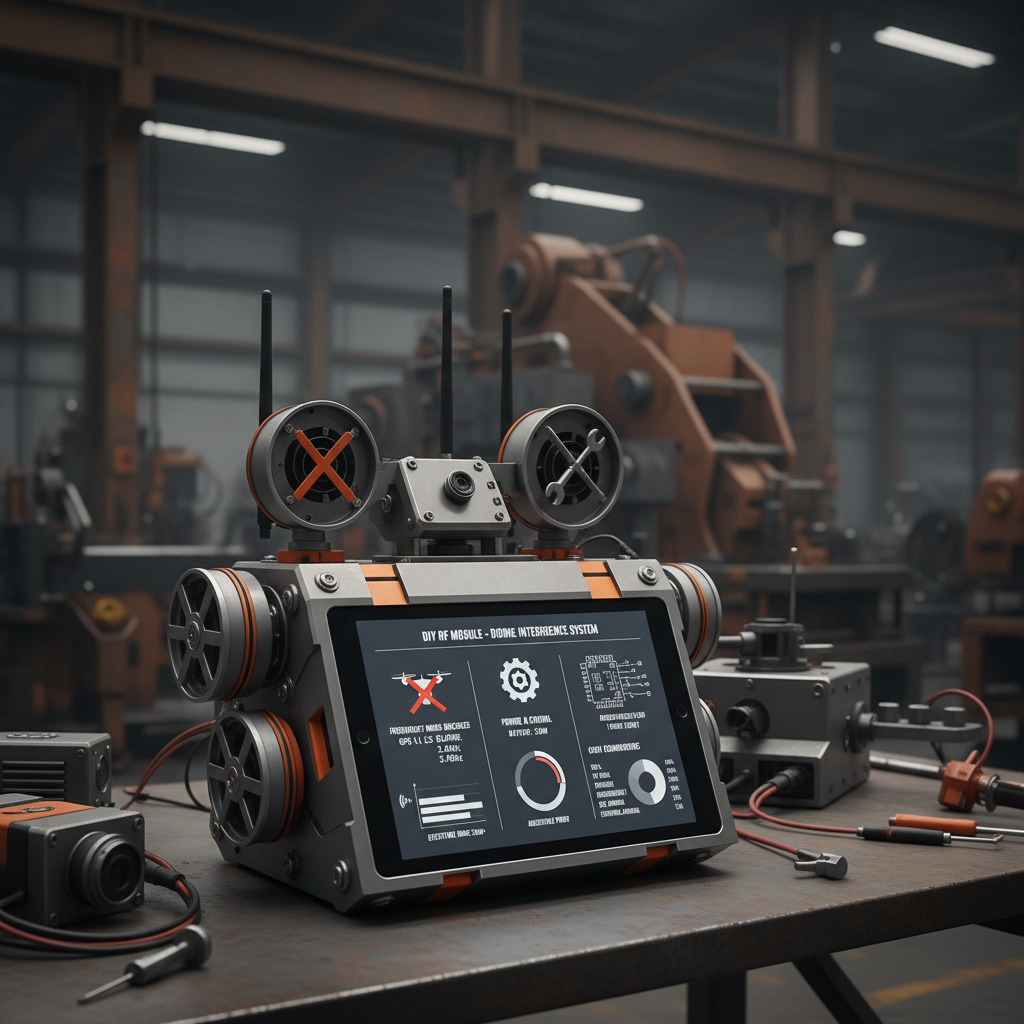
Important Considerations: Range, Power, and Regulations
When designing your RF module, remember to consider factors such as transmission range, power consumption, and regulatory compliance. Range is affected by transmit power, antenna gain, and environmental factors. Lower power consumption is crucial for battery-powered applications. Furthermore, it’s essential to adhere to local regulations regarding RF emissions. Regulations vary by country and frequency band. Resources from Drone-System.com can help you navigate these requirements.
Conclusion: Empowering Your Wireless Projects
Building a DIY RF module empowers you to create customized wireless solutions for a wide range of applications. While it requires a solid understanding of RF principles, the rewards in terms of flexibility and learning are significant. With the resources available at Drone-System.com, you can confidently embark on your RF journey.
Frequently Asked Questions (FAQs)
What is the typical range of a DIY RF module?
The range of a DIY RF module varies significantly depending on several factors including transmit power, antenna design, frequency band, and environmental conditions. In open space, a 433MHz module with a well-designed antenna can achieve a range of up to 100 meters or more. 2.4GHz modules generally have a shorter range, typically around 20-50 meters, due to higher absorption. Increasing transmit power and using a high-gain antenna can extend the range, but it’s crucial to remain within legal limits for RF emissions.
What are the common modulation techniques used in RF modules?
Common modulation techniques include Amplitude Shift Keying (ASK), Frequency Shift Keying (FSK), and Gaussian Frequency Shift Keying (GFSK). ASK is simple to implement but less robust to noise. FSK and GFSK offer better noise immunity and are often preferred for reliable data transmission. The choice of modulation technique depends on the application requirements, such as data rate, range, and noise environment. The nRF24L01 module commonly uses GFSK.
How do I choose the right antenna for my RF module?
Antenna selection is crucial for maximizing range and performance. The antenna's frequency should match the operating frequency of your RF module. Consider the antenna's gain, radiation pattern, and impedance. Higher gain antennas can increase range, but they often have a narrower beamwidth. The impedance of the antenna should be matched to the impedance of the RF module (typically 50 ohms) to minimize signal reflection. Drone-System.com provides antenna selection guides to help you choose the optimal antenna for your project.
Are there any legal restrictions on using RF modules?
Yes, there are legal restrictions on using RF modules, which vary by country and frequency band. Regulations are designed to prevent interference with other radio communications. You must ensure that your RF module complies with the relevant regulations in your region. In the United States, the Federal Communications Commission (FCC) regulates RF emissions. In Europe, the regulations are governed by ETSI. It is your responsibility to understand and comply with these regulations before operating your RF module.

-
 09 March 2021 16 Apr 2026
 -
 09 March 2021 09 Apr 2026
 -
 09 March 2021 07 Apr 2026
 -
 09 March 2021 04 Apr 2026
 -
 09 March 2021 31 Mar 2026
-
 09 March 2021 21 May 2025
 -
 09 March 2021 25 Dec 2024
 -
 09 March 2021 14 Oct 2022
-
 09 March 2021 25 Dec 2024
 English
  Arabic
  Belarusian
  Danish
  Dutch
Dutch  French
  German
  Greek
Greek  Japanese
  Korean
  Myanmar
  Polish
  Portuguese
  Russian
  Spanish
  Swedish
  Thai
Thai  Ukrainian
  Vietnamese