The evolution of remote-controlled systems has fundamentally shifted how we interact with unmanned machinery, placing the rc transmitter and receiver module at the very heart of modern wireless communication. From simple hobbyist drones to sophisticated industrial inspection tools and defense systems, the ability to transmit precise commands over varying distances with minimal latency is no longer a luxury—it is a technical necessity. Understanding the synergy between these two components is critical for ensuring operational safety and system reliability in high-stakes environments.
On a global scale, the demand for high-performance RF (Radio Frequency) components is surging as automation penetrates deeper into agriculture, logistics, and emergency response. The integration of a robust rc transmitter and receiver module allows operators to maintain absolute control over assets in hazardous zones, reducing human risk and increasing the efficiency of remote data collection. As we move toward more autonomous systems, the underlying communication link remains the "nervous system" that ensures a fail-safe connection between the human pilot and the machine.
However, the industry faces significant challenges, including signal interference, spectrum congestion, and the constant threat of electronic spoofing. By optimizing the architecture of the rc transmitter and receiver module, engineers can implement advanced frequency-hopping spread spectrum (FHSS) techniques and enhanced encryption. This ensures that whether the application is a small-scale consumer drone or a large-scale industrial UAV, the link remains stable, secure, and resilient against external disruptions.
Global Relevance of RC Communication Modules
The global landscape of wireless control is currently undergoing a massive transformation. As the International Telecommunication Union (ITU) continues to manage the expanding RF spectrum, the role of the rc transmitter and receiver module has transitioned from simple radio control to complex data link management. With the rise of "Industry 4.0," these modules are now integrated into autonomous warehouses and remote mining operations, where precision and reliability are paramount.
The challenge lies in the increasing density of wireless signals in urban environments. When thousands of devices compete for the same bandwidth, the risk of "signal collision" increases. Consequently, the modern rc transmitter and receiver module must be capable of intelligent frequency management to avoid interference, ensuring that critical commands reach their destination without delay, which is essential for preventing catastrophic failures in industrial settings.
Defining the RC Transmitter and Receiver Architecture
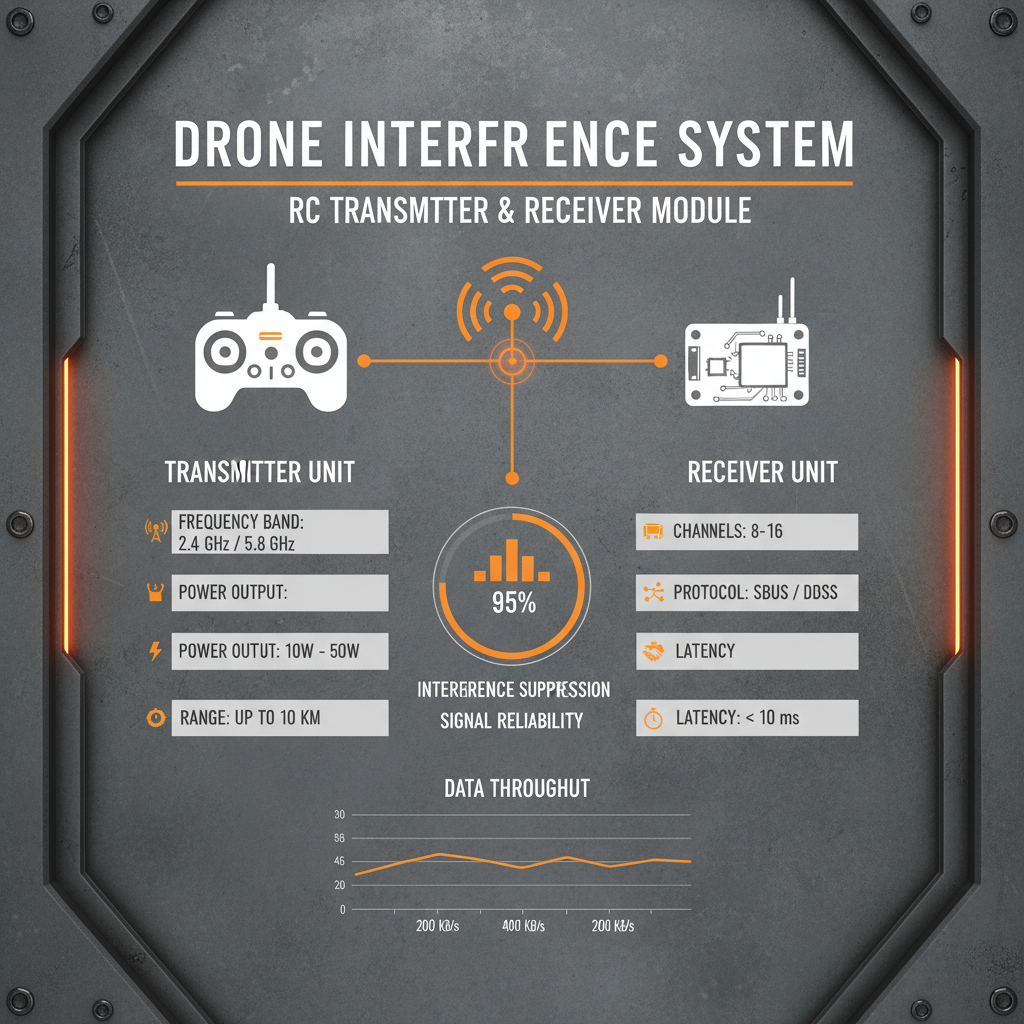
At its most basic level, an rc transmitter and receiver module is a paired system designed to convert human input (via sticks, switches, or software) into electromagnetic waves, and then decode those waves back into electrical signals to drive actuators. The transmitter acts as the "brain," encoding the data, while the receiver acts as the "ears," listening for the specific signature of its paired transmitter amidst a sea of electronic noise.
In the context of professional-grade hardware, this relationship is governed by strict protocols. Modern modules utilize digital modulation rather than old analog signals, allowing for telemetry data to flow back from the receiver to the transmitter. This means an operator can monitor battery voltage, GPS coordinates, and signal strength in real-time, turning a one-way command link into a sophisticated two-way communication channel.
This architecture is fundamental to humanitarian needs as well. In post-disaster scenarios, where infrastructure is destroyed, a reliable rc transmitter and receiver module allows search-and-rescue teams to deploy drones into unstable buildings or flooded areas without risking human lives. The ability to maintain a stable link through concrete or foliage is what separates a toy from a professional tool.
Core Components for Operational Reliability
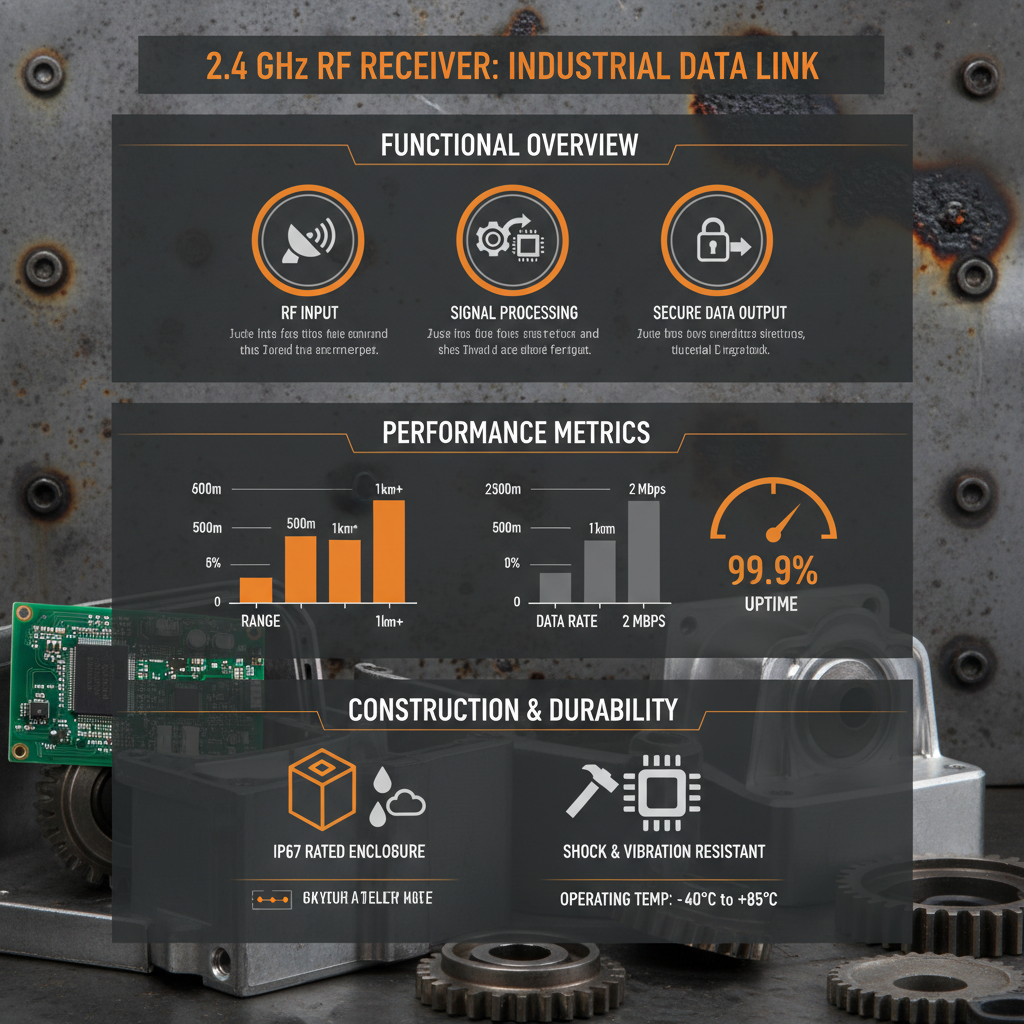
Durability is the first pillar of a high-end rc transmitter and receiver module. Since these components are often deployed in extreme environments—ranging from humid jungles to freezing altitudes—the circuitry must be shielded against EMI (Electromagnetic Interference) and physical vibration. Industrial-grade housings and conformal coatings on the PCBs ensure that the hardware doesn't fail when the mission is most critical.
Scalability and flexibility are equally important. A modular rc transmitter and receiver module allows users to swap antennas for different ranges—using an omnidirectional antenna for close-range agility or a high-gain directional antenna for long-distance surveillance. This adaptability ensures that the same core hardware can be repurposed across different missions without needing a complete system overhaul.
Finally, cost-efficiency in the long term is achieved through reliability. While a low-cost module might seem attractive, the "hidden cost" of a signal drop—resulting in a lost drone or damaged equipment—is astronomical. Professional systems prioritize "Link Budget" optimization, ensuring that the signal-to-noise ratio remains healthy even at the edge of the operational range, thus safeguarding the entire investment.
Performance Metrics in Wireless Control
Evaluating the effectiveness of an rc transmitter and receiver module requires looking beyond simple range. Latency—the time it takes for a command to travel from the transmitter to the receiver—is the most critical metric for high-speed applications. In drone racing or precision industrial maneuvering, a delay of even 50 milliseconds can be the difference between a successful operation and a crash.
Furthermore, the "penetration power" of the signal determines how the module performs in obstructed environments. Higher frequencies offer more bandwidth for data but struggle with obstacles, whereas lower frequencies penetrate walls and foliage more effectively. Finding the "sweet spot" in frequency selection is a core part of the engineering process for any professional rc transmitter and receiver module.
Comparison of RC Communication Methodologies
Real-World Applications and Use Cases
In remote industrial zones, such as oil rigs or deep-pit mines, an rc transmitter and receiver module is used to operate robotic crawlers that inspect pipelines for leaks. These environments are often saturated with metallic structures that cause multipath interference, requiring the module to utilize advanced error-correction algorithms to ensure the control signal remains intact despite the reflections.
In agricultural technology, large-scale drone swarms rely on synchronized rc transmitter and receiver module systems to map thousands of acres of crops. By using a single high-power transmitter to coordinate multiple receivers, farmers can apply fertilizers with centimeter-level precision, significantly reducing chemical waste and promoting sustainable farming practices across the globe.
Long-Term Value and Strategic Advantages
The long-term value of investing in a premium rc transmitter and receiver module extends beyond hardware longevity. It provides the peace of mind that comes with "fail-safe" mechanisms. A professional module doesn't just stop working when the signal is lost; it triggers a pre-programmed safety routine—such as "return to home" or "auto-hover"—preventing the loss of expensive assets and ensuring the safety of personnel on the ground.
From a logical angle, the shift toward digital, encrypted modules reduces the risk of "hijacking" or signal spoofing, which is a critical security concern for government and defense agencies. By implementing rolling codes and AES encryption, the link between the transmitter and receiver becomes a secure tunnel, fostering trust in the technology for sensitive operations.
Moreover, the emotional value lies in the confidence of the operator. When a pilot knows their rc transmitter and receiver module is immune to common interference, they can focus entirely on the mission objectives rather than worrying about the link stability. This psychological edge leads to better decision-making and higher success rates in complex maneuvers.
Future Innovations in RF Transmission
Looking ahead, the integration of AI-driven adaptive frequency hopping is set to revolutionize the rc transmitter and receiver module. Future systems will be able to "sense" the RF environment in real-time and automatically shift to the cleanest available channel before interference even occurs, effectively eliminating signal drops in crowded urban spectrums.
We are also seeing a move toward "Software Defined Radio" (SDR), where the hardware of the rc transmitter and receiver module can be updated via software to support new protocols or frequencies. This eliminates hardware obsolescence and allows operators to adapt to changing regulatory environments (such as new FCC or ETSI rules) without replacing their entire fleet of equipment.
Finally, the push toward green energy is influencing module design. Next-generation receivers are focusing on "Ultra-Low Power" (ULP) consumption, extending the battery life of remote assets by weeks rather than hours. This is particularly vital for environmental monitoring sensors that must operate autonomously in the wild for years.
Comparative Analysis of RC Module Technical Specifications
|
Module Tier
|
Frequency Stability
|
Max Operational Range
|
Latency (ms)
|
| Entry-Level Hobby |
Moderate |
500m - 1km |
20-40ms |
| Professional UAV |
High |
5km - 15km |
5-15ms |
| Industrial Grade |
Ultra-High |
20km+ |
2-8ms |
| Defense Spec |
Military Grade |
50km+ (LoS) |
< 5ms |
| Agricultural Mesh |
High |
2km - 5km |
10-20ms |
| Custom SDR Module |
Adaptive |
Variable |
Variable |
FAQS
The best way to prevent interference is to use a module that supports Frequency Hopping Spread Spectrum (FHSS). This technology allows the system to switch frequencies rapidly, making it difficult for a single source of noise to disrupt the link. Additionally, ensuring your antennas are correctly oriented and placed away from other electronic components (like power amplifiers) will significantly improve signal clarity.
2.4GHz is the industry standard for high-speed, low-latency control but has a shorter range and poorer penetration through obstacles. 900MHz (and similar sub-GHz bands) offers much greater range and the ability to penetrate walls and dense foliage, though it usually has a lower data bandwidth. Choosing between them depends on whether your mission prioritizes agility or distance.
Yes, many professional systems support "binding" multiple receivers to a single transmitter. This is commonly used in drone swarms or for redundant backup systems. However, the transmitter must support multiple channel maps or a mesh protocol to ensure that commands are sent to the correct unit without causing collision or confusion in the signal stream.
Professional-grade modules feature a "Fail-Safe" mode. When the receiver detects a loss of signal for a predetermined time (e.g., 1 second), it automatically executes a safety command. Depending on the configuration, the aircraft might climb to a safe altitude and return to the launch point, or simply land slowly in place to avoid a high-speed crash.
Generally, yes. Digital transmission allows for error correction, encryption, and the transmission of telemetry data (like battery life). While analog has a "graceful degradation" (you get static before total loss), digital provides a crystal-clear signal until the limit is reached. For professional and industrial applications, the security and precision of digital are indispensable.
Selection depends on your flight pattern. Omnidirectional antennas are best for general use where the drone moves in all directions. Directional (Patch) antennas are ideal for long-range missions where the drone is flying away from the operator in a specific direction. Combining both—using an omni for takeoff and a patch for long-range—is the professional standard for maximum reliability.
Conclusion
In summary, the rc transmitter and receiver module is far more than a simple remote control; it is the critical infrastructure that enables the safe and efficient operation of unmanned systems across global industries. By balancing latency, range, and interference resistance, these modules empower everything from life-saving rescue missions to high-precision industrial automation. The transition toward digital, encrypted, and adaptive RF systems ensures that as our reliance on drones and robotics grows, the link remains unbreakable.
As we look toward a future defined by AI and autonomous swarms, the importance of robust wireless communication will only intensify. We recommend that operators and engineers prioritize systems with fail-safe redundancies and SDR capabilities to remain future-proof in a rapidly evolving spectrum. For those seeking high-performance RF solutions and specialized drone detection and control hardware, the right choice of communication module is the first step toward operational excellence. Visit our website: www.drone-system.com