In the rapidly evolving landscape of wireless communication and electronic warfare, the ms transmitter stands as a critical component for signal generation and transmission. These devices are not merely tools for data exchange but are essential for maintaining spectral dominance and ensuring the reliability of complex RF systems across various frequency bands. Understanding the nuances of their operation is key to optimizing performance in high-stakes environments where precision is non-negotiable.
Globally, the demand for high-precision transmission equipment has surged as organizations transition toward more automated and autonomous systems. The ms transmitter addresses the critical challenge of signal stability and power efficiency, which are often the primary failure points in long-range wireless links. By bridging the gap between low-power signal processing and high-power amplification, these transmitters enable secure and robust communication channels.
From a commercial and strategic perspective, investing in a high-quality ms transmitter ensures that operators can mitigate interference and maximize the effective range of their hardware. Whether integrated into a drone detection system or a wideband jammer, the quality of the transmission source determines the overall success of the operation, making it a cornerstone of modern software-defined radio (SDR) architectures.
The Technical Fundamentals of ms transmitter
The ms transmitter operates by converting digital data into high-frequency electromagnetic waves capable of traveling through diverse atmospheric conditions. At its core, the device utilizes sophisticated oscillators and modulators to ensure that the carrier wave is stable and the data modulation is precise, reducing the Bit Error Rate (BER) even in noisy environments.
Moreover, the integration of filtering stages prevents harmonic distortion, which is crucial for compliance with international spectrum regulations. By optimizing the impedance matching between the transmitter and the antenna, the ms transmitter maximizes power transfer, ensuring that the signal reaches its intended target without excessive energy loss or overheating.
Global Industry Context and Market Demand
In the contemporary electronic landscape, the shift toward 5G and beyond has placed immense pressure on RF components to handle wider bandwidths. The ms transmitter has become a focal point for industries ranging from aerospace to border security, where the ability to transmit clean, high-power signals is a strategic necessity. According to industry trends, the demand for modular transmission units has grown as users seek scalable solutions for drone detection and electronic countermeasures.
One of the primary challenges faced by global operators is the increasing congestion of the RF spectrum. With millions of devices competing for the same frequencies, the ms transmitter must incorporate advanced frequency agility and stability to avoid crosstalk. This is particularly vital in urban environments where electromagnetic interference (EMI) can render traditional transmission equipment ineffective.
Furthermore, the rise of unmanned aerial vehicles (UAVs) has catalyzed a new market for specialized transmission hardware. The need for precise ms transmitter units that can integrate with GPS spoofers and jammer systems has turned these components from niche laboratory tools into essential field equipment for national security and critical infrastructure protection.
Core Components for Maximum Performance
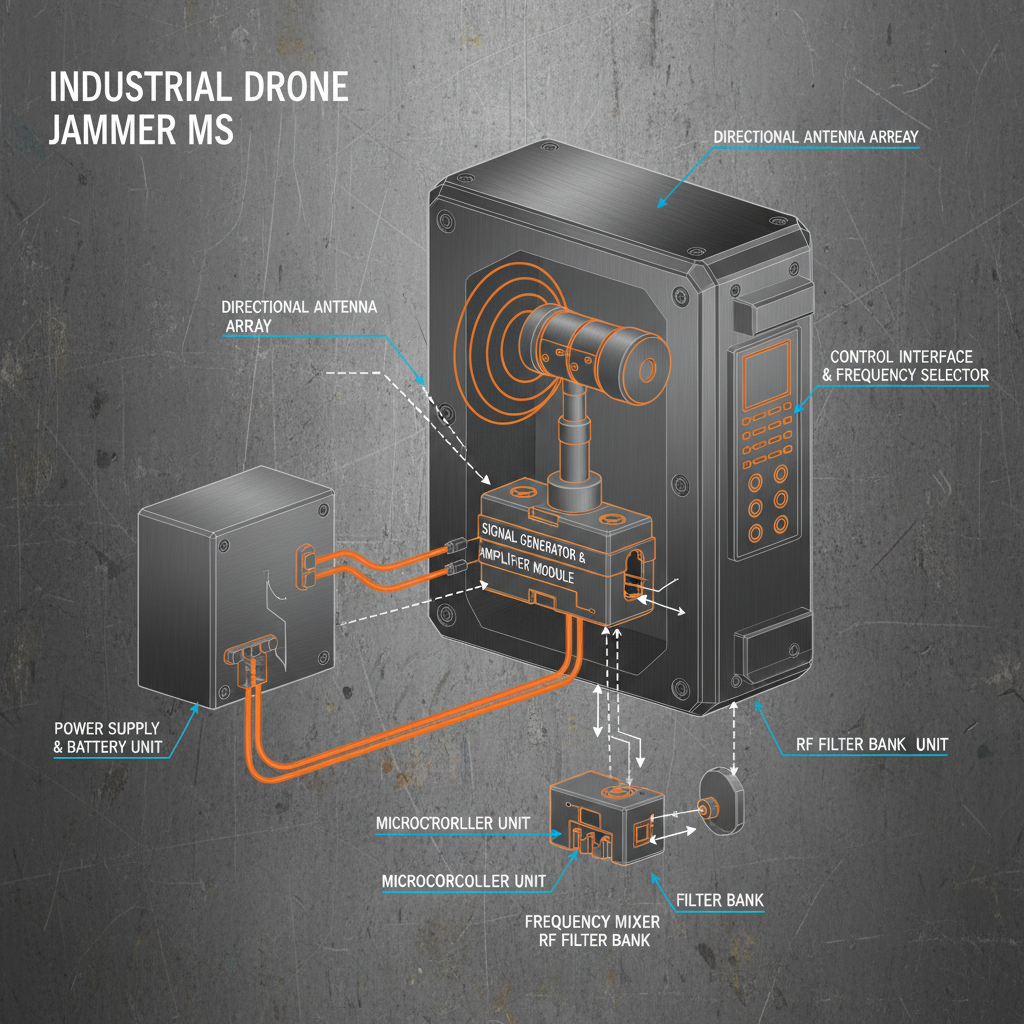
To achieve peak operational efficiency, an ms transmitter relies on a high-stability local oscillator (LO) and a precision frequency synthesizer. These components ensure that the signal remains locked to the target frequency regardless of temperature fluctuations or power surges, which is essential for maintaining a consistent link in outdoor deployments.
Another critical element is the Power Amplifier (PA) stage. The ms transmitter must balance output power with linear performance to avoid signal clipping and spectral regrowth. High-efficiency GaN (Gallium Nitride) semiconductors are increasingly used here to provide higher power density and better thermal management compared to traditional silicon-based amplifiers.
Finally, the interface and control logic—often driven by an FPGA or an MCU—allows the ms transmitter to be dynamically reconfigured. This software-defined approach enables the transmitter to switch between different modulation schemes or frequency bands on the fly, providing the flexibility needed for multi-mission capabilities.
Comparative Efficiency in Transmission Methods
When analyzing the performance of various transmission architectures, the choice of the ms transmitter method significantly impacts the signal-to-noise ratio (SNR) and overall range. Direct conversion architectures offer simplicity and lower cost, while superheterodyne systems provide superior selectivity and sensitivity for high-precision military applications.
The following data illustrates the performance ratings of different ms transmitter configurations based on key operational metrics such as stability, power efficiency, and deployment speed.
Efficiency Analysis of ms transmitter Configurations
Strategic Real-World Applications
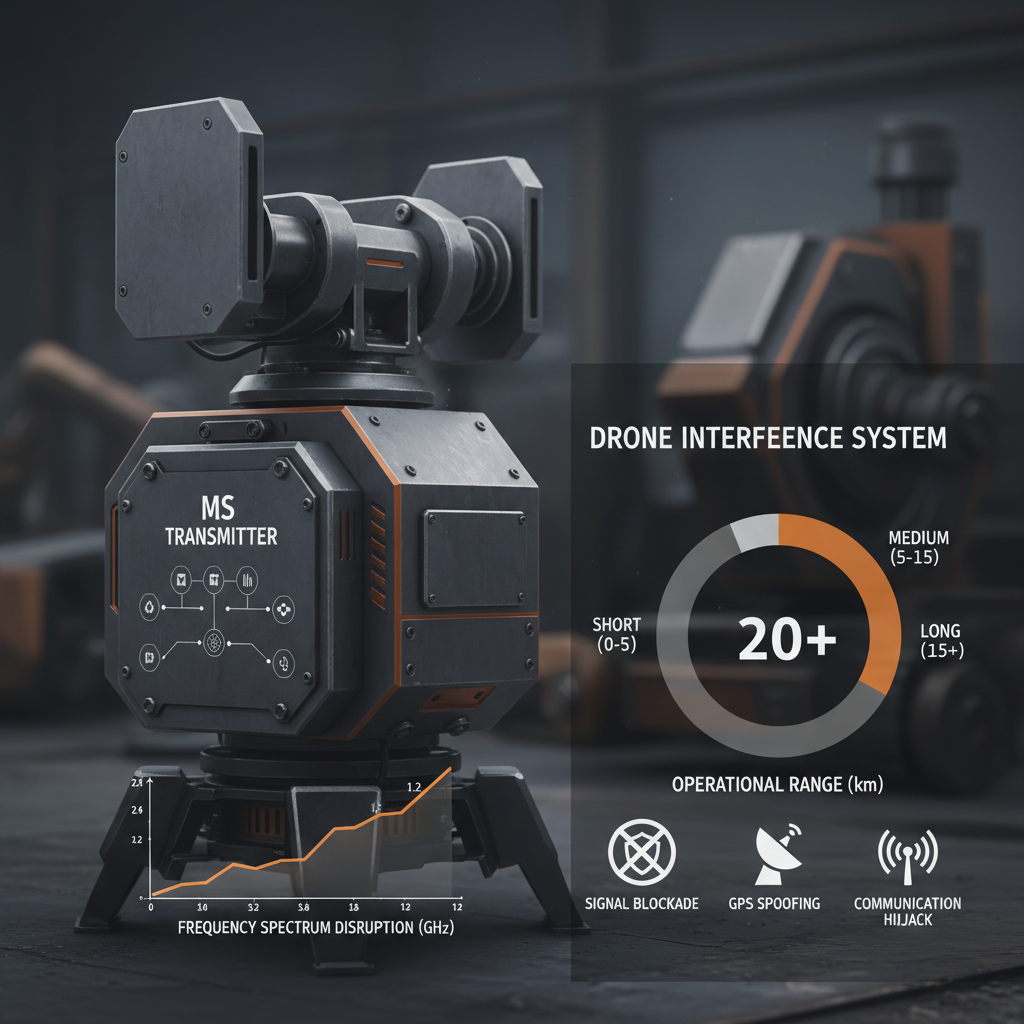
The versatility of the ms transmitter allows it to be deployed in a multitude of critical scenarios. In drone detection and neutralization systems, these transmitters are used to emit specific patterns that can confuse the navigation systems of unauthorized UAVs or create "no-fly zones" around sensitive government installations.
Beyond security, the ms transmitter is indispensable in remote industrial zones for telemetry and control. In mining or oil and gas operations, where traditional infrastructure is absent, these high-reliability transmitters ensure that critical sensor data is relayed back to the command center without interruption, enhancing worker safety and operational uptime.
Long-Term Value and Operational Reliability
Investing in a professional-grade ms transmitter yields significant long-term value by reducing the need for frequent hardware replacements. Because these units are designed with industrial-grade thermal dissipation and ruggedized housings, they can withstand extreme environments—from Arctic cold to desert heat—without degradation in signal quality.
From a logical perspective, the reliability of the ms transmitter translates directly into operational trust. In high-stakes electronic warfare or emergency response, the confidence that a signal will be transmitted exactly as intended allows commanders to make decisions based on accurate data, ultimately saving lives and protecting assets.
Additionally, the scalability of modern transmitter modules means that an initial investment can be expanded. As new threats emerge or new frequency requirements are mandated, the ms transmitter can often be updated via firmware or by adding complementary power amplifier modules, ensuring the system remains relevant for years to come.
Future Innovations in Transmitter Technology
The future of the ms transmitter is closely tied to the integration of AI-driven spectral analysis. Upcoming models are expected to feature "cognitive radio" capabilities, allowing the transmitter to autonomously sense the RF environment and switch frequencies in real-time to avoid interference or jamming, creating a truly adaptive communication link.
Sustainability is also becoming a primary driver in design. New materials are being explored to create the ms transmitter with a lower carbon footprint and higher energy efficiency, reducing the power draw for vehicle-mounted and handheld units, which in turn extends the operational battery life of field teams.
Furthermore, the move toward miniaturization—leveraging System-on-Chip (SoC) technology—will allow the ms transmitter to be embedded into even smaller form factors. This will enable the deployment of clandestine sensor networks and highly portable jamming devices that maintain the power of a fixed-chassis system.
Technical Comparison of ms transmitter Design Evolution
| Generation |
Core Technology |
Spectral Efficiency |
Operational Range |
| Legacy ms transmitter |
Analog Oscillator |
Low (3/10) |
Short (1-5 km) |
| Standard ms transmitter |
PLL Synthesizer |
Medium (6/10) |
Medium (5-15 km) |
| Advanced ms transmitter |
SDR / FPGA |
High (8/10) |
Long (15-50 km) |
| Cognitive ms transmitter |
AI-Adaptive |
Ultra (10/10) |
Dynamic (5-100 km) |
| Miniaturized ms transmitter |
RF-SoC |
High (7/10) |
Medium (2-10 km) |
| GaN-Enhanced ms transmitter |
GaN Power Amp |
Very High (9/10) |
Very Long (50+ km) |
FAQS
In a drone detector system, the ms transmitter is responsible for emitting signals used for active scanning or neutralization. It can send out "probing" signals to detect the presence of UAVs or emit interference signals (jamming) to disrupt the control link between the drone and its operator, effectively forcing the drone to land or return to home.
Professional ms transmitters utilize advanced thermal management systems, including aluminum heat sinks, active cooling fans, and sometimes liquid cooling for chassis-mounted units. High-efficiency GaN amplifiers are also used to reduce the amount of energy converted into waste heat, ensuring the device remains stable during continuous high-power transmission.
Yes, most modern ms transmitters are designed for broadband or customized frequency ranges. By adjusting the local oscillator and filtering stages, the device can be tuned to specific bands (e.g., 300-6000MHz) to meet the unique regulatory requirements of a specific region or the operational needs of a specific target device.
The primary differences are power capacity and portability. Handheld units are optimized for low power consumption and rapid deployment by a single operator. Vehicle-mounted units leverage the vehicle's power supply to drive higher-wattage amplifiers, offering significantly greater range and coverage areas, typically used for convoy protection.
Stability is achieved through the use of Temperature Compensated Crystal Oscillators (TCXOs) or Oven Controlled Crystal Oscillators (OCXOs). These components ensure that the frequency does not drift as the temperature changes, keeping the ms transmitter locked on its target frequency regardless of environmental extremes.
Absolutely. Many ms transmitters are specifically engineered to work as the RF front-end for GPS spoofing modules. They provide the necessary power and precision to transmit simulated satellite signals that can mislead a receiver's positioning system, which is a critical capability in electronic warfare and security testing.
Conclusion
The ms transmitter is far more than a simple signal source; it is the heart of modern wireless electronic systems. From its core technical components like GaN amplifiers to its strategic application in drone detection and industrial telemetry, the transmitter defines the reach and reliability of any RF deployment. By balancing power, stability, and frequency agility, it provides the essential infrastructure needed to maintain security and connectivity in an increasingly complex electromagnetic environment.
Looking forward, the integration of AI and miniaturization will continue to push the boundaries of what the ms transmitter can achieve. For organizations seeking to enhance their electronic warfare or communication capabilities, investing in adaptive, high-efficiency transmission hardware is no longer optional—it is a strategic imperative. To explore our full range of high-performance RF solutions, visit our website: www.drone-system.com.