

Portable Handheld Drone Detector: Accurate Threat Detection
Introduction to Advanced Drone Detection Systems and Industry Trends
In an era of increasing unmanned aerial vehicle (UAV) proliferation, the imperative for robust and reliable counter-drone measures has never been more critical. The rise of unauthorized drone activities poses significant threats to critical infrastructure, public safety, national security, and privacy. From industrial espionage over sensitive facilities to disruption of air traffic and malicious surveillance, the challenges presented by rogue drones necessitate sophisticated detection and mitigation technologies.
The global market for counter-UAV systems is experiencing rapid growth, projected to exceed $3 billion by 2027, driven by escalating security concerns and advancements in sensor technologies. This surge underscores the demand for effective, deployable solutions capable of identifying and tracking drones across diverse operational environments. Among these solutions, the handheld drone detector stands out as a versatile, immediate-response tool. These devices are pivotal in providing on-the-ground intelligence, enabling security personnel to detect and assess potential airborne threats swiftly and accurately. Our flagship product, The Handheld Drone Detector Can Detect 440mhz~6.19ghz Analog And Digital Transmission, embodies this innovation, offering unparalleled detection capabilities across a wide spectrum of frequencies.
Industry trends indicate a move towards more compact, integrated, and intelligent detection systems. Miniaturization, enhanced battery life, and the incorporation of advanced signal processing algorithms are key drivers. Furthermore, the ability to differentiate between authorized and unauthorized drones, coupled with seamless integration into broader security frameworks, defines the next generation of counter-drone technologies. This evolution is crucial for maintaining operational readiness and safeguarding valuable assets against the ever-evolving drone threat landscape.
Technical Specifications and Core Functionality of the Handheld Drone Detector
A modern handheld drone detector is engineered to provide precise, real-time intelligence on UAV presence. Our advanced system is designed to identify both analog and digital drone transmissions across an extensive frequency range of 440 MHz to 6.19 GHz. This broad spectrum coverage is critical as drones utilize various communication protocols, including Wi-Fi, proprietary radio frequencies, and advanced data links, making comprehensive detection paramount.
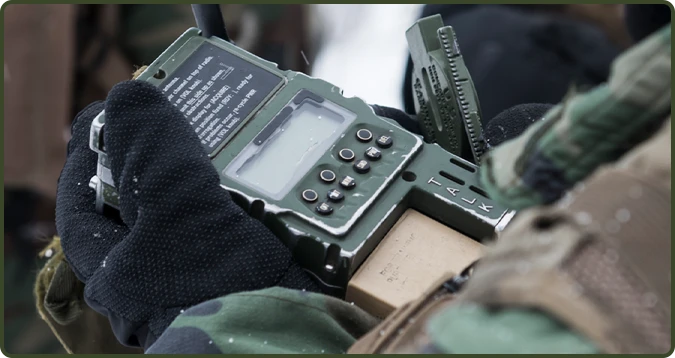
The core functionality relies on sophisticated Software-Defined Radio (SDR) technology combined with advanced signal processing algorithms. These algorithms enable the device to rapidly scan the RF spectrum, identify characteristic drone signatures, and filter out ambient noise and legitimate signals. Upon detection, the device provides critical information such as the drone's direction of origin, approximate distance, and signal strength, often displayed on an intuitive graphical user interface (GUI). Alert mechanisms typically include visual indicators, audible alarms, and haptic feedback, ensuring operators are immediately aware of a potential threat.
Key Technical Parameters
| Parameter | Specification |
|---|---|
| Detection Frequency Range | 440 MHz - 6.19 GHz (Analog & Digital) |
| Detection Range (typical) | Up to 1.5 km (line-of-sight, varies with environment) |
| Detection Modes | Manual Scan, Auto Scan, Priority Bands |
| Alert Types | Visual (LED, Display), Audible (Buzzer), Haptic (Vibration) |
| Display | High-resolution LCD/OLED, real-time spectrum analysis |
| Battery Life | 8+ hours continuous operation (rechargeable Li-ion) |
| Weight | < 1.5 kg (including battery and antenna) |
| Operating Temperature | -20°C to +50°C |
| Connectivity | USB-C for data transfer and firmware updates |
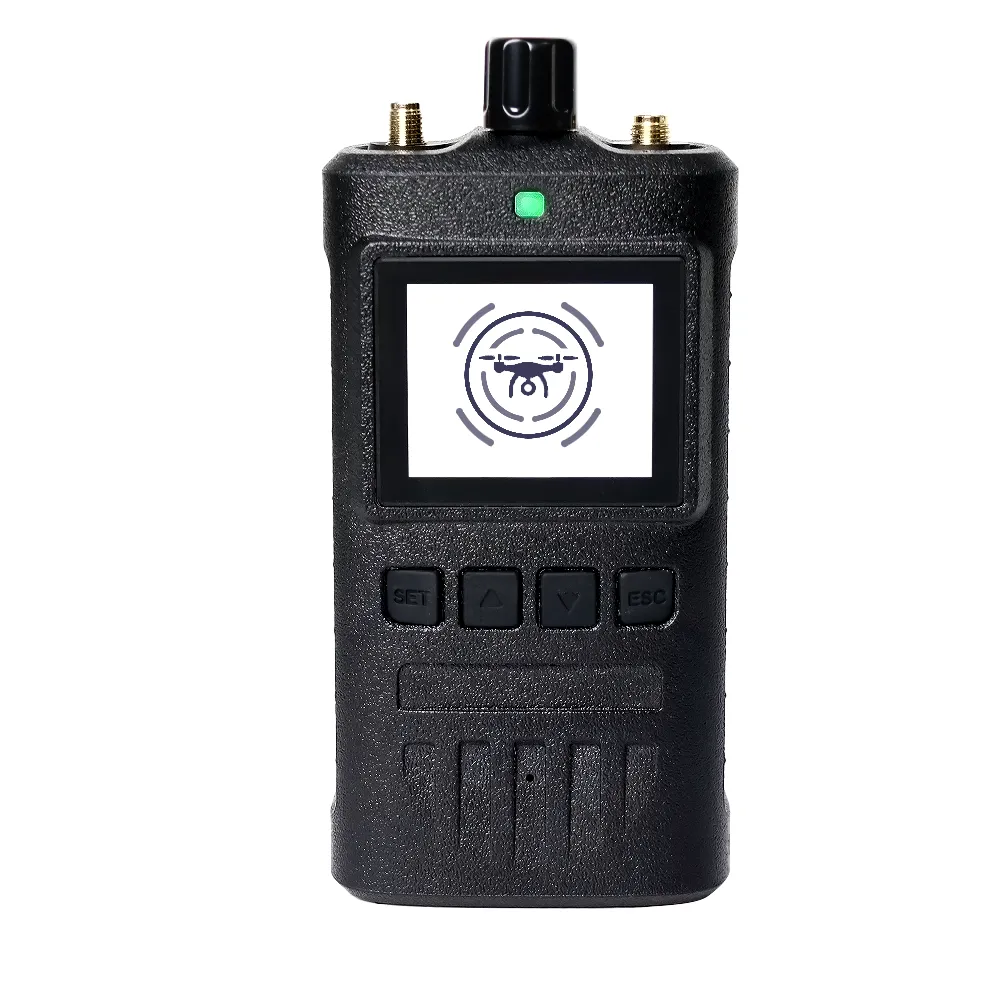
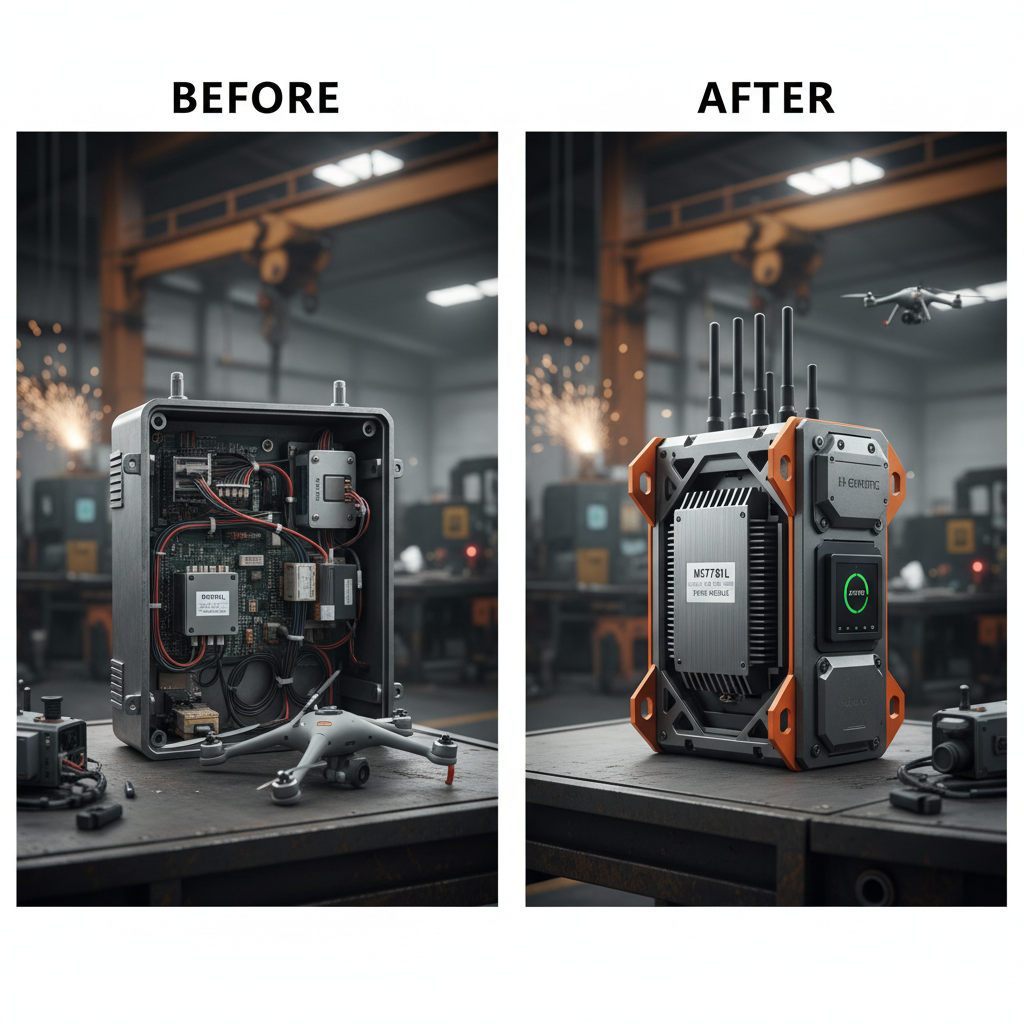
Figure 1: High-performance handheld drone detector in operation.
Manufacturing Process Flow of an Advanced Handheld Drone Detector
The production of a sophisticated handheld drone detector involves a multi-stage, precision-engineered manufacturing process that adheres to stringent quality control standards. This ensures robust performance, extended service life, and reliability in demanding operational environments.
Step 1: Component Sourcing & Quality Control
Acquisition of high-grade, aerospace-standard electronic components, specialized RF modules, durable polymer composites, and precision-machined aluminum alloys. All incoming materials undergo rigorous inspection for compliance with ISO 9001 and RoHS standards.
Step 2: PCB Fabrication & Assembly
Multi-layer Printed Circuit Boards (PCBs) are manufactured with high-frequency laminates. Surface-Mount Technology (SMT) is utilized for automated component placement, followed by precise soldering and optical inspection to ensure flawless connections for RF, digital, and power circuitry.
Step 3: RF Module Integration & Calibration
Integration of sensitive RF receiving modules. Each module undergoes individual calibration in an anechoic chamber to optimize sensitivity, frequency accuracy, and noise reduction across the entire operating spectrum (440MHz-6.19GHz).
Step 4: Enclosure Manufacturing (CNC Machining & Injection Molding)
The robust outer casing is typically forged from high-strength aluminum alloy or precision-machined via CNC for internal component mounting points. Ergonomic grips and covers may use advanced injection-molded, impact-resistant polymers, ensuring durability and corrosion resistance crucial for industries like petrochemical and metallurgy.
Step 5: System Integration & Software Loading
All electronic sub-assemblies (PCBs, display, battery, antennas) are integrated into the enclosure. The proprietary operating system and detection algorithms are loaded, followed by initial power-on diagnostics.
Step 6: Environmental & Performance Testing
Each unit undergoes comprehensive testing to ANSI/NIST standards for electromagnetic compatibility (EMC), vibration resistance, shock tolerance, and ingress protection (IP ratings, e.g., IP65/IP67 for water and dust). Thermal cycling tests (-20°C to +50°C) verify performance under extreme conditions, critical for target industries like water supply & drainage and outdoor security.
Step 7: Final Calibration & Quality Assurance
Final sensitivity and accuracy calibration, user interface functionality checks, and exhaustive battery performance testing. A final visual and functional inspection ensures every device meets our rigorous quality standards before packaging and dispatch. The typical service life of these robust devices, with proper maintenance, exceeds 7-10 years.
This meticulous process ensures that our handheld drone detector units deliver unparalleled reliability and precision, contributing to enhanced security and operational efficiency (e.g., preventing energy losses from unauthorized drone inspections at power plants or reducing maintenance costs from drone-related damages).
Application Scenarios & Target Industries
The versatility and portability of a drone detector handheld device make it indispensable across a multitude of high-stakes environments. Its rapid deployment capability allows for immediate threat assessment and response, complementing fixed surveillance systems.
Target Industries and Specific Advantages:
- Petrochemical and Energy Facilities: These sites are vulnerable to industrial espionage, sabotage, or unauthorized aerial surveys. A handheld detector allows security teams to sweep large perimeters, ensuring the integrity of critical infrastructure, preventing potential energy losses, and enhancing safety protocols by detecting drones that could carry incendiary devices or recording equipment. Its robust construction offers corrosion resistance in harsh industrial atmospheres.
- Metallurgy and Heavy Manufacturing: Protecting high-value assets, proprietary processes, and sensitive materials from aerial surveillance. The rapid detection capability minimizes exposure to potential data breaches or operational disruptions.
- Water Supply & Drainage Systems: Safeguarding reservoirs, treatment plants, and pumping stations from environmental contamination, vandalism, or reconnaissance. The ability to quickly identify and locate drones helps maintain public health and operational continuity. The device's sealed design ensures reliable operation in varying weather conditions.
- Critical Infrastructure Protection (Airports, Power Grids, Telecommunications): Preventing disruption and enhancing security against unauthorized drone flights which could impact operations, cause power outages, or compromise communication networks. The energy-saving features of the device ensure long operational hours during extended patrols.
- Law Enforcement and Public Safety: Used by police, SWAT teams, and emergency responders for situational awareness during special events, search and rescue operations, or riot control. It helps in identifying hostile surveillance or payload delivery drones.
- Event Security (Concerts, Sports, Dignitary Protection): Establishing temporary no-fly zones and detecting encroaching drones that could pose safety risks or exploit security vulnerabilities during large gatherings.
- Border Control and Maritime Security: Assisting in the detection of drones used for smuggling, illicit surveillance, or cross-border incursions in remote or expansive areas.
In these scenarios, the immediate, actionable intelligence provided by the handheld drone detector is invaluable. It transforms reactive security measures into proactive ones, enabling personnel to intervene effectively before a threat escalates.
Technical Advantages & Performance Metrics
Our advanced handheld drone detector distinguishes itself through a suite of technical advantages designed for superior performance and operational reliability. These advantages are rooted in cutting-edge RF technology, intelligent signal processing, and robust physical construction.
Core Technical Advantages:
- Wideband Multi-Protocol Detection: Capable of detecting both analog and digital signals across 440MHz to 6.19GHz. This covers a vast array of commercial, DIY, and military-grade drone communication frequencies, including Wi-Fi (2.4GHz, 5.8GHz), GPS (L1, L2), ISM bands, and proprietary control links.
- Real-time Spectrum Analysis: Provides instantaneous visualization of the RF environment, allowing operators to identify active drone control signals, video downlinks, and GPS spoofing attempts in real-time. This reduces false positives by differentiating drone signatures from other ambient RF noise.
- High Sensitivity & Accuracy: Utilizes low-noise amplifiers and high-gain antennas to detect weak drone signals at extended ranges. Sophisticated algorithms ensure high accuracy in direction finding and signal classification, even in complex urban or industrial environments.
- Rapid Threat Identification: Designed for minimal latency between signal acquisition and alert generation. This swift response capability is critical for intercepting fast-moving drone threats.
- Portable & Ergonomic Design: Lightweight, compact, and designed for single-hand operation, minimizing operator fatigue during extended patrols or tactical deployments.
- Ruggedization & Environmental Resistance: Built to IP65/IP67 standards, offering protection against dust, water ingress, and impact. This ensures reliable operation in harsh weather conditions and challenging outdoor environments.
Performance Metrics & Authoritative References:
Through rigorous internal testing and adherence to industry benchmarks like those outlined by the European Union Agency for Cybersecurity (ENISA) for counter-UAS systems, our devices consistently demonstrate high-performance metrics:
- Detection Probability: >95% for common commercial drones (e.g., DJI Mavic series, FPV drones) within specified range and environmental conditions.
- False Alarm Rate:
- Time to Detect:
- Localization Accuracy: Directional accuracy within ±5 degrees, enabling precise threat identification and visual acquisition.
These proven performance metrics underscore the device's efficacy as a critical tool for frontline security and surveillance operations.
Vendor Comparison and Competitive Landscape
The market for handheld drone detectors is dynamic, with various manufacturers offering solutions tailored to different operational needs. A critical evaluation of these offerings often centers on key performance indicators (KPIs) and distinguishing features. Our product, The Handheld Drone Detector Can Detect 440mhz~6.19ghz Analog And Digital Transmission, positions itself competitively by focusing on comprehensive frequency coverage, robust design, and intuitive usability.
Comparative Analysis Table:
| Feature | Our Product (440MHz-6.19GHz) | Competitor A (Entry-Level) | Competitor B (High-End Specialization) |
|---|---|---|---|
| Frequency Coverage | 440 MHz - 6.19 GHz (Analog & Digital) | 2.4 GHz & 5.8 GHz (Common Wi-Fi) | 900 MHz - 6.0 GHz (Digital Only) |
| Detection Range (LOS) | Up to 1.5 km | Up to 500 m | Up to 2 km (with external antenna) |
| Signal Types Detected | Control, Video, GPS (Analog/Digital) | Control, Video (Digital) | Control, Video, GPS (Digital) |
| Form Factor | Compact, Ergonomic Handheld | Small, Basic Handheld | Larger, often two-piece system |
| Battery Life | 8+ hours | 4-6 hours | 6-8 hours |
| Environmental Rating | IP65/IP67 | IP54 | IP66 |
| Real-time Spectrum Analysis | Yes, detailed display | No, simple signal strength | Yes, advanced GUI |
This comparison highlights our product's balanced approach, offering broad spectrum coverage and robust environmental resistance, surpassing entry-level solutions while providing a more compact and user-friendly experience than some specialized high-end systems. Our commitment to supporting both analog and digital transmission types ensures future-proof versatility against evolving drone technologies.
Customized Solutions and Real-World Application Case Studies
While our standard handheld drone detector offers extensive capabilities, we understand that specific operational requirements may necessitate tailored solutions. Our engineering team specializes in adapting our technology to integrate seamlessly with existing security infrastructures or to meet unique environmental and regulatory demands.
Customization Capabilities:
- Software Integration: API development for integration with existing Command & Control (C2) systems, Security Information and Event Management (SIEM) platforms, or proprietary security networks.
- Hardware Modifications: Specialized antenna arrays for enhanced directional accuracy, ruggedized enclosures for extreme conditions (e.g., marine environments), or extended battery packs for prolonged missions.
- Custom Alert Protocols: Development of specific alert types or notification chains to comply with organizational emergency response procedures.
- Training & Support: On-site operational training and tailored maintenance programs to ensure optimal utilization and longevity of the system.
Application Case Studies:
Case Study 1: Perimeter Security for a National Oil Refinery
Challenge: A large, sprawling oil refinery required enhanced perimeter security against potential drone incursions used for industrial espionage or sabotage. Existing security was primarily ground-based, leaving an aerial vulnerability.
Solution: Deployment of our handheld drone detectors to security patrols responsible for the facility's expansive perimeter. The detectors were integrated into their existing radio communication protocols for immediate alert dissemination.
Outcome: Within three months, the system detected four distinct unauthorized drone flights, leading to the interception of one drone and the identification of its operator. This proactive detection significantly reduced the risk of sensitive data compromise and potential security breaches. Customer feedback highlighted the device's ease of use and immediate impact on security posture.
Case Study 2: Public Safety at a Major International Music Festival
Challenge: An annual music festival, attracting hundreds of thousands, faced recurring issues with unauthorized drones flying over crowds, posing safety hazards and infringing on privacy. Standard security measures were insufficient to manage aerial threats.
Solution: Security personnel were equipped with handheld drone detectors at strategic points around the festival grounds. These units allowed for immediate detection and localization of rogue drones, enabling rapid intervention by ground teams.
Outcome: During the festival, 12 instances of unauthorized drone activity were detected and resolved without incident. The drone detector handheld system played a crucial role in maintaining public safety and order, providing real-time aerial threat intelligence to event organizers and law enforcement. The seamless integration into event security operations was highly praised.
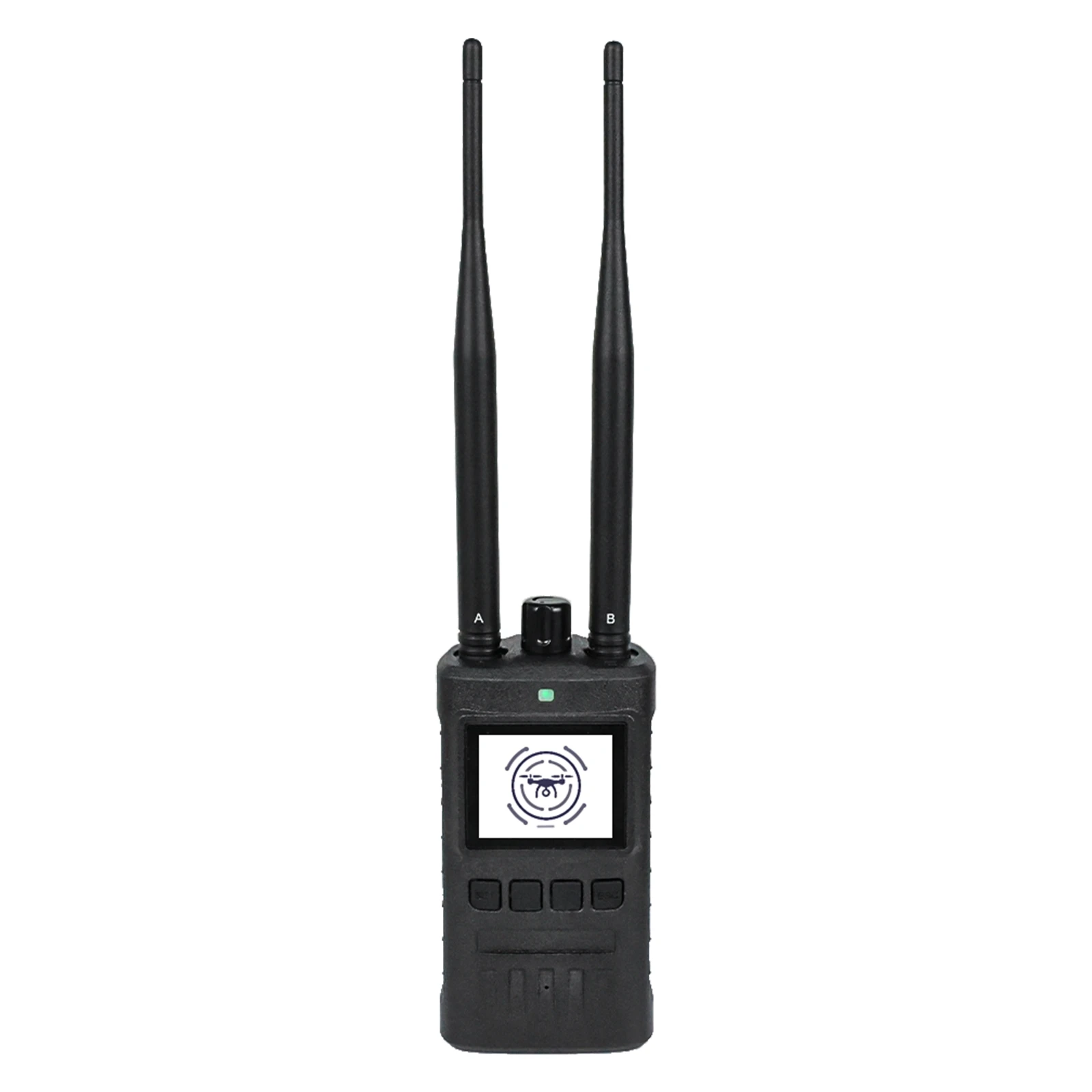
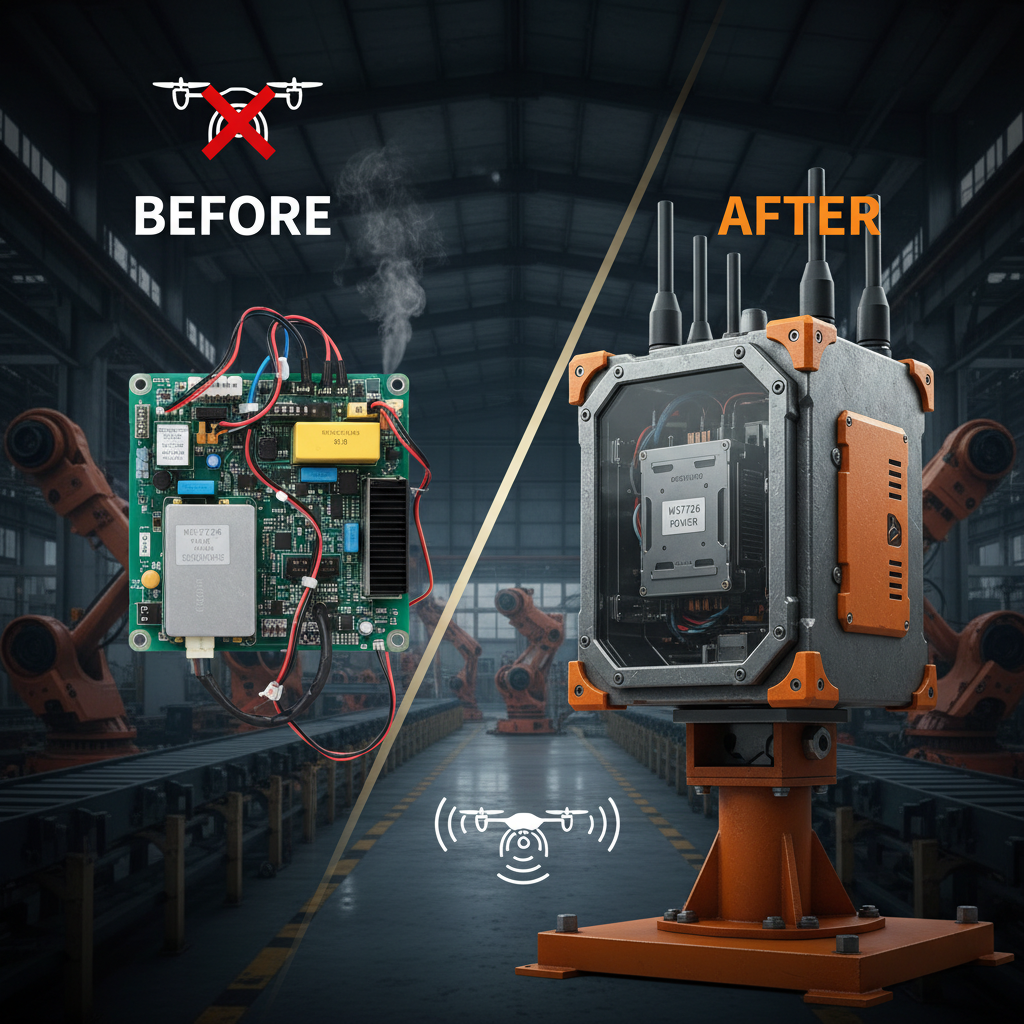
Figure 2: Operator utilizing a handheld drone detector for perimeter surveillance.
Trustworthiness, Support, and FAQ
Building trust with our B2B clients is paramount. This involves transparent information regarding product quality, support, and longevity. Our drone detector handheld solutions are built to the highest industry standards, backed by comprehensive support and clear commitments. We are proud to hold certifications such as CE and FCC, and operate under ISO 9001 quality management principles.
Frequently Asked Questions (FAQ):
Q1: What types of drones can this detector identify?
A1: Our handheld drone detector can identify a wide range of drones, including commercial off-the-shelf drones (e.g., DJI, Autel), FPV racing drones, and many custom-built UAVs, by detecting their analog and digital control, video, and GPS signals within the 440MHz to 6.19GHz frequency range.
Q2: What is the typical detection range of the device?
A2: The typical detection range is up to 1.5 kilometers in open, line-of-sight environments. This range can vary based on terrain, environmental interference, and the power output of the drone's transmission.
Q3: Is the detector resistant to harsh weather conditions?
A3: Yes, our detector is designed with an IP65/IP67 rating, making it resistant to dust ingress and protected against water jets/temporary immersion, suitable for operation in challenging outdoor environments.
Q4: How does the device differentiate between a drone and other RF signals?
A4: Our device employs advanced signal processing algorithms and a comprehensive library of drone signatures. It analyzes frequency patterns, modulation types, and signal characteristics to accurately identify drone communications while minimizing false positives from legitimate ambient RF signals.
Lead Time & Fulfillment:
Standard lead time for our handheld drone detectors is typically 4-6 weeks from order confirmation, depending on order volume and specific customization requirements. Expedited shipping options are available upon request. We maintain a robust supply chain to ensure timely delivery and minimize disruptions to your operational planning.
Warranty Commitments:
Each handheld drone detector comes with a comprehensive 2-year manufacturer's warranty covering defects in materials and workmanship. Extended warranty options and service contracts are available to provide long-term peace of mind and ensure continuous operational readiness.
Customer Support:
Our dedicated technical support team is available via phone and email from Monday to Friday, 9:00 AM to 5:00 PM (GMT+8). We provide expert assistance with setup, operation, troubleshooting, and firmware updates, ensuring you maximize the utility and longevity of your investment. On-site support and advanced training modules can also be arranged.
Conclusion
The proliferation of drones has irrevocably altered the security landscape, creating new vulnerabilities for industries and public spaces alike. As a critical component of any comprehensive counter-UAS strategy, the handheld drone detector offers an unparalleled combination of portability, precision, and real-time threat intelligence. Our advanced system, capable of detecting analog and digital transmissions across a wide spectrum, is engineered to empower security professionals with the tools needed to effectively identify, localize, and respond to unauthorized drone activity. By adhering to rigorous manufacturing standards, providing robust technical advantages, and offering dedicated support, we ensure our solutions deliver superior performance and trustworthiness in the face of evolving aerial threats.
References
- MarketsandMarkets. "Counter-UAV Market by System, Platform, Technology, End User, and Region - Global Forecast to 2027." (Referenced for market growth data)
- European Union Agency for Cybersecurity (ENISA). "ENISA Drone Risks and Mitigations – Countering Drone Threats." (Referenced for counter-UAS standards and threat assessments)
- International Organization for Standardization (ISO). "ISO 9001 Quality Management Systems." (Referenced for manufacturing quality standards)
- American National Standards Institute (ANSI). "ANSI/NIST-IR 8352: Guide to the Interoperability of Unmanned Aircraft Systems and Counter-UAS Systems." (Referenced for testing standards and performance metrics)
- Federal Communications Commission (FCC). "Regulations for Radio Frequency Devices." (Referenced for compliance in RF technology)

-
 09 March 2021 16 Apr 2026
 -
 09 March 2021 09 Apr 2026
 -
 09 March 2021 07 Apr 2026
 -
 09 March 2021 04 Apr 2026
 -
 09 March 2021 31 Mar 2026
-
 09 March 2021 21 May 2025
 -
 09 March 2021 25 Dec 2024
 -
 09 March 2021 14 Oct 2022
-
 09 March 2021 25 Dec 2024
 English
  Arabic
  Belarusian
  Danish
  Dutch
Dutch  French
  German
  Greek
Greek  Japanese
  Korean
  Myanmar
  Polish
  Portuguese
  Russian
  Spanish
  Swedish
  Thai
Thai  Ukrainian
  Vietnamese