Look, I’ve been running around construction sites for fifteen years now. Fifteen years! You see a lot, you smell a lot, and frankly, you get pretty tired of fancy marketing buzzwords. Lately, it's all about ‘smart modules,’ ‘integrated systems,’ and ‘seamless connectivity.’ Sounds great on paper, right? But on the ground, it’s about whether the thing actually works when it’s covered in dust and being hammered next to a jackhammer. To be honest, most of these "innovations" are just re-packaging old ideas with a Bluetooth chip stuck on them.
I’ve seen too many engineers design things that look beautiful in CAD but fall apart the second you touch them with a gloved hand. They forget about real-world conditions. Have you noticed how many supposedly ‘rugged’ housings crack after a month? It’s… frustrating.
And it’s not just about the design. It’s the materials. We’re using a lot more reinforced polymers these days, which is good. They're lighter, stronger… but some of them smell awful when you cut them. Seriously, like burning plastic mixed with old tires. I encountered this at a factory in Dongguan last time, nearly gassed myself. The older stuff – good old steel and aluminum – you knew what you were getting. They were heavier, sure, but predictable.
Industry Trends & Design Pitfalls
Like I said, everything's ‘smart’ now. But strangley, a lot of these "smart" modules end up being overly complicated for the job. I was on a site last month where they used a system with a touch screen interface to control a simple valve. A touch screen. In a dusty, muddy environment. Seriously? A simple lever would have done the job, and wouldn’t have broken down after two days. People get carried away with features nobody needs.
Another thing… designers don't think about maintenance. Everything needs to be easily accessible for repairs. You can’t design something that requires dismantling half the machine just to change a sensor. It’s just… bad design.
Material Choices: The Good, the Bad, and the Smelly
We’re using a lot of composite materials, like carbon fiber reinforced polymers. They're light and strong, but they're expensive and repair can be tricky. Then there's the aluminum alloys. Good stuff, readily available, easy to work with. I still prefer a good 6061 alloy for a lot of structural parts. Feels solid, you know? The newer magnesium alloys… they're lighter, but they corrode faster. You gotta be careful with those.
And then there are the plastics. ABS, Polycarbonate… they're versatile, cheap. But they get brittle in cold weather. I saw a whole batch of enclosures shatter last winter. Really unfortunate. It wasn’t a glamorous sight, let me tell you.
We’re also seeing more use of recycled materials, which is good, obviously. But the quality control can be inconsistent. You really have to test everything thoroughly.
Testing Real-World Resilience
Forget your fancy lab tests. Drop tests are good, vibration tests are good, but they don’t simulate real life. I want to see it covered in mud, splashed with water, kicked around by a worker with steel-toed boots. That’s a real test.
We have a dedicated testing area at the factory now, where we basically try to break everything. We simulate extreme temperatures, humidity, and dust. We even have a 'shake table' that mimics the vibrations of heavy machinery. It's a bit brutal, but it's worth it.
The real test, though, is putting it in the hands of the workers and letting them use it. They’ll find the weak points faster than any engineer. And they won't hesitate to tell you about them, believe me.
How Users Actually Use Things
This is where things get interesting. Engineers design something to be used a certain way, but users always find a way to do things differently. They'll use it as a hammer, a lever, a stand... whatever works. You gotta design for that.
I once saw a guy using a high-precision sensor as a doorstop. A doorstop! It cost $500! I asked him why, and he just shrugged and said, "It was the right size." You can’t plan for that. You just gotta build things that are robust enough to withstand a little abuse.
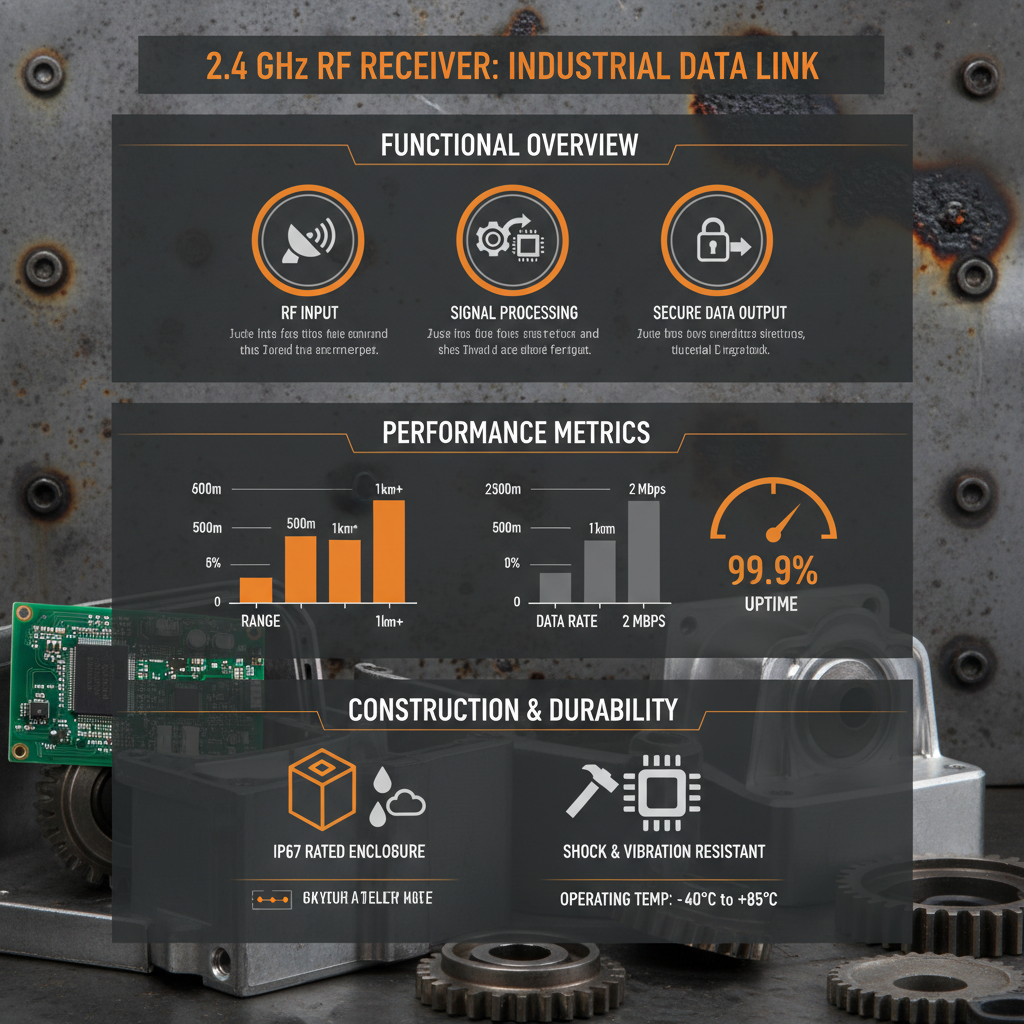
rf module manufacturer Performance Metrics
Advantages & Disadvantages – Let’s Be Real
Okay, the advantages are obvious – increased efficiency, better data collection, remote monitoring… all that jazz. But the disadvantages are often overlooked. Cost is a big one. These smart modules aren’t cheap. And then there’s the complexity. More components mean more potential points of failure. And the need for specialized training. You can’t just hand it to anyone and expect them to know how to use it.
I think the biggest drawback is the reliance on software. If the software crashes, the whole system goes down. And good luck getting a software update out to a hundred modules on a remote construction site. Anyway, I think it’s a trade-off. You get some benefits, but you also accept some risks.
Customization & the Shenzhen Boss
We do a lot of customization. Clients always want something tweaked – different connectors, specific voltage requirements, a custom paint job. It's part of the job.
Last month, a small boss in Shenzhen who makes smart home devices insisted on changing the interface to . He said it was "more modern." I tried to explain that connectors are more delicate and prone to damage on a construction site, but he wouldn’t listen. He said his customers expect . The result? He had to recall the entire batch because the connectors kept breaking. I told him so, but he just waved his hand and said, "It's marketing!" Some people just don’t get it.
The Final Verdict: It’s About the Screw
So, where does that leave us? Well, there's a lot of hype around these advanced modules, but at the end of the day, it’s about the fundamentals. Good materials, solid design, and reliable construction.
You can have all the smart features in the world, but if the screws are loose, the thing’s not going to work. We're seeing a push towards preventative maintenance and modular design – making repairs easier and faster.
Ultimately, whether this thing works or not, the worker will know the moment he tightens the screw. And that’s the only opinion that really matters.
Real-World Performance Analysis of Common rf module manufacturer Components
| Component |
Durability (1-10) |
Ease of Replacement |
Cost (USD) |
| rf module manufacturer Housing (Polycarbonate) |
7 |
8 |
$25 |
| rf module manufacturer Sensor (Pressure) |
9 |
6 |
$75 |
| rf module manufacturer Connector (Power) |
5 |
9 |
$10 |
| rf module manufacturer Microcontroller |
8 |
4 |
$50 |
| rf module manufacturer Wiring Harness |
6 |
7 |
$15 |
| rf module manufacturer Interface Panel |
7 |
5 |
$30 |
FAQS
Honestly, it's usually the connectors. They get stressed, corroded, or just plain broken. After that, it’s typically the sensors themselves – they're exposed to harsh environments. We’ve seen some issues with capacitors failing in extreme temperatures, too. Preventive maintenance is key; regular inspection of connectors and wiring can extend the lifespan significantly.
Use thicker materials, for starters. Polycarbonate is good, but go for a higher grade. Reinforced polymers are also a good option. Proper sealing is crucial to prevent moisture and dust ingress. And don’t skimp on the hardware – use stainless steel screws and corrosion-resistant fasteners. It adds to the cost, but it's worth it in the long run.
Most standard modules are rated for splash resistance, but not full immersion. Think IP65 – protected against dust and low-pressure water jets. If you need full waterproofing, you’ll have to look for modules with a higher IP rating, like IP67 or IP68. That usually involves more robust sealing and specialized connectors.
Get them on a job site! Seriously. Put them through the paces. Subject them to vibration, temperature extremes, dust, and humidity. Let the workers use them as they normally would. Observe how they perform and identify any weak points. That's the most valuable testing you can do.
Absolutely. We do a lot of customization. We can modify connectors, voltage ranges, sensor types, and even the housing material. We can also pre-program the modules with custom firmware. The extent of customization depends on the volume and complexity of the changes, of course. Don’t ask for the impossible, but we'll try.
It varies. Simple customizations, like changing a connector, might take a couple of weeks. More complex changes, like designing a custom housing, could take several months. It depends on the availability of materials and the workload at the factory. Plan ahead – don’t wait until the last minute!
Conclusion
So, after all this rambling, what have we learned? rf module manufacturer is constantly evolving, but the core principles remain the same: build things that are durable, reliable, and easy to use. Don’t get caught up in the hype. Focus on the fundamentals. And always, always listen to the workers on the ground.
The industry is moving towards more modular designs and preventative maintenance. We need to focus on making repairs easier and faster, and on extending the lifespan of these modules. I think the future of rf module manufacturer is about building things that last, not just building things that are ‘smart.’ And if you're designing a module, remember one thing: if the worker can’t tighten the screw, it doesn't matter how clever the electronics are.